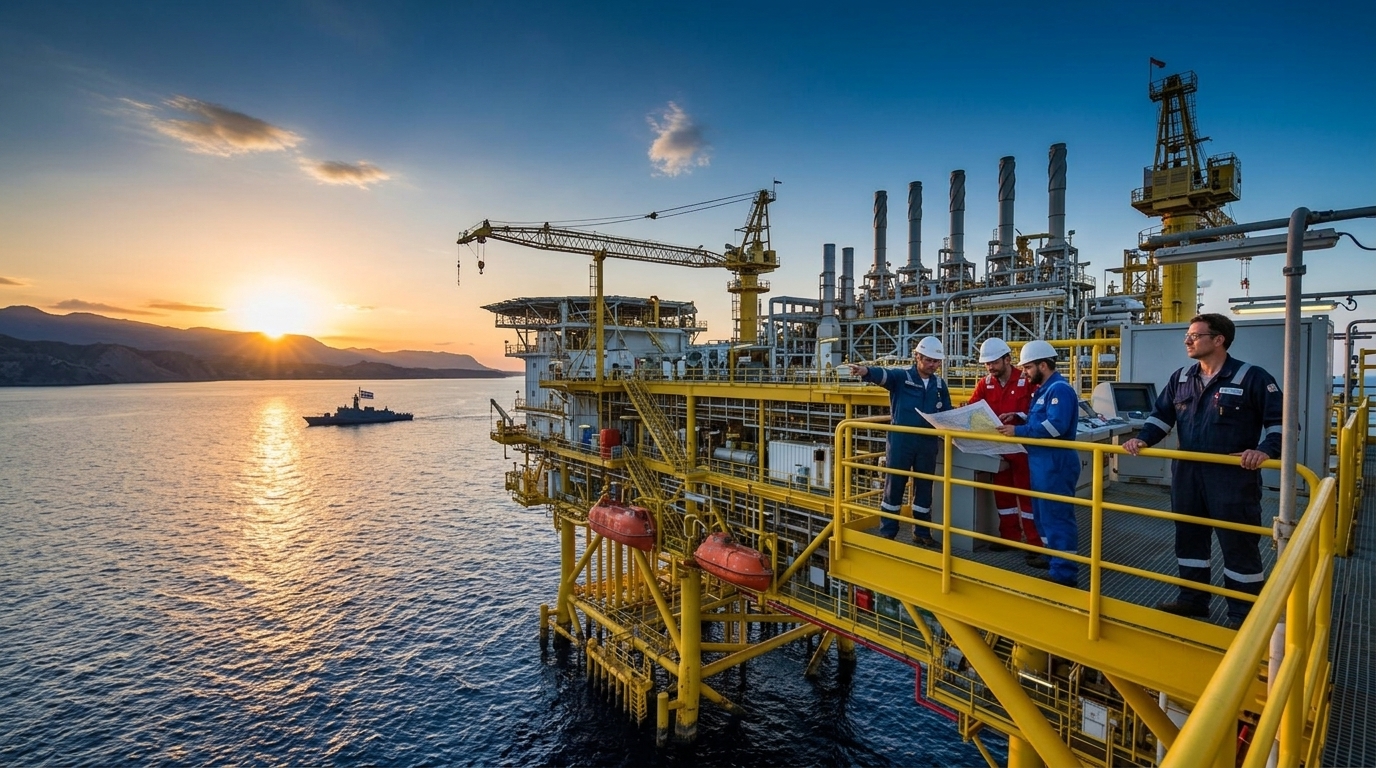
The quest for hydrocarbons in Greek waters has never been a purely technical endeavor. It has always been a blend of hope, geopolitical strategy, and economic risk. Today, as Europe attempts to redraw its energy map away from past dependencies, Greece faces a moment of truth. According to recent estimates and data from major market players, the probability of success for an exploratory well in the country's offshore concessions is estimated between 15% and 20%. While this percentage might seem low to the uninitiated observer, in the world of oil and gas exploration, it is considered a satisfactory starting point for areas characterized as "frontier basins"—basins with limited historical drilling data.
The Data Challenge and Technical Risk
The primary issue facing consortia, such as the partnership between ExxonMobil and Helleniq Energy in the west and southwest of Crete, is the lack of recent drilling data. The last serious efforts date back decades, and the technology of that era cannot compare to today's 3D seismic data. This lack of data lowers the success rate, as geologists are required to interpret formations at depths exceeding 3,000 meters below sea level without having physical samples from previous wells in the same area.
However, the completion of recent seismic surveys has provided a new lease on life for these projects. Analysts point out that if a first drilling is successful, the probability for subsequent wells in the same area could jump to over 40%, as the reservoir model would then be confirmed. This is the so-called "success begets success" phenomenon in the petroleum industry. Greece is currently betting on finding the first "key" that will unlock investor confidence.
Economic Implications and the Role of ExxonMobil
The presence of a giant like ExxonMobil is no accident. The decision of such a company to invest hundreds of millions of euros just for the exploration phase suggests that expectations for the size of potential deposits are significant. Estimates suggest natural gas reserves that could not only cover domestic needs for decades but also establish Greece as an energy exporter to the rest of Europe.
- Reduction of the trade balance deficit through import substitution.
- Creation of thousands of high-skilled jobs.
- Enhancement of state revenues through royalties and taxation.
- Upgrade of local infrastructure in Crete and the Ionian Islands.
"Greece is not just looking for natural gas; it is looking for a seat at the new energy axis of the Eastern Mediterranean, alongside Israel and Egypt," says an energy market executive.
The Green Transition Dilemma
One of the most thorny issues is the compatibility of these explorations with the goals of the European Green Deal. The EU is committed to climate neutrality by 2050. How, then, are new drillings in 2026 justified? The answer lies in the term "bridge fuel." Natural gas is considered the least polluting fossil fuel, essential for the stability of the electrical system while renewable energy sources (RES) develop their storage infrastructure. Furthermore, energy security has become an absolute priority following the Russian invasion of Ukraine, providing a political "pardon" to countries seeking autonomy.
Geopolitics and Security
We cannot ignore the fact that the exploration areas are located in zones where Turkey has occasionally raised claims, despite the fact that these specific concessions are well within the Greek EEZ and west/south of Crete, far from the disputed areas of the Aegean. The success of the drillings would mean the de facto recognition of Greek sovereign rights through the presence of international giants and the protection they entail from their home countries. It is a power game where drill bits also function as diplomatic tools.
In conclusion, 15-20% is a figure that carries immense responsibility. The Greek government and the companies involved are called to move quickly, as the window of opportunity for fossil fuels is gradually closing. If the 2025-2026 drillings are successful, Greece will enter a new league. If not, the landscape will at least be cleared, allowing for a full shift of resources toward clean energy without the lingering doubt of a lost treasure.