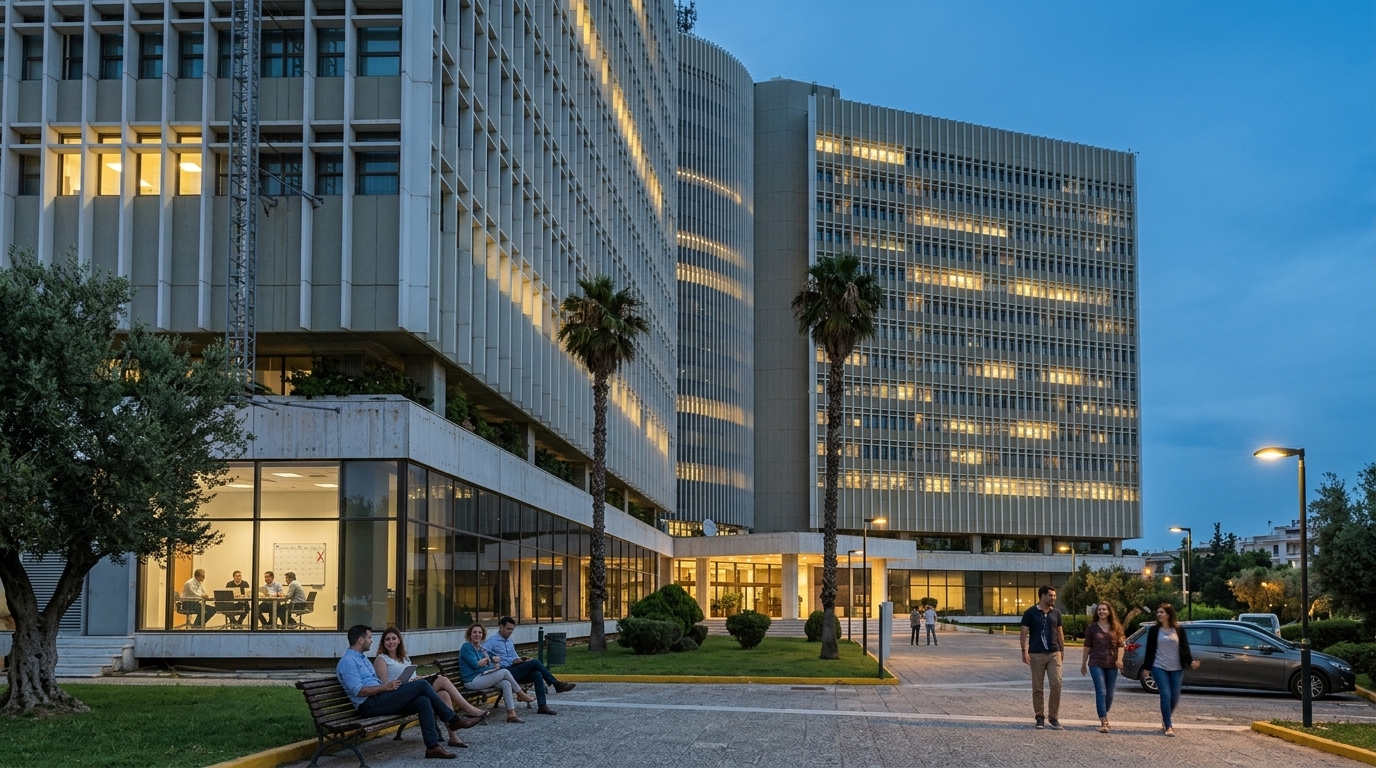
In an era where the boundaries between professional and personal life are becoming increasingly blurred, OTE Group—the largest telecommunications provider in Greece and a member of the Deutsche Telekom family—is making a move that could be described as a milestone for the Greek labor market. The pilot implementation of flexible working forms, including a four-day work week, remote work from abroad, and flexible hours, is not just a corporate perk; it is a strategic response to the challenges of the digital age and the global competition for talent.
The Triad of Flexibility: What the Program Entails
OTE's pilot program initially focuses on the Information Technology (IT) and Human Resources (HR) units, sectors that are traditionally at the forefront of digital transformation. The three main pillars are:
- Four-Day Work Week: Employees have the option to compress their weekly working hours into four days instead of five, gaining an extra day of rest or personal engagement without any reduction in their total compensation.
- Work from Abroad: For a limited period per year, employees can perform their duties from any foreign country, facilitating those who wish to combine work with travel or stay close to family members outside of Greece.
- Flexible Hours: The ability to adjust start and end times allows employees to avoid peak traffic hours and harmonize their schedules with family obligations.
This move comes at a time when Greece is striving to reverse the "brain drain" phenomenon. By offering working conditions similar to those found in tech giants of Silicon Valley or Northern Europe, OTE is attempting to become a magnet for specialized personnel seeking more than just a good salary: quality of life.
The Strategy Behind the Decision and International Experience
OTE's decision was not made in a vacuum. Globally, the four-day work week has been successfully tested in countries like Iceland, the United Kingdom, and Belgium. The results of these trials showed that reducing work days does not necessarily lead to a drop in productivity. On the contrary, reduced stress and increased employee satisfaction often lead to higher efficiency during the hours spent at work.
For OTE, adopting these models is part of a broader digital transformation strategy. In an industry like IT, where the talent shortage is a global phenomenon, flexibility is the strongest currency. Furthermore, the possibility of working from abroad meets the needs of the "digital nomad" generation, who do not wish to be bound by geographical constraints.
"Work is no longer a place you go, but something you do. Trust is the foundation of this new relationship between employer and employee," market executives note when commenting on the initiative.
Challenges and the Future of Work in Greece
Despite the obvious benefits, the transition to such models carries challenges. Managing teams working on different schedules requires a high level of organization and sophisticated digital tools. There is also the issue of tax and social security compliance for those working from abroad, a field that remains complex within the European Union.
However, the message OTE is sending to the Greek market is clear: the traditional 9-to-5 office model is fading. If a company of OTE's size and history can adapt, then the pressure on the rest of the private sector to follow suit will be intense. The success of this pilot program will determine whether the four-day week becomes the norm or remains a privilege for a few elite members of the tech sector. In any case, the discussion about the future of work in Greece has just entered a new, more mature phase.