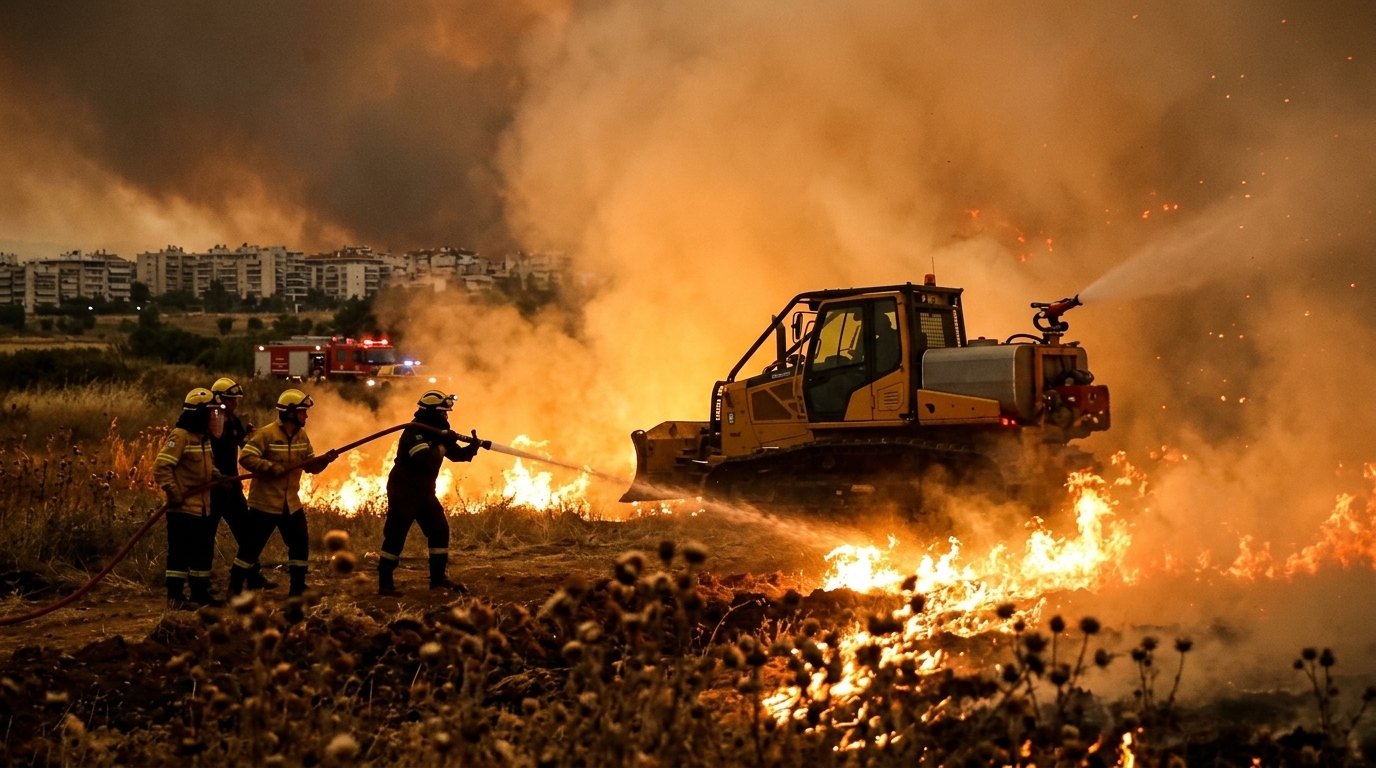
The city of Thessaloniki once again stared into the abyss as a fierce wildfire tore through the district of Anthoupoli in Oreokastro on Saturday night. The fire, which broke out around 8:30 PM, quickly escalated into a major crisis, underscoring the extreme vulnerability of Greece's peri-urban landscapes. Fueled by gusty winds and parched Mediterranean vegetation, the blaze forced authorities to issue urgent evacuation orders via the 112 emergency system, highlighting a recurring nightmare for the region's residents.
A Night of Chaos and Urgent Evacuations
The fire's timing was particularly treacherous. Starting just as dusk began to fall, it severely limited the window for aerial firefighting operations. Canadair and Ericsson helicopters managed only a few sorties before being grounded by darkness, leaving the brunt of the battle to ground crews. Firefighters, volunteers, and local residents fought a desperate hand-to-hand battle against flames that reached heights of ten meters in some areas.
The most harrowing episode of the night involved the evacuation of the 'Agios Panteleimon' care facility. Moving elderly residents and individuals with disabilities in the middle of a smoke-filled night is a logistical and humanitarian challenge of the highest order. While the evacuation was completed without loss of life, it raised serious questions about why such sensitive institutions are located in high-risk zones without adequate perimeter defense or automated suppression systems.
The Urban-Forest Interface: A Structural Failure
Oreokastro serves as a textbook example of the dangers inherent in the Wildland-Urban Interface (WUI). This is where human settlements bleed into natural forest land, creating a zone where fire can transition from a natural process to a structural disaster. In Anthoupoli, the reported loss of buildings was not merely a matter of bad luck; it was the result of decades of planning failures.
- Lack of mandatory firebreaks between private properties and forest land.
- The accumulation of biomass (dead wood and dry grass) on unmaintained private plots.
- Infrastructure constraints, such as narrow, winding roads that impede heavy fire engines.
- A reliance on reactive measures rather than proactive landscape management.
As the smoke drifted over the Thermaic Gulf, covering Thessaloniki in a gray shroud, the psychological toll on the community became evident. For many, the dream of living close to nature has turned into a seasonal anxiety, where every summer wind brings the scent of potential ruin.
Policy Failures and the Climate Scapegoat
In the aftermath of the Oreokastro fire, a familiar political debate is emerging. Government officials point to the success of the 112 warning system in preventing casualties—a metric they use to define a 'successful' response. However, critics and environmental experts argue that 'zero casualties' should be the baseline, not the ultimate goal. The real failure lies in the protection of the environment and private property.
"We watched the horizon turn orange and waited for a text message. But an SMS doesn't clear the brush or widen the roads. We are being told to run, but nobody is telling us how to stay and be safe," noted a local resident during the evacuation.
The frequent invocation of the 'climate crisis' by politicians is increasingly seen as a convenient shield against accountability. While it is true that global warming exacerbates fire conditions, the local factors—such as municipal negligence in clearing public spaces and the lack of a modern cadastre—are human errors that can and must be corrected.
The Road to Resilience
As the embers cool in Anthoupoli, the focus shifts to recovery. Compensation for those who lost homes or businesses is the first step, but it won't prevent the next fire. A paradigm shift is required: Greece must move away from a suppression-only model of firefighting towards a comprehensive strategy of forest management and urban resilience. This includes strict enforcement of plot-clearing laws, the creation of green firebreaks (using less flammable vegetation), and a massive investment in local civil protection units that don't just wait for the fire to start, but work year-round to prevent it.
The fire in Oreokastro is a warning shot for the rest of the summer. It serves as a reminder that the boundary between the city and the wild is thinning, and without a radical rethink of our relationship with the landscape, these 'nightmares' will become the new, tragic normal.