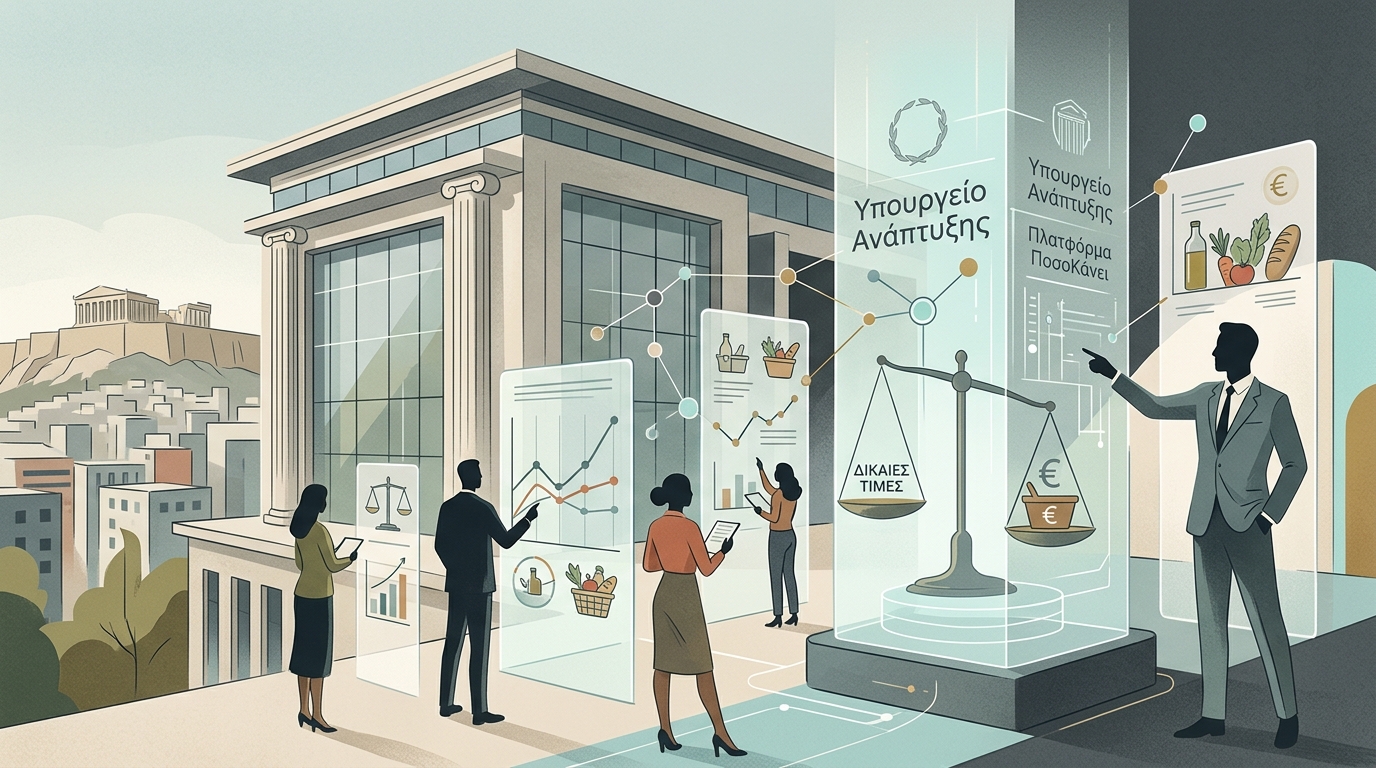
In an era where the cost of living dominates the social and economic discourse for Greek households, the Ministry of Development is launching a technological counter-offensive. The new platform, "PosoKanei" (HowMuchDoesItCost), integrated into a broader digital market supervision ecosystem, promises to place Artificial Intelligence (AI) at the service of consumers and regulatory bodies. This is not merely another price comparison app, but a sophisticated data analysis tool aimed at uncovering unfair practices and fostering healthy competition.
The Architecture of Transparency: How AI Operates
The core of "PosoKanei" beats with machine learning algorithms that process millions of data points in real-time. The system is fed by retail prices that large supermarket chains and other retailers are mandated to report, but the analysis now goes far beyond simple recording. The AI has the capability to identify "anomalous" price fluctuations that cannot be justified by international raw material costs or energy expenses.
For instance, if the price of olive oil increases simultaneously across five different chains without a corresponding change in wholesale prices, the system will trigger a "red alert" for inspectors of the Interagency Market Control Unit (DIMEA). This predictive capability allows the state to intervene in a targeted manner, rather than conducting random checks blindly. Furthermore, the platform will offer citizens a personalized experience, allowing them to create product "baskets" and receive notifications for the lowest prices in their vicinity using geospatial data.
From e-Katanalotis to PosoKanei: The Evolution of Oversight
The transition from the existing "e-Katanalotis" to "PosoKanei" marks a qualitative upgrade. While the previous platform functioned primarily as an observatory, the new system is designed as an enforcement and policy-making tool. The Ministry of Development aims to unify all databases—from fuel prices to fresh produce—into a single dashboard accessible to the ministry's leadership and auditors.
- Automated Audits: The system will automatically compare corporate profit margins with historical data from previous years, ensuring compliance with legislation regarding profiteering.
- Interactivity: Consumers will be able to submit complaints directly through the app, attaching photos of receipts or price tags.
- Predictive Models: Utilizing AI to forecast price trends for essential goods, enabling the government to take measures before an inflation crisis erupts.
"Technology is our ally for a market that operates by the rules. With PosoKanei, information becomes power in the hands of the citizen," Ministry sources state.
Challenges and Social Stakes
Despite the expectations, the project's success depends on several factors. The quality of the input data is critical; if businesses find ways to manipulate the information sent to the system, the AI's effectiveness will be curtailed. Additionally, there is the issue of the digital divide. While younger generations will quickly adapt to "PosoKanei," the elderly, who are most affected by inflation, may find it difficult to use.
Finally, the platform is not a panacea. Inflation is a multi-factorial phenomenon linked to international cartels, transportation costs, and domestic production structures. "PosoKanei" can limit profiteering at the shelf level, but it cannot lower the international prices of natural gas or grain. However, creating a climate of transparency is a necessary first step toward restoring trust between the state, the market, and the consumer. Its success will be judged not by the number of downloads, but by whether it ultimately succeeds in pushing prices down through oversight and competition.