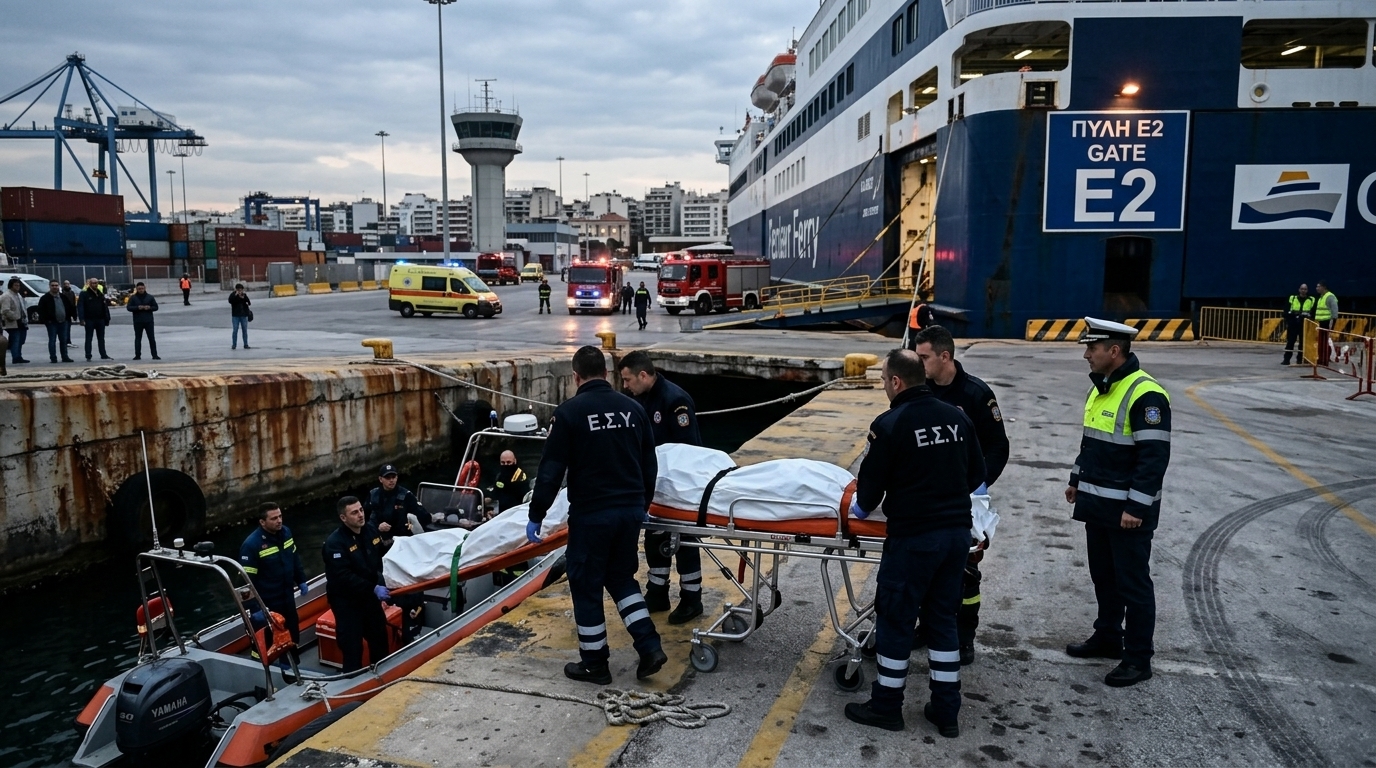
The discovery of a man's body in the sea area of Gate E2 at the port of Piraeus on Sunday morning has triggered an immediate response from authorities and sent a wave of concern through the local community. While the incident is initially being treated as a tragic isolated event, it opens a broader discussion on security, surveillance, and the social conditions prevailing in the country's largest port and one of the most significant maritime hubs in the Mediterranean.
Chronicle of the Discovery and Coast Guard Mobilization
According to official reports, the body was spotted by passers-by and port workers, who immediately alerted the Hellenic Coast Guard. Gate E2, which primarily serves ferry routes to Crete and the Cyclades, is one of the busiest points in Piraeus, especially during the summer months. The swift intervention of a Coast Guard patrol boat allowed for the recovery of the body, which was subsequently transported to a hospital for an autopsy and necropsy.
Initial information does not indicate obvious signs of foul play; however, the Central Port Authority of Piraeus has launched a preliminary investigation to clarify the circumstances under which the man ended up in the water. Identifying the body remains a priority, as no documents identifying the victim have been found so far.
Surveillance Gaps and the Role of Technology
This incident highlights a harsh reality: despite millions of euros invested in security systems and CCTV, "blind spots" still exist within port facilities. The use of Artificial Intelligence for motion detection in restricted zones or for identifying man-overboard situations are technologies implemented in modern ports abroad, but in Greece, their application remains fragmented.
- Need for thermal cameras along the entire length of the piers.
- Integration of AI systems that recognize unusual behavior in real-time.
- Improvement of lighting in low-traffic zones during nighttime hours.
The security of a port like Piraeus is not just about counter-terrorism or anti-smuggling; it is about protecting human life—be it passengers, workers, or vulnerable social groups who often seek refuge within port premises.
The Social Dimension: The "Invisible" of the Ports
Beyond the technical aspect of security, finding a body in a port is often linked to the plight of the homeless or migrants moving on the fringes of urban centers. Piraeus, as a gateway of entry and exit, is a gathering point for people in despair. The lack of adequate housing structures and social isolation often lead to accidents or suicides that go unnoticed until it is too late.
"The port is a living organism that never sleeps, but amidst its roar, loneliness and despair can become completely silent," says a sociologist studying the Piraeus area.
The state and local authorities must view this incident not just as a police report, but as a red flag for the need to strengthen social services in the wider area. Security is a holistic concept that includes the welfare and protection of the weakest links in our society.
Conclusions and Next Steps
The investigation into the causes of the unfortunate man's death continues. The results of the forensic examination will shed light on whether the cause was medical, accidental, or something more sinister. However, ethically and politically, the burden lies on the management of public spaces. Piraeus in 2026, with the technological capabilities at our disposal, should not allow any human being to disappear "invisibly" into its waters.