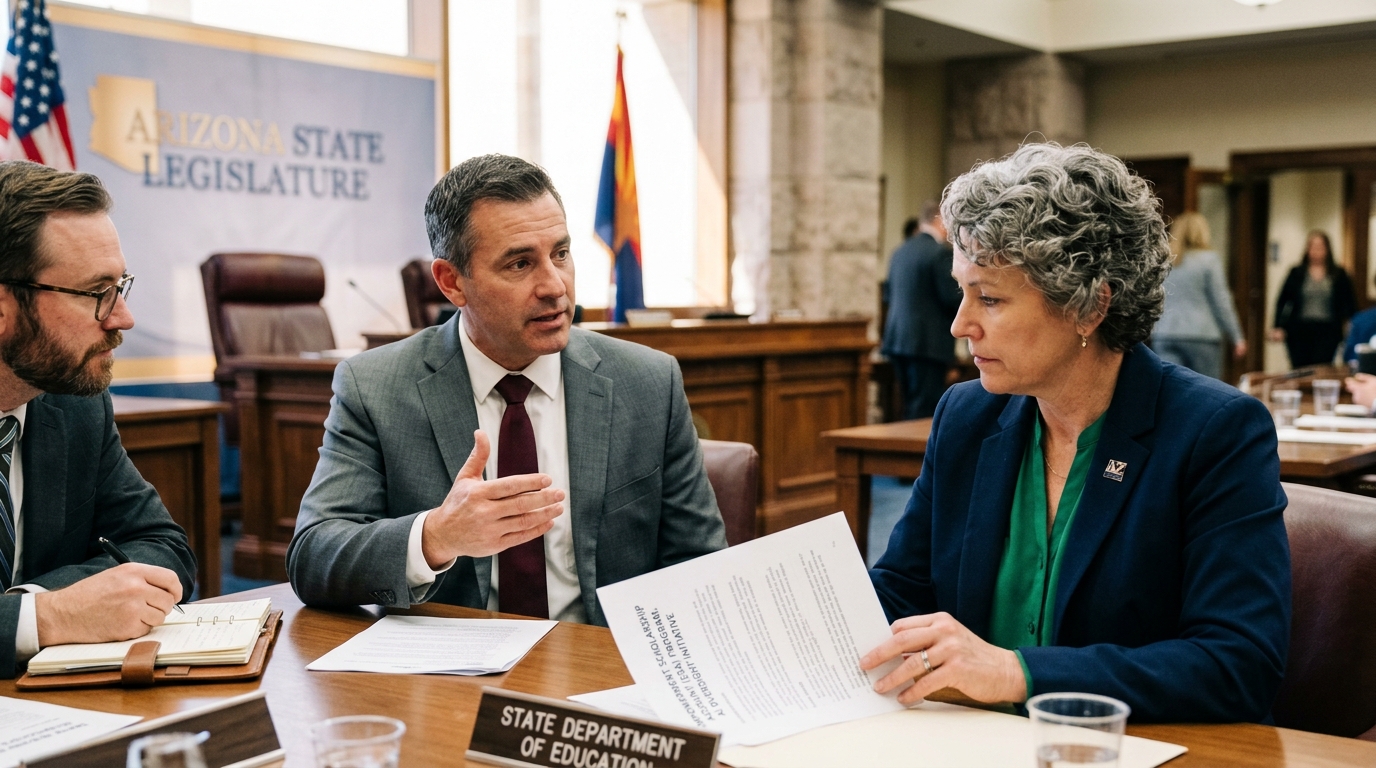
In a move that marks a significant turning point for public education administration in the United States, the Arizona Department of Education (ADE) has announced the full integration of Artificial Intelligence tools into the Empowerment Scholarship Account (ESA) program. This initiative, arriving amidst intense political debate over the future of school choice, promises to revolutionize how expenditures are audited and parental applications are approved.
Arizona's ESA program, which allows parents to use public funds for private tuition, homeschooling, and other educational expenses, has seen explosive growth in recent years. However, this success has been accompanied by administrative nightmares: thousands of receipts requiring manual review, months-long reimbursement delays, and mounting concerns over the potential misuse of funds. The introduction of AI is no longer a luxury but a necessity for the program's long-term viability.
Technological Upgrades and Audit Automation
The core of the new upgrade lies in a sophisticated system of Machine Learning and Optical Character Recognition (OCR). Until now, department staff had to examine each receipt individually to determine if the purchase of a tablet, a textbook, or a tutoring service complied with the program's strict guidelines. The new AI system can now "read" thousands of documents per second, cross-reference prices with market averages, and identify suspicious patterns indicative of fraud.
Tom Horne, the State Superintendent of Public Instruction, emphasized that utilizing AI will allow staff to focus on more complex cases, while routine approvals will become nearly instantaneous. "This isn't just about speed," Horne stated. "It's about protecting taxpayer dollars. AI doesn't get tired, and it doesn't overlook details that a human might miss after an eight-hour shift." This move is seen as a direct response to critics who have labeled the ESA program as a "black hole" for public money.
Political Pushback and Privacy Concerns
Despite the promises of efficiency, the move is not without its detractors. Arizona Democrats, who have traditionally opposed the expansion of ESAs, are raising alarms about the "black box" nature of the algorithms. There is a palpable fear that the system might unfairly reject legitimate educational expenses from lower-income families who may not have access to standardized receipts or sophisticated digital tools. The risk of "algorithmic bias" in educational funding is a new frontier for civil rights advocates.
Furthermore, the issue of student data privacy is at the forefront. Processing sensitive information regarding children's educational needs and learning disabilities through AI systems raises questions about data storage and access. Digital rights advocates warn that turning educational oversight into an automated process could further alienate parents from the state, replacing human empathy with cold, binary logic.
The Future of School Choice in the Digital Age
Arizona is currently serving as a massive laboratory for the rest of the nation. If the integration of AI into ESA accounts proves successful, other states adopting similar programs—such as Florida and Texas—will almost certainly follow suit. Technology offers a potential solution to the scaling problem: how to provide personalized education to hundreds of thousands of students without creating an unwieldy, expensive bureaucracy.
However, the challenge remains to preserve human judgment within the system. While AI can recognize a receipt, it cannot inherently understand the pedagogical value of a unique experience a parent chooses for their child. The balance between algorithmic rigor and educational flexibility will determine whether Arizona becomes a model for modernization or a cautionary tale of technocratic overreach. As the 2026 academic year approaches, all eyes will be on the ADE's dashboard to see if the silicon auditor can truly deliver on its promises.