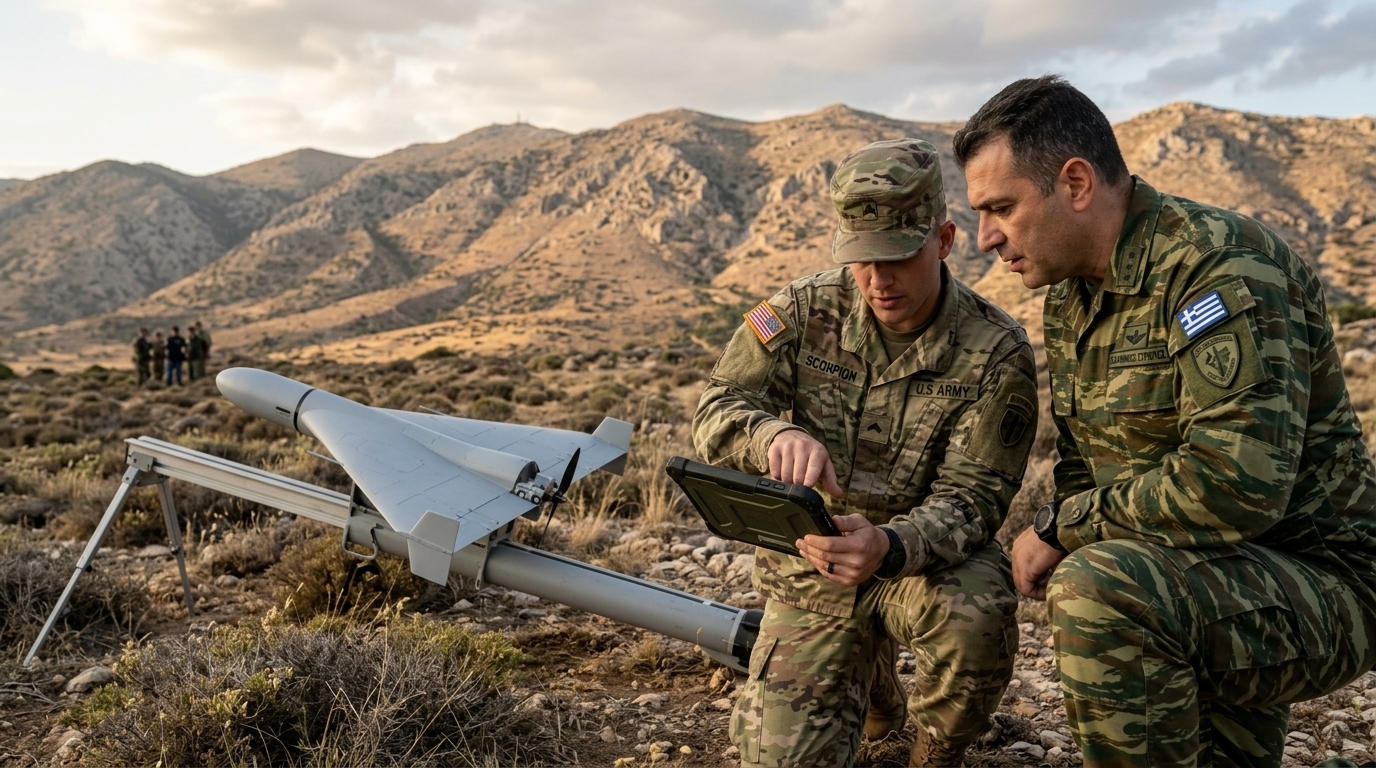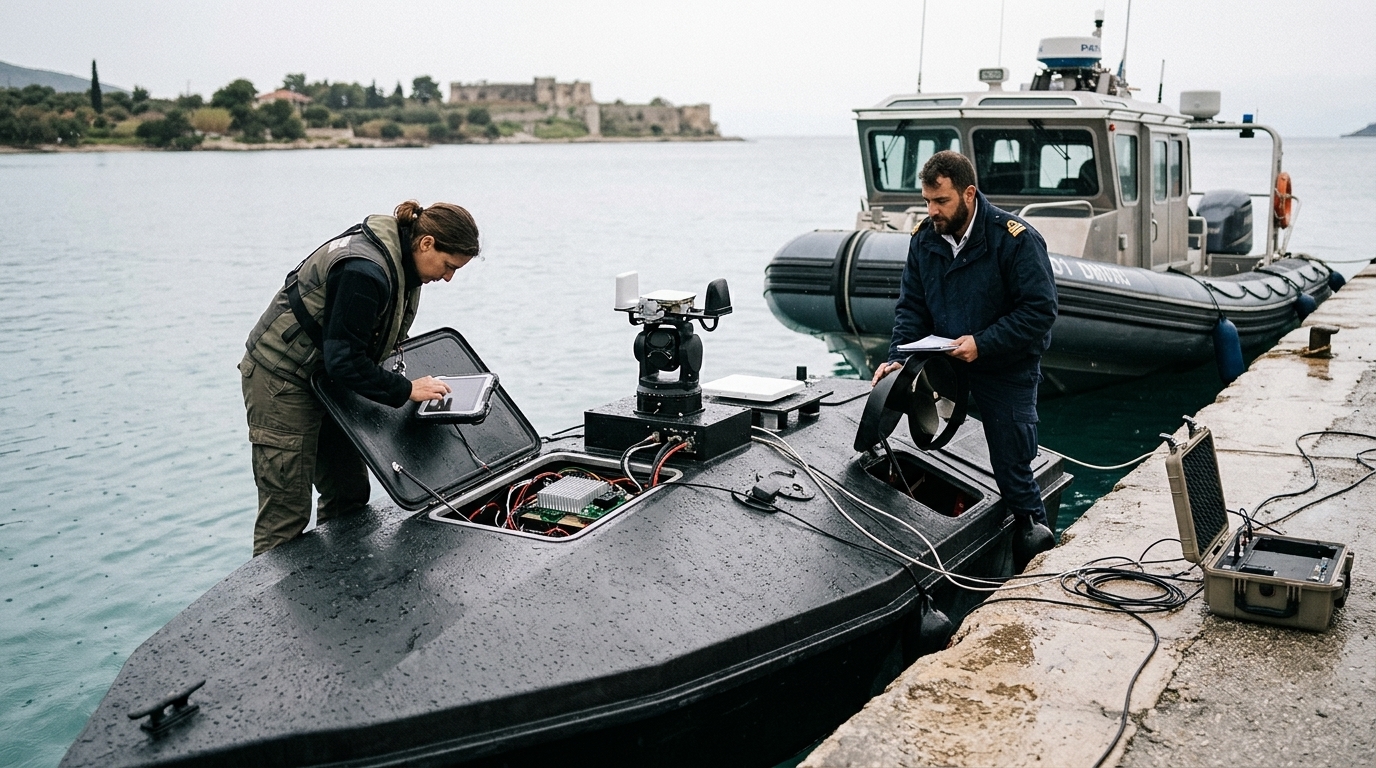
The recent discovery of an advanced Unmanned Surface Vessel (USV) in the turquoise waters of Lefkada was not merely a random maritime incident; it was an event that sent shockwaves through the Hellenic National Defense General Staff and the National Intelligence Service. What initially appeared to be an "orphan" craft was quickly revealed as a technological feat of a neighboring nation, which many analysts now describe as a "godsend" for the Greek armed forces. The opportunity to closely examine the architecture, communication systems, and software of such a craft offers a rare chance for reverse engineering and understanding the adversary's capabilities.
Technical Profile and Strategic Significance
The drone located near the islets of Kastos and Kalamos is far from a simple remote-controlled boat. It is a platform integrating cutting-edge technologies: from advanced GPS navigation systems resilient to jamming (anti-jamming) to high-definition sensors and satellite data transmission systems. Analyzing these systems allows the Greek side to identify the "blind spots" of this technology. As defense industry experts point out, possessing an intact specimen is far more valuable than any satellite imagery or human intelligence.
USV technology has radically altered the doctrine of naval warfare, as recently witnessed in the conflicts across the Black Sea. The ability of these vessels to operate silently, with a low radar signature, and to carry explosives or perform surveillance missions makes them an asymmetric threat to traditional naval units like frigates. The fact that such a vessel was found in the Ionian Sea—a region theoretically far from the "hot" Aegean front—raises serious questions about the scope of Turkey's testing and operational plans.
Political Pressure or Technical Failure?
One of the most intriguing aspects of the case is the theory that the drone did not reach Lefkada due to mechanical failure or signal loss but was steered there intentionally. Analysts from Fortune Greece and international observers suggest that its presence in Greek territorial waters could constitute a form of "hybrid pressure" against Athens. This display of power and the ability to penetrate areas of high tourist and strategic interest send a clear message regarding the capabilities of the Turkish defense industry.
- Software code analysis can reveal autonomous decision-making protocols.
- Examination of construction materials provides data on the vessel's stealth footprint.
- Studying the antennas uncovers the frequencies used for communication with the control center.
On the other hand, if it was indeed an accident, it exposes vulnerabilities in long-range control systems. In either case, Greece is called upon to handle this "gift" with care, avoiding escalation while fully exploiting the technological advantage unexpectedly handed to it.
The Future of Greek Defense Innovation
The Lefkada incident serves as a wake-up call for the domestic defense industry. While the neighboring country has invested billions in developing unmanned systems (UAVs and USVs), Greece is still in an acceleration phase. The need to create a national ecosystem producing similar technologies is now imperative. Greek companies and research centers are already working on programs like "Archytas," but the speed of implementation must increase.
"Technology is no longer a supplement to power; it is power itself. Whoever controls the algorithms in the seas also controls the geopolitical balances," notes a high-ranking Naval officer.
In conclusion, the Lefkada sea drone is a mirror of 21st-century challenges. Greece has the opportunity to turn a violation of its sovereignty into a strategic knowledge advantage. The silent battle of the laboratories following the recovery of the vessel will largely determine the country's readiness against future threats, where wars will be fought not just with iron and fire, but with bytes and invisible signals.