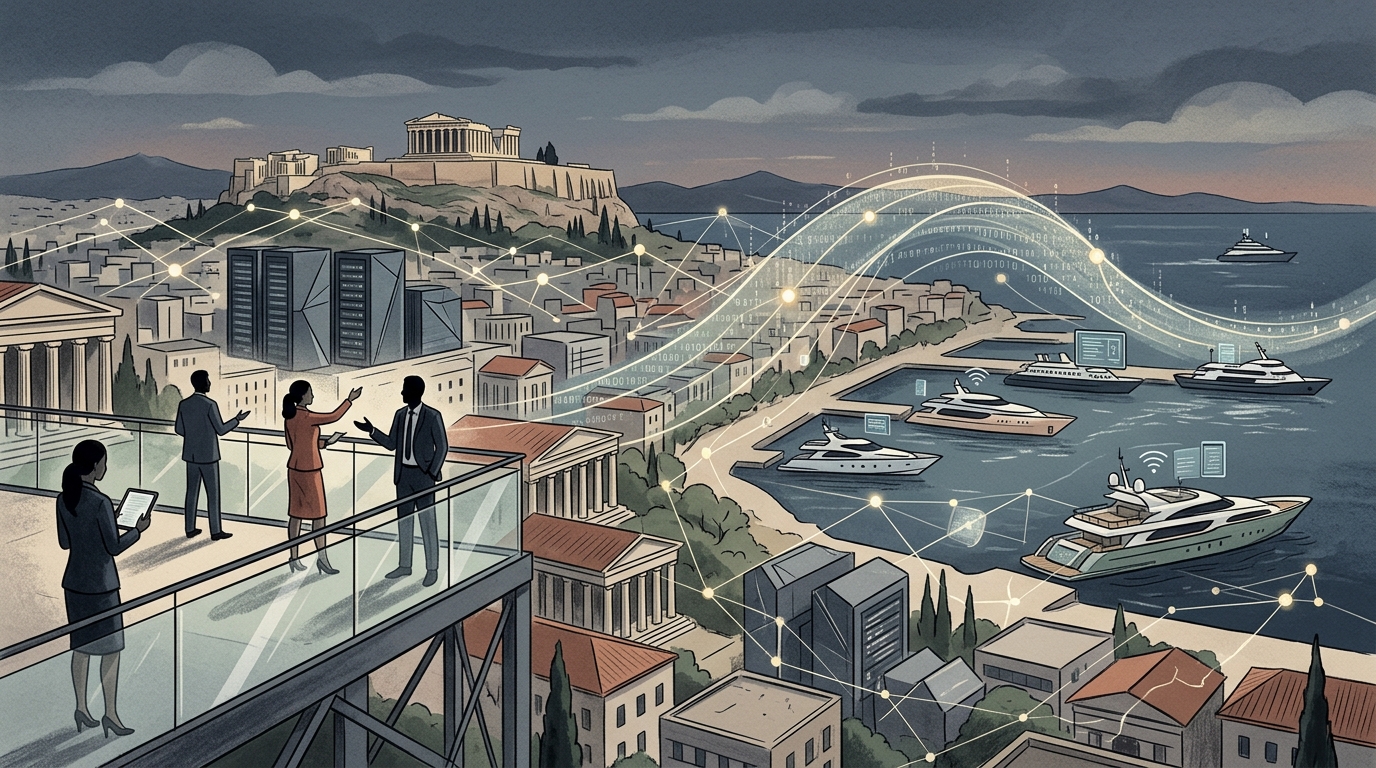
In an era where technology is redefining every facet of the global economy, Greece, the world's preeminent maritime power, could no longer afford to remain tethered to the practices of the past. Speaking from the port of Lavrio, the Minister of Maritime Affairs and Insular Policy, Vassilis Kikilias, delivered a clear message: digital transformation is no longer an option, but a "national necessity." The initiative presented aims to fully overhaul maritime tourism, a sector that serves as the backbone of the blue economy but has for decades remained trapped in labyrinthine bureaucratic processes.
The End of Paper: From e-Charter to Digital Port Authorities
The heart of this new reform lies in the digitalization of procedures for yachting and leisure craft. Until today, a boat owner or a tourist wishing to charter a vessel in Greece faced a deluge of paperwork. Physical presence at port authorities, physical stamps, handwritten charter agreements, and endless waiting times were major hurdles for the industry's growth. With the introduction of the e-Charter and the digital manifest, the government seeks to move the entire process to a mobile screen or a computer.
According to Mr. Kikilias, this transition will allow for real-time vessel monitoring, reducing waiting times from hours to just a few minutes. "We cannot talk about high-quality tourism when a visitor paying thousands of euros to enjoy Greek waters is forced to wait in a queue for a stamp," he noted pointedly. The interconnection of the Ministry of Maritime Affairs' systems with the Independent Authority for Public Revenue (AADE) and Gov.gr is the next big step to ensure transparency and combat tax evasion in the charter sector.
Strategic Importance for the National Economy
Maritime tourism contributes significantly to the Greek GDP, yet competition from neighboring countries like Turkey, Croatia, and Italy is intense. Simplifying procedures is not just a matter of convenience; it is a matter of survival in the international arena. As Ministry officials analyzed, digitalization will make the Greek flag more attractive to shipowners, encouraging the registration of more vessels in the Greek registry.
- Operational Cost Reduction: Yacht management companies will save thousands of man-hours previously wasted on bureaucratic chores.
- Revenue Increase: Faster service means more charters per season and higher customer satisfaction.
- Transparency: Digital tracking makes the use of illegal charter agreements impossible, protecting legitimate professionals.
Mr. Kikilias emphasized that digital transformation also serves as a means of social cohesion. In our remote islands, where access to central services is difficult, digital platforms enable local professionals to operate on an equal footing with those in Athens or Piraeus.
Safety and Environmental Protection
Beyond the economic dimension, digitalization brings a revolution to the field of safety. The new system will allow the Hellenic Coast Guard to have a complete and immediate picture of which vessels are in which area, who is on board, and whether safety regulations are being met. In case of an emergency or severe weather, the ability for immediate communication and tracking through digital data can save lives.
"The sea is our strength, but technology is the tool that will allow us to utilize it with respect and efficiency in the 21st century," the Minister stated.
Furthermore, the reduction of paper use and the optimization of vessel routes through digital applications contribute to the "green" footprint of shipping. Greece aspires to become a model for "smart" and "green" port management, starting with strategic hubs like Lavrio, which now serves as a pilot for the rest of the country.
Challenges and the Future
Despite the optimism, the path is not without obstacles. The need for training port authority personnel, upgrading telecommunications infrastructure on small islands, and ensuring cybersecurity are critical parameters. The government has earmarked funds from the Recovery and Resilience Facility (RRF) to finance these projects, believing that the investment in technology will yield multiple benefits in the coming years.
In conclusion, Vassilis Kikilias' move to place digital transformation at the top of the Ministry's agenda represents a necessary adaptation to the new reality. If Greece manages to combine its unique maritime tradition with digital innovation, its maritime tourism will be able to enter a new golden age, offering safety, quality, and prosperity.