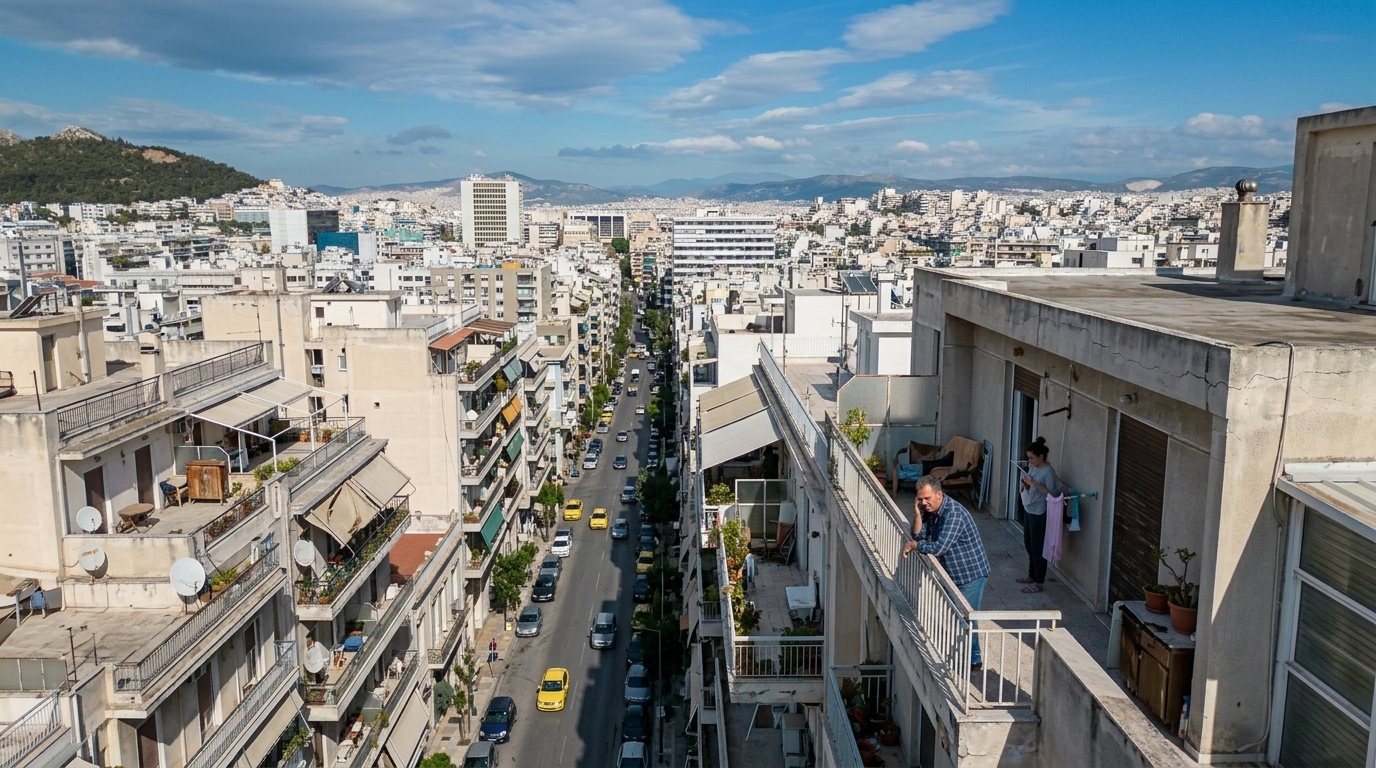
Greece is facing one of the most painful social and economic challenges of the post-bailout era: a profound housing crisis. According to the latest Eurostat data, the country holds the negative distinction of having the highest percentage of the population overburdened by housing costs in the European Union. While Europe as a whole grapples with rising interest rates and inflation, the problem in Greece has taken on structural characteristics, threatening middle-class stability and the future of the younger generation.
The Anatomy of Overburden: Spending Over 40% of Income on Shelter
Eurostat's 'Housing Cost Overburden Rate' is a stark indicator of the local reality. In Greece, more than 27% of the total population—and over 70% of tenants in urban areas—spend more than 40% of their disposable income on housing expenses, including rent, utilities, and heating. This figure is the highest in the EU, standing in sharp contrast to the European average, which hovers around 9%.
The root of the problem lies not only in skyrocketing rents, which have surged by 30-50% over the last five years in parts of Athens and Thessaloniki, but also in the stagnation of real wages. Despite increases in the minimum wage, the purchasing power of Greeks remains among the lowest in the Eurozone, making even a modest rent unaffordable for the average household.
'Touristification' and the Impact of Short-Term Rentals
A primary driver of this crisis is the unregulated expansion of short-term rental platforms like Airbnb. Entire neighborhoods in central Athens, such as Koukaki, Petralona, and Neos Kosmos, have been transformed into 'hotel zones,' displacing long-term residents. The supply of housing for long-term lease has shrunk dramatically, leading to a market cannibalization where students and young families are forced to compete with tourist demand.
Concurrently, the 'Golden Visa' program, while attracting capital to the real estate market, is blamed for artificially inflating property prices, which in turn drives up rents. Recent increases in investment thresholds in 'hot' areas are viewed by many analysts as a delayed measure, implemented only after significant damage to housing affordability had already occurred.
Policy Interventions and the Social Housing Bet
The issue has now reached the highest levels of European policy-making, with the Eurogroup extensively discussing social housing strategies. The Greek government has launched programs like 'Spiti Mou' (My Home), offering low-interest loans to young people. However, critics argue that such measures stimulate demand without increasing supply, potentially leading to further price hikes.
Experts suggest that a solution requires a multi-level strategy:
- Utilizing thousands of vacant public and municipal properties for social housing projects.
- Providing tax incentives to landlords to transition properties from short-term to long-term leases.
- Stricter regulations on the number of days a property can be listed on platforms like Airbnb, based on regional saturation.
- Accelerating the renovation of older building stock through expanded green energy programs.
Conclusion: A Ticking Time Bomb at the Foundation of Society
The housing crisis in Greece is more than just an economic statistic; it is an existential threat to the country's social fabric. When a young worker must allocate 60% of their salary just to pay rent, personal growth, family formation, and general consumption are put on hold. The transition from a nation of homeowners to a nation of besieged tenants requires bold regulatory interventions that prioritize the right to housing over the short-term profitability of investment funds.