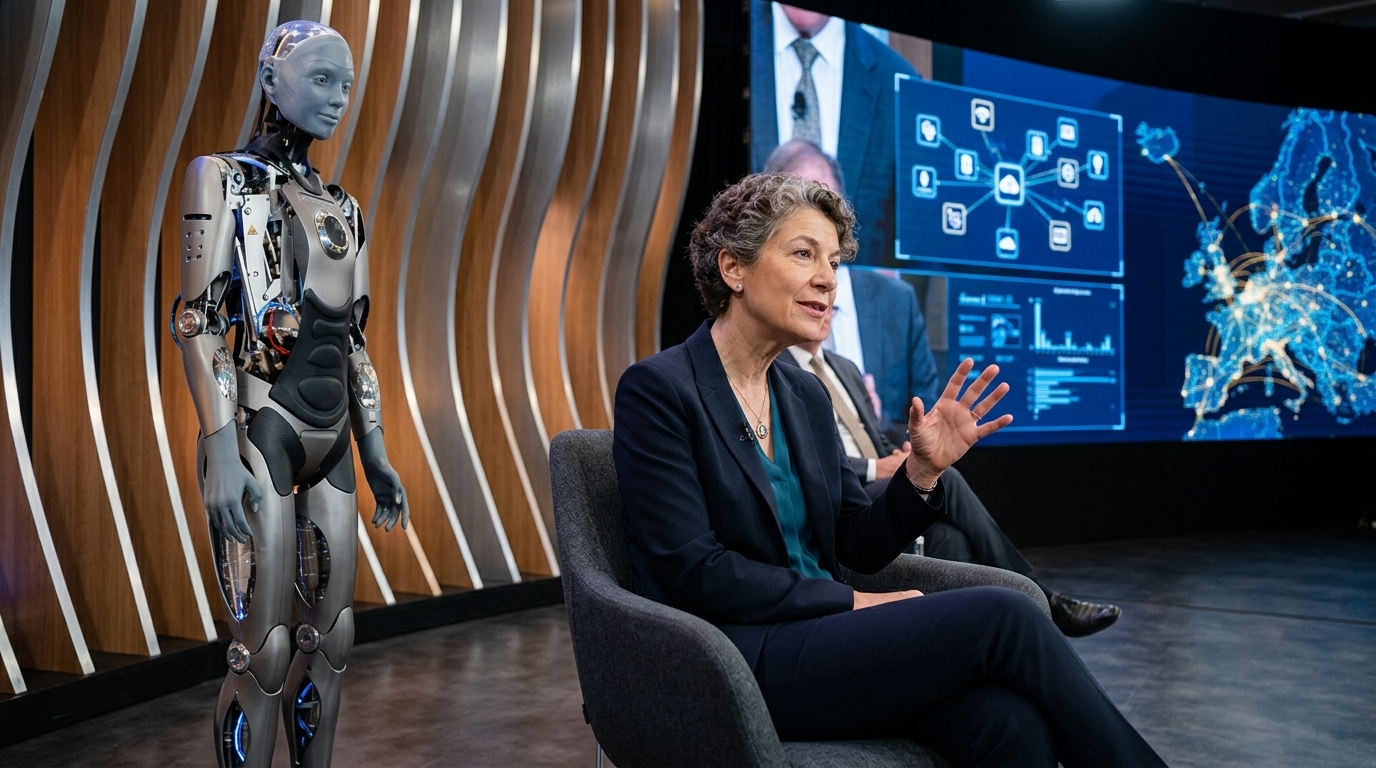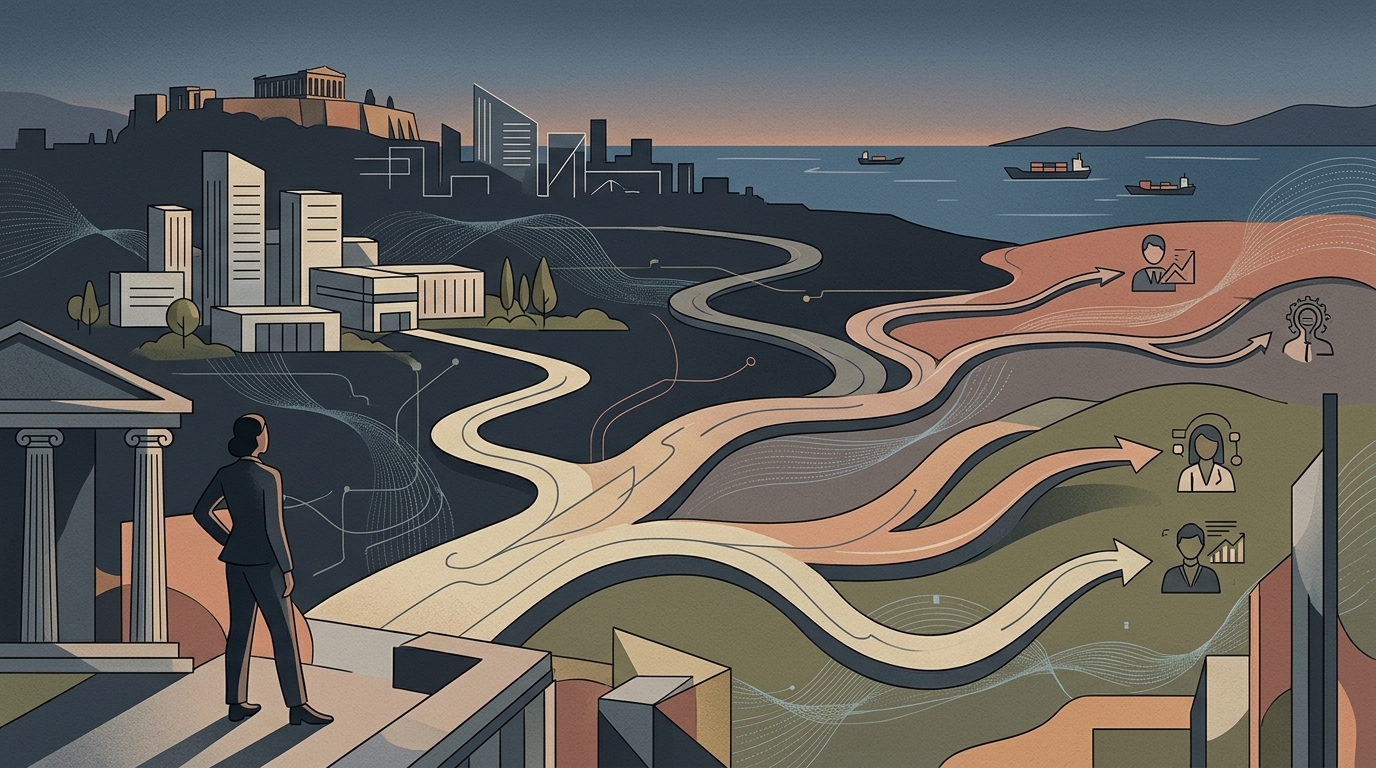
The period for filling out the "Michanografiko" (the national university application form) has traditionally been a time of anxiety and strategic planning for thousands of Greek students. However, in 2026, this process is no longer just about admission cut-off scores or the prestige of specific departments; it is about a deep understanding of a world rapidly transforming under the influence of Artificial Intelligence (AI). In a recent interview with APE-MPE, George Doukidis, Professor at the Athens University of Economics and Business (AUEB), offers an insightful look at how Generative AI is overturning established norms in professions once considered "unshakeable" and how this should influence academic choices.
The Shift from Knowledge to Application
According to Professor Doukidis, AI is not merely an additional tool but a force changing the very nature of work. For candidates currently choosing their path, the message is clear: rote memorization and static knowledge are losing their value. AI can now compose texts, write code, analyze legal documents, and suggest medical diagnoses with a precision that often exceeds human speed.
This means that professions such as law, accounting, computer science, and engineering are not disappearing; they are being transformed. A future lawyer will not be paid to search for case law—an algorithm will do that—but for the ability to synthesize case strategy and manage the human dimension of justice. Professor Doukidis emphasizes that the university application process must reflect this new reality, steering young people toward departments that promote critical thinking and synthetic ability.
The New Skills: Beyond Technology
One of the most interesting aspects of the professor's analysis is the emphasis on "human" skills (soft skills). Paradoxically, the more technology permeates our lives, the more valuable the traits that AI struggles to mimic become. Professor Doukidis highlights several key areas:
- Emotional Intelligence: The ability to understand and manage human emotions in a professional environment.
- Ethics and Deontology: Making decisions that consider social and moral parameters, something algorithms cannot fully grasp.
- Adaptability: The individual's ability to "learn how to learn," as technological shifts will require constant upskilling.
In this context, interdisciplinary studies are gaining ground. A combination of economics with computer science, or philosophy with digital humanities, can provide a more solid foundation than a one-dimensional specialization.
The Challenge for Greek Universities
Professor Doukidis' analysis also places responsibility on the Greek educational system. If the application choices are changing, curricula must change as well. Simply introducing an AI course is not enough. Technology must be integrated into every aspect of education. Students must learn to use AI as a "co-pilot" in their work while developing the ability to audit and challenge the results produced by the machine.
"AI will not replace humans, but the human who knows how to use AI will replace the one who does not," the professor notes.
This statement encapsulates the essence of the new era. Candidates should not fear technology but incorporate it into their toolkit, regardless of whether they study medicine, philology, or business administration.
Conclusions for Candidates
In conclusion, Professor Doukidis urges young people not to choose departments based on what was true ten years ago. The labor market of 2030, when this year's candidates will be graduating, will be radically different. Choice should be based on a passion for the subject matter, but also on a willingness for continuous evolution. The 2026 university application is the first act of a career that will be characterized by coexistence with machine intelligence.