As we navigate through 2026, the global labor market is witnessing a seismic shift, with Generation Z at the epicenter of this transformation. This generation, which came of age with smartphones as their primary interface with the world, is no longer satisfied with merely surviving within a corporate structure; they are demanding a radical redefinition of employment terms. Recent analyses show that young professionals in Greece and abroad are increasingly turning toward flexible work, Artificial Intelligence (AI) integration, and the cultivation of alternative income streams, effectively challenging the traditional model of a lifelong career with a single employer.
AI as a Productivity Partner, Not a Rival
For Gen Z, Artificial Intelligence is not a job-stealing specter but an indispensable partner. While older generations may view AI with skepticism or trepidation, professionals under 30 are seamlessly integrating it into their workflows to automate repetitive tasks, enhance creativity, and accelerate output. In Greece, where digital transformation has hit a high gear, young workers are leveraging generative AI tools to bridge skill gaps and compete on a global scale.
The use of AI allows a young professional to manage multiple projects simultaneously by drastically reducing the time required for copywriting, coding, or graphic design. This has led to the rise of 'solopreneurship'—one-person businesses where technology acts as a full-fledged support team. This capability grants Gen Z the most coveted asset: time. They reinvest this time into personal growth, mental health, or additional revenue-generating activities.
Flexibility as a Non-Negotiable Requirement
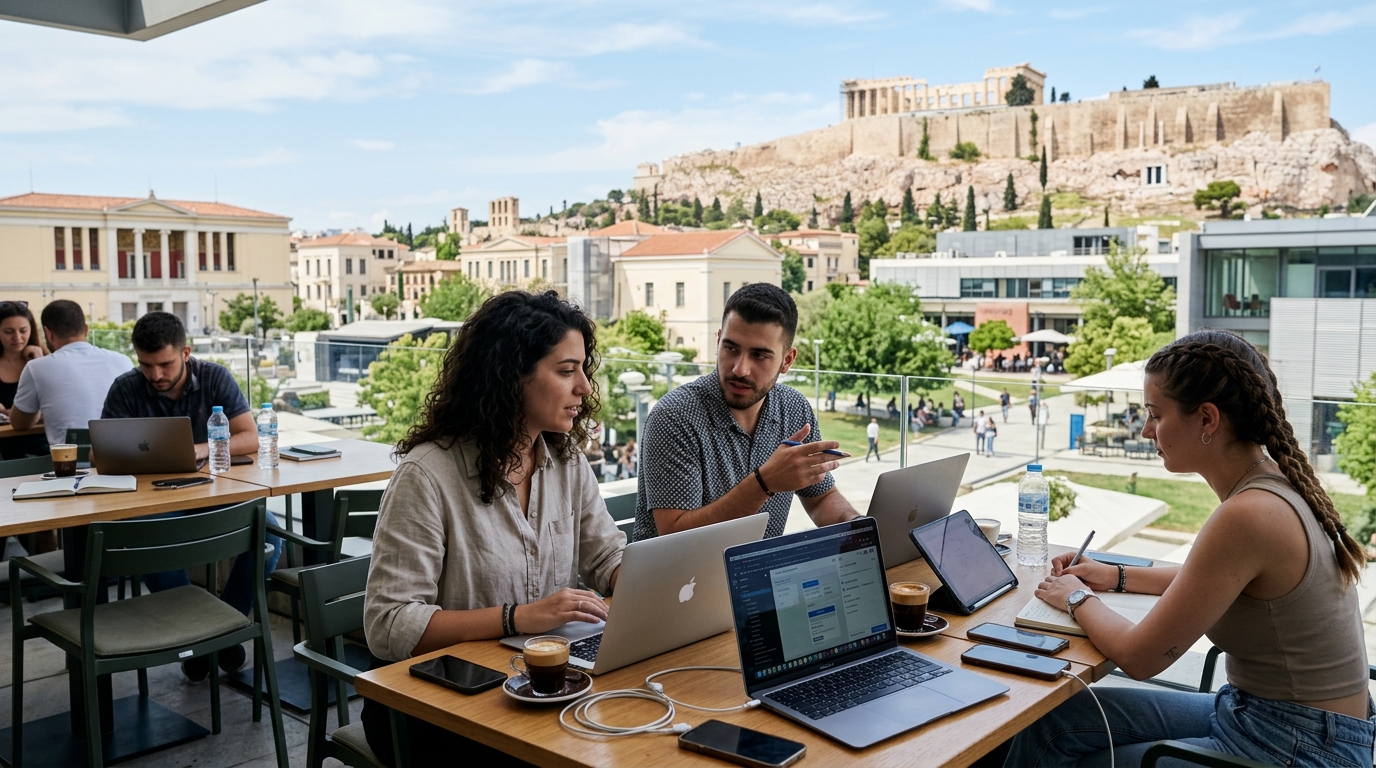
The traditional 9-to-5 office grind is increasingly viewed as an obsolete relic by the younger workforce. The demand for remote or hybrid work models is not just about convenience; it stems from a deeper need for autonomy and mental well-being. Influenced by global movements like 'Quiet Quitting' and the pursuit of a sustainable work-life balance, Greek youth are seeking employers who respect their personal boundaries and offer flexibility in how and where they work.
- A strong preference for Remote-First corporate policies.
- Performance evaluation based on output rather than hours logged.
- Prioritization of mental health and burnout prevention.
This trend is forcing Greek businesses, which have traditionally relied on physical presence as a metric of loyalty, to adapt. Those that refuse to offer flexibility are facing a renewed 'Brain Drain,' as talented individuals pivot toward international firms that allow them to work from Athens or the Greek islands for employers based in London, Berlin, or New York.
The Proliferation of Side Hustles and Portfolio Careers
The economic instability inherited by Gen Z from successive global crises has fostered a mindset of diversification. The 'side hustle' is no longer just a hobby for extra pocket money; it is a strategic choice for financial resilience. From dropshipping and affiliate marketing to content creation and freelancing on platforms like Upwork, young Greeks are building diverse income portfolios.
"We don't want to depend on a single salary that could vanish tomorrow. Technology allows us to have five different income streams from our bedroom," says a 24-year-old freelancer.
This mentality is altering economic dynamics. Gen Z isn't just investing in traditional assets; they are investing in their 'personal brand.' They understand that in the digital age, attention is the new currency. By building online communities, they create platforms that can be monetized in various ways, reducing their reliance on the traditional job market and providing a safety net that previous generations lacked.
Looking Ahead: Challenges and Opportunities
Gen Z's shift toward flexibility and AI is not a fleeting trend but the blueprint for a new social contract of work. However, this new reality is not without its hurdles. The lack of traditional stability can lead to heightened anxiety, and the isolation of remote work can impact social cohesion and mentorship. Nevertheless, this generation's ability to adapt and innovate remains the strongest guarantee for the evolution of the Greek economy in the digital era. The challenge for businesses and policymakers is to understand these shifting values and create a framework that enables this new breed of professionals to thrive, rather than attempting to confine them to the rigid structures of the past.