In the shadowy corridors of modern espionage, weapons are no longer just bullets and wiretaps; they are pixels and algorithms. The recent revelation of the attempted deception of Thanos Dokos, the Prime Minister's National Security Advisor, through highly advanced deepfake technology, is not merely an isolated cyberattack. It is a clarion call for a new era where truth is negotiable and diplomacy is conducted within a minefield of digital illusions.
The Anatomy of a Digital Ruse
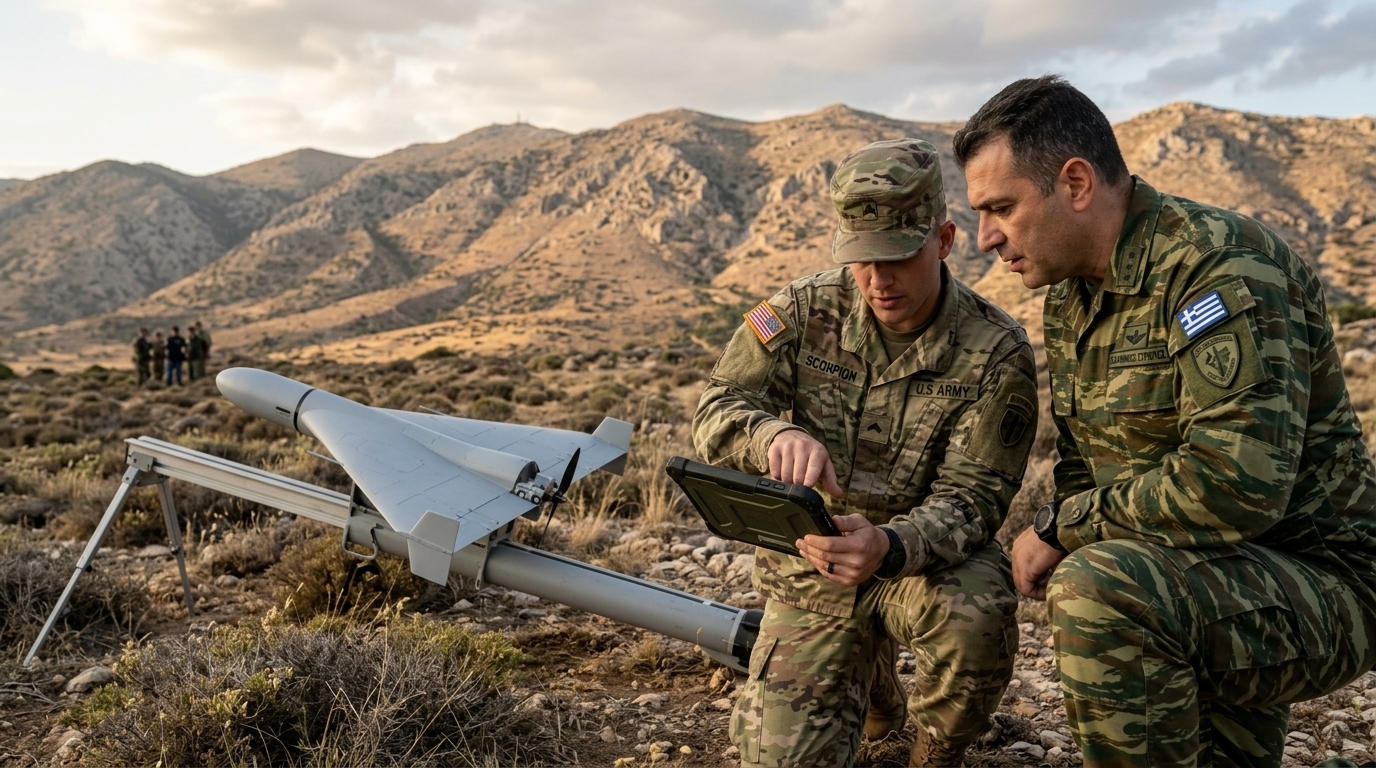
It began with a request for an urgent video call. On the other side of the screen appeared Mr. Dokos's Ukrainian counterpart. The image was convincing, the voice familiar, and the background environment seemed perfectly consistent with a government office in Kyiv. However, as the conversation progressed, something began to trigger the Greek official's seasoned intuition. The questions were not about general geopolitical analyses but focused with suspicious persistence on specific weapon systems and, most notably, the use and capabilities of Greek drones.
The moment of clarity came when the "Ukrainian official" began requesting details regarding the location and operational readiness of specific units. Recognizing that the flow of conversation was deviating from established diplomatic protocols, Mr. Dokos maintained reservations. A subsequent investigation by the EYP (Hellenic Intelligence Service) confirmed his fears: he was not speaking with his counterpart, but with a digital avatar—a product of generative AI designed to extract classified information.
EYP and the New Security Architecture
The mobilization of the Hellenic Intelligence Service was instantaneous. Agency analysts determined that the attack bore the hallmarks of a "State-Sponsored" operation, with the technical expertise pointing toward Russian hybrid warfare centers. The use of deepfakes at the national security level changes the calculus entirely. We are no longer dealing with amateurish TikTok parodies, but with strategic deception tools capable of triggering diplomatic crises or exposing military secrets.
Reports suggest that the EYP has already begun forming a specialized anti-deepfake unit tasked with training government officials to recognize digital anomalies. The details that "betrayed" the fake Ukrainian were subtle: an imperceptible lag in lip-syncing and an unnatural eye movement pattern that only a trained eye—or a sharpened intuition—could detect. This incident underscores that while AI can mimic form, it often struggles with the spontaneous nuances of human interaction.
Drones: The Eye of the Storm
Why did the intruders choose drones as the central theme of their trap? The answer lies in the strategic importance unmanned aerial vehicles (UAVs) have acquired in modern conflict, as vividly demonstrated in Ukraine. Greece, currently developing its own drone ecosystem (such as the "Archytas" and "Grypas" projects), is a prime target for foreign agencies seeking to gauge the level of Greek deterrent power in the Aegean.
This operation proves that an adversary no longer needs to physically breach borders to strike a nation. They can do so through a laptop screen, exploiting the trust inherent between allies. The Dokos case serves as a definitive case study on how human judgment remains the final line of defense against unchecked technology. It highlights a shift from traditional signals intelligence (SIGINT) to a more psychological form of cyber-warfare.
Protection in a Post-Truth Era
This incident highlights the urgent need for new communication protocols. Traditional video calls, even via encrypted applications, are no longer considered fully secure for the exchange of sensitive information. The implementation of "digital watermarking" and the requirement for multi-factor authentication during live calls are among the measures being considered by NATO and EU security experts.
However, the broader issue remains the psychological impact. When leaders can no longer trust their own eyes, diplomacy risks being paralyzed by pervasive suspicion. Greece, as a pillar of stability in the Eastern Mediterranean, must lead the way in establishing a European framework for protection against digital interference. Ensuring that artificial intelligence remains a tool for progress rather than a Trojan horse for national sovereignty is the defining challenge of our decade.