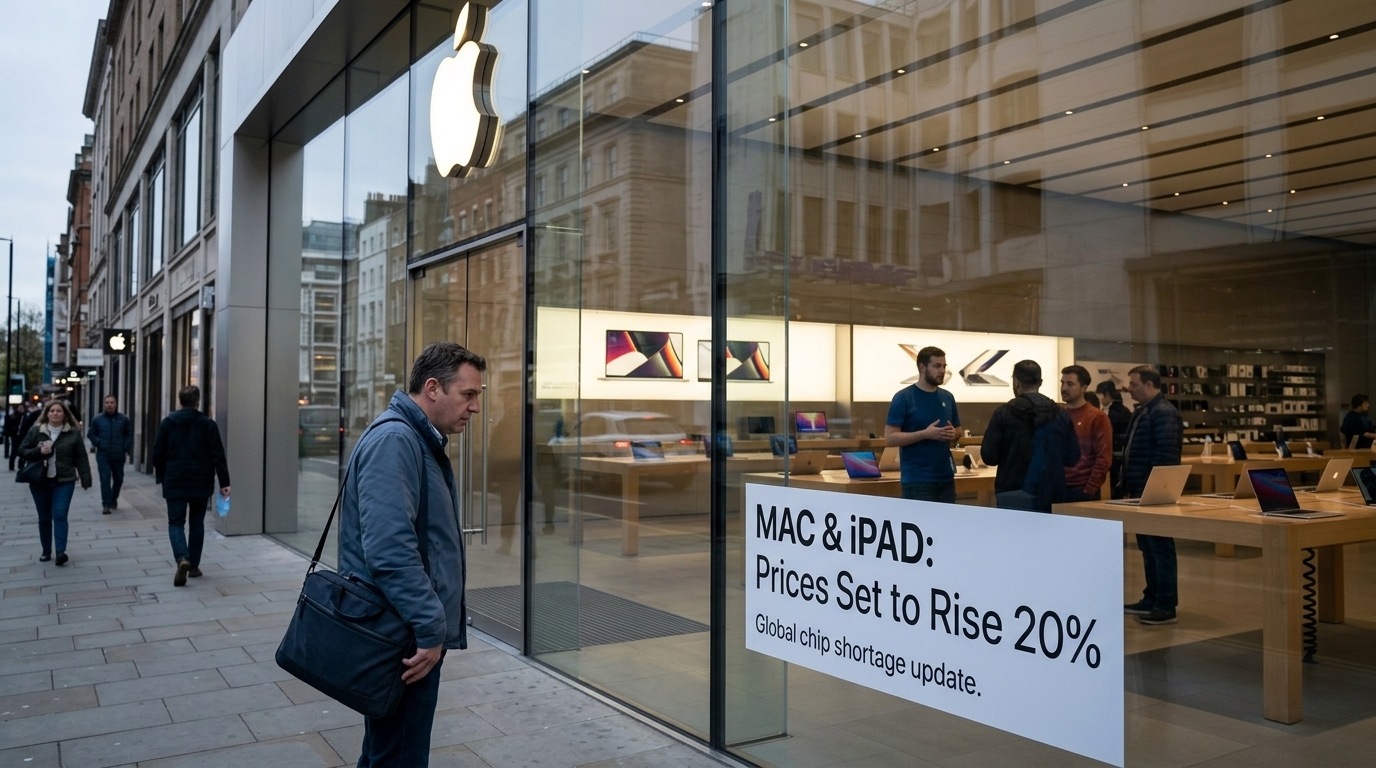
The era of "affordable" high-end technology seems to be drawing to a close as the Cupertino tech giant prepares for one of the most significant price adjustments in its history. According to recent market reports and analyst data, Apple is poised to increase the prices of MacBooks and iPads by as much as 20%, a move directly attributed to the explosive growth of Artificial Intelligence (AI) and the subsequent fierce competition for semiconductor resources.
The Battle for Memory: HBM and Data Center Dominance
The bottleneck isn't just in the central processors but primarily in memory components. The rise of Large Language Models (LLMs) requires vast amounts of High Bandwidth Memory (HBM). As companies like Nvidia and Microsoft sweep the market to equip their massive data centers, availability for consumer electronics manufacturers has plummeted. Despite its legendary bargaining power, Apple is facing production cost increases that it can no longer absorb internally.
This shortage is not a temporary glitch but a structural shift in the global supply chain. Memory chip manufacturers like Samsung and SK Hynix are reallocating their production lines from traditional DRAM and NAND—used in laptops and tablets—toward high-margin AI solutions. This creates a "starvation" effect in the consumer device market, driving component prices to record highs.
Impact on the Product Lineup
The price hikes are expected to hit the MacBook Pro and iPad Pro models hardest, as these devices utilize the most advanced M-series silicon. Specifically:
- MacBook Pro: Prices could see an uptick of $300 to $500 on high-end configurations.
- iPad Air and Pro: The transition to OLED displays combined with the increased cost of M4 chips is leading to price adjustments in the 15-20% range.
- Mac Studio and Mac Pro: Professional workstations will likely see the steepest increases, as the RAM in these machines has effectively become a premium commodity.
"This isn't just inflation. It's the redefinition of hardware value in a world where silicon is the new oil," says a leading industry analyst.
Supply Chain Geopolitics
Behind these increases lies a complex geopolitical chess game. Apple's dependence on TSMC in Taiwan remains its greatest vulnerability. As the US and China vie for semiconductor supremacy, the supply chain is becoming both more expensive and more fragmented. While Apple is diversifying production to India and Vietnam, the fabrication of cutting-edge nodes remains geographically concentrated, leaving the company exposed to regional instability and logistical bottlenecks.
The Consumer Dilemma
For the average consumer, this news comes at a time when purchasing power is already under strain from broader economic pressures. While Apple relies on its intense brand loyalty to maintain margins, the "Apple Tax" is reaching a tipping point. Professionals who rely on these tools for creative work may find themselves extending the lifecycle of their current devices rather than upgrading, potentially slowing down the replacement cycle that Apple relies on for growth.
In conclusion, the AI revolution has a hidden cost that the end-user is now being asked to pay. While AI promises to make our digital lives more efficient, the infrastructure supporting it is making the tools required to access it more expensive than ever. As the leader of the premium hardware market, Apple is setting a precedent that other manufacturers will almost certainly follow in the coming year.