In the heart of the Cyclades, where the Aegean blue meets the rugged stone terraces known as "aimasies," Andros is attempting a leap into the future. This is not merely a tourism campaign; it is a profound technological shift redefining our relationship with architectural heritage. The "Andros AI" project, recently unveiled, serves as a blueprint for how artificial intelligence can act as a guardian of history, transforming the visitor experience from passive observation into active engagement.
Digital Preservation of the Captains' Mansions
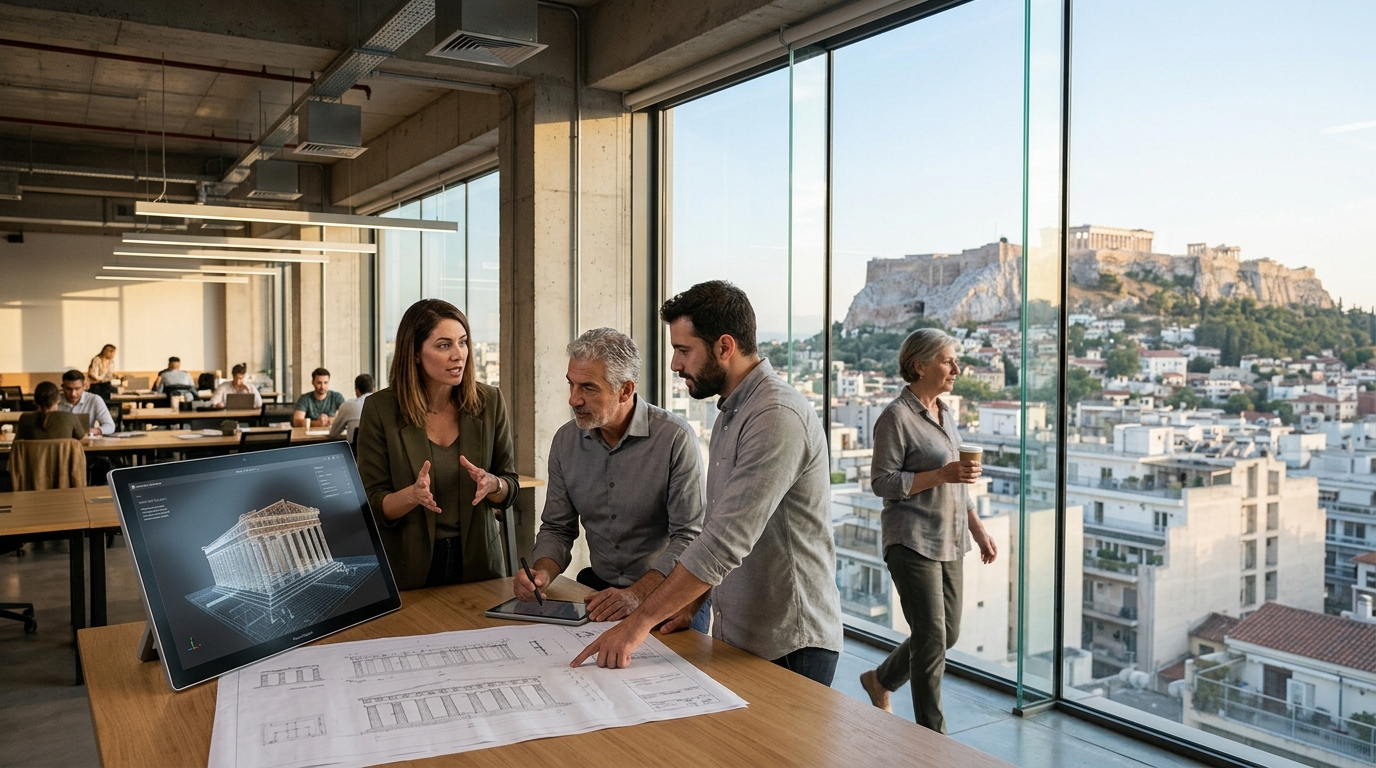
Andros possesses a unique architectural identity, shaped by the wealth of shipping dynasties and the folk wisdom of dry-stone walling. The neoclassical mansions of Chora, the famous "kapetanospita," are monuments of a bygone era, yet they are threatened by time and climate change. The use of AI in Andros begins with 3D scanning and digital archiving of these structures.
Through machine learning algorithms, researchers can now predict material erosion and suggest optimal restoration methods that respect original materials. "We aren't just digitizing buildings; we are digitizing the island's soul," project leaders state. These "digital twins" allow architects and urban planners to simulate interventions before a single tool touches the stone, ensuring that new construction harmonizes perfectly with the historical landscape.
Augmented Reality: A Window into the Past
For the visitor, AI technology translates into an unprecedented exploration experience. Imagine walking through the alleys of Chora and, via an AR app powered by generative AI, seeing the Square of the Unknown Sailor as it appeared in 1930. The AI doesn't just replicate the image; it recreates the sounds, stories, and voices of the people who lived there.
- Personalized itineraries based on user interests (e.g., architecture, hiking trails, local cuisine).
- Interactive digital guides answering real-time questions about each building's history.
- Automated translation and explanation of local idioms and architectural nomenclature.
This approach dismantles the "mass tourism" model and promotes "quality knowledge tourism." The visitor is no longer a stranger but a participant in local culture, educated by technology itself to respect and appreciate the environment hosting them.
Sustainable Tourism and Flow Management
The greatest challenge for Greek islands in 2026 remains overtourism. Here, AI takes on the role of a "traffic controller." Through analytical models, Andros AI can predict peak periods and redirect visitors to lesser-known but equally significant sites, such as inland monasteries or the archaeological ruins of Paleopolis.
"Technology is the tool that allows us to remain authentic in a homogenizing world," says a local tourism official.
Resource management—from water to energy—is also optimized through smart systems. Hotels and accommodations within the network use AI to reduce their environmental footprint while providing superior services. Andros does not aim to become a "high-tech" resort, but a "smart" island using technology to shield its natural and architectural beauty.
The Social Dimension: From Locals to the World
The most crucial element of the venture is the involvement of the local community. The AI is fed by oral testimonies from the island's elders, photographs from family archives, and the expertise of local stonemasons. This "democratization" of information ensures that technology is not imposed from the outside but emerges from the needs of Andros itself.
In conclusion, Andros is leading the way for Greece in the coming decade. Architectural heritage is not a static fossil but a living organism that, with the help of artificial intelligence, can breathe again, tell its story, and serve as the pillar of sustainable and ethical tourism development.