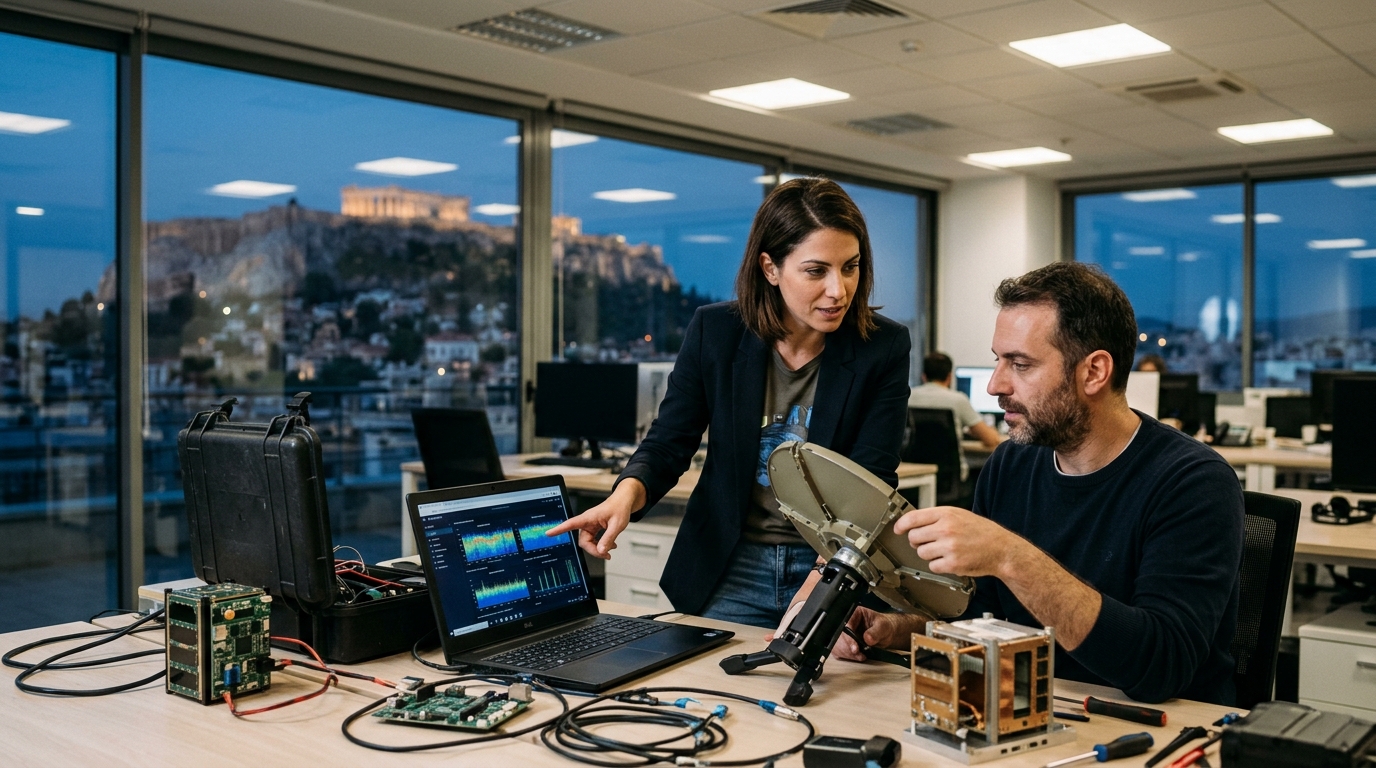
The Artificial Intelligence (AI) revolution is no longer facing just algorithmic hurdles; it is confronting hard physical limits. The insatiable thirst of Large Language Models (LLMs) for computational power has pushed terrestrial power grids to their breaking point. In this context, a new generation of startups and tech giants is exploring a radical solution: moving data centers into space. An idea once relegated to the realm of science fiction is transforming into a realistic business strategy to address the energy and environmental costs of AI infrastructure.
The Energy Deadlock and the Solar Solution
On Earth, operating a modern data center requires vast amounts of energy, not just to power the processors, but primarily to cool them. AI has multiplied these requirements, with Nvidia’s GPUs consuming power comparable to entire cities. Space offers a unique solution: 24/7 access to solar energy without atmospheric interference or the day-night cycle (in specific orbits).
Startups like LEOcloud and Lumen Orbit argue that deploying servers in Low Earth Orbit (LEO) can eliminate reliance on fossil fuels. "It’s not just about moving the problem elsewhere; it’s about leveraging an environment that is inherently more efficient for this type of work," industry analysts note. The abundance of solar energy in the vacuum allows for the operation of GPU clusters at a scale that would be prohibitive for the terrestrial grids of Europe or the US.
The Vacuum Cooling Advantage
One of the largest costs for terrestrial data centers is the consumption of water and energy for cooling systems. In space, the heat problem is handled differently. Although the vacuum is an insulator, thermal radiation into the vast cold of space provides a natural way to dissipate heat, provided appropriately designed radiator panels are used. Furthermore, the absence of humidity and oxygen eliminates component corrosion, potentially extending the lifespan of the hardware.
However, the challenge of radiation remains. AI chips are extremely sensitive to cosmic rays, which can cause data bit-flips or permanent hardware damage. Companies operating in this sector are developing new layers of shielding and Error Correction Code (ECC) software that is far more advanced than what is used on Earth to ensure the integrity of AI model training.
Latency and the Question of Speed
The biggest question mark for space-based data centers is latency. The speed of light sets physical limits on how fast data can travel from Earth to orbit and back. For applications requiring real-time responses, such as chatbots or autonomous vehicles, this delay can be problematic. However, for model "training," which can take months and doesn't require constant user interaction, orbital processing is ideal.
Moreover, the development of networks like SpaceX's Starlink provides the necessary infrastructure for rapid data transfer between satellites. The concept is to create a "space cloud" where processing occurs where data is generated – for instance, AI analyzing satellite imagery directly in space, sending only the final conclusions to Earth rather than raw terabytes of data.
Geopolitics and the Future of Data Sovereignty
Moving data outside national borders raises serious legal and geopolitical questions. Which law applies to a server in orbit? Data sovereignty becomes a complex equation when information is stored 500 kilometers above sea level. Startups leading this movement will have to navigate uncharted international law, while governments may view space data centers as critical national infrastructure, akin to telecommunications satellites.
In conclusion, the shift toward space is not a mere escape from Earth's problems, but the next logical phase of technological evolution. As launch costs plummet thanks to reusable rockets like Starship, the dream of "astral brains" is nearing reality, promising an AI that will not burden our planet's ecosystem.