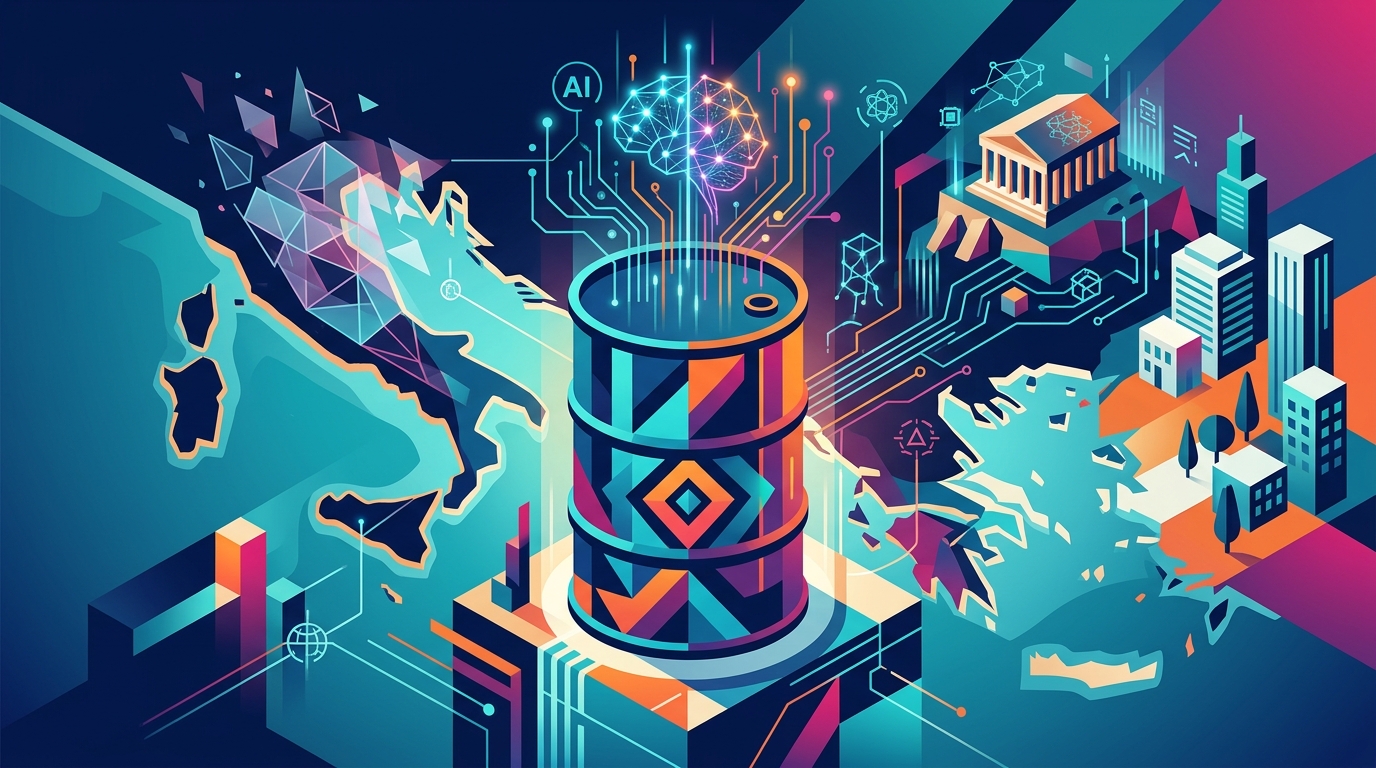
At the dawn of 2026, the conversation surrounding Artificial Intelligence has shifted from simple productivity tools to the very fabric of social organization. A recent proposal that has come to light, involving the creation of an "experimental island" where governance is entirely delegated to AI systems, is no longer a science fiction scenario, but a risky political and technological challenge. This venture, backed by consortiums of tech giants and certain states seeking "administrative renewal," promises ultimate efficiency while simultaneously raising nightmarish questions about the nature of democracy and human freedom.
The Promise of "Algocracy"
The core idea behind the AI island-state is the elimination of human corruption, bureaucratic delay, and political passions. According to the plan's proponents, a central algorithm could manage the island's resources—from energy and water to budget allocation—with mathematical precision. Decision-making would not be based on electoral expediency but on real-time data analysis (Big Data) aimed at maximizing resident welfare.
In this model, "justice" is dispensed by autonomous legal systems that analyze case law in seconds, while public administration is transformed into a series of automated APIs. For a country like Greece, where bureaucracy is a historical bottleneck, the prospect of a "clean" and rapid administration sounds enticing. However, the transition from the governance of men to the administration of things, as envisioned by Saint-Simon, conceals traps that touch the foundations of European legal culture.
The Black Box of Power
The primary problem with governance via AI is the lack of transparency and accountability. Algorithms, no matter how sophisticated, remain "black boxes." If an AI decision leads to economic disaster or blatant injustice against a minority group on the island, who bears the responsibility? The concept of political accountability evaporates when the "governor" is a machine learning model trained on data that may contain gender or racial biases.
- The Loss of "Phronesis": Politics is not just numbers. It is the ability to judge the exception, to show leniency, and to understand the moral weight of a decision. AI lacks this human quality.
- The Dominance of Tech Corporations: Who owns the code? If a private company provides the governance software, then the island is not ruled by AI, but by the company's shareholders.
- The Digital Panopticon: For AI to function, universal surveillance is required. Every movement, transaction, and social interaction must be converted into data, effectively abolishing privacy.
Geopolitical Implications and the Future of Nation-States
This experiment is not just about an isolated island. It is the vanguard of what some analysts call "Network States." If the model proves successful, we could see the emergence of autonomous zones within existing states, where central government laws are replaced by algorithmic contracts. This could lead to a new type of digital feudalism, where the wealthy and technologically advanced isolate themselves in "smart" islands of prosperity, leaving the rest of the world to struggle with dysfunctional traditional structures.
"Delegating power to an algorithm is not progress; it is the abdication of human responsibility to define one's own destiny," state critics from the academic world.
In conclusion, the plan for an AI-governed island is a reminder that technology is never neutral. It is a tool of power. The challenge for our generation is not to reject technological evolution, but to ensure that the "Governor-Algorithm" remains at the service of the citizen and not vice versa. Political sovereignty, won through centuries of struggle, must not be sacrificed on the altar of algorithmic optimization.