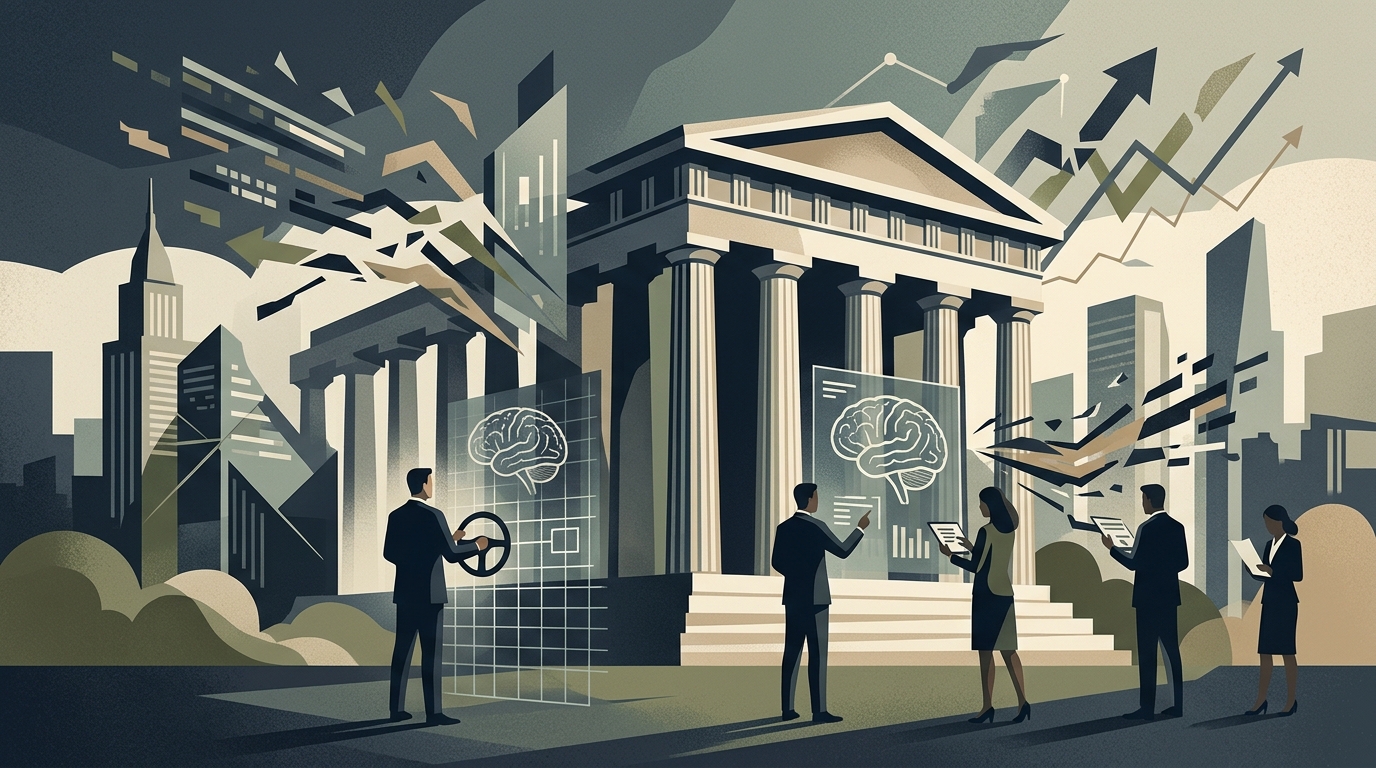
The relationship between Artificial Intelligence (AI) and the human brain is no longer a science fiction scenario confined to the pages of Isaac Asimov or the silver screen. Today, in 2026, we stand at the threshold of a revolution that promises—or threatens—to bridge the gap between biological and digital intelligence. A recent analysis by Forbes Greece highlights the critical question: Is this convergence an opportunity to transcend our biological limits or a path toward the loss of human autonomy?
The Architecture of Mimicry and Neuroscience
Artificial Intelligence, in its current form, relies heavily on the architecture of the human brain. Artificial neural networks were designed to simulate the way neurons exchange information. However, the disparity remains vast. While an algorithm can process trillions of data points in seconds, the human brain operates on the energy of a 20-watt light bulb, demonstrating an unparalleled capacity for empathy, creativity, and moral judgment.
The challenge today is not just making computers think like us, but understanding how we can integrate their computational power into our own biological structure. Brain-Computer Interfaces (BCIs), such as those developed by Neuralink and Synchron, have already moved into human clinical trials, allowing paralyzed patients to control digital devices using only their thoughts. What began as a medical miracle is gradually transforming into a debate about "upgrading" the healthy population.
The Threat of Digital Manipulation
Where there is opportunity, danger also lurks. The greatest threat identified by experts is not a machine uprising, but the erosion of the privacy of our thoughts. If an interface can read brain signals to move a cursor, what prevents it from decoding emotions or subconscious preferences? In the era of surveillance capitalism, the human brain remains the last fortress of privacy. If this is breached, the consequences for free will will be immeasurable.
- Neuro-privacy: The urgent need for legal protection of brain data.
- Social Inequality: The widening gap between "enhanced" and "natural" humans.
- Dependency: The potential atrophy of natural cognitive functions due to over-reliance on AI.
In Greece, this discussion takes on particular interest as the country seeks to position itself on the global innovation map. With the establishment of research centers focusing on AI ethics, the Greek scientific community emphasizes that technology must remain human-centric. The risk of "neuro-colonialism," where big tech corporations control cognitive infrastructures, is real and requires a strict regulatory framework from the European Union.
The Opportunity: A New Renaissance?
On the other hand, the convergence of AI and the brain could unlock possibilities that today seem impossible. Imagine instantaneous language learning, treating Alzheimer's disease through neural stimulation, or expanding human memory. AI does not need to be our replacement, but our partner. It can take on the burden of data analysis, leaving humans the role of the visionary and the ethical guide.
"Artificial intelligence is not the enemy of humanity, but its mirror. If we fear what we see, perhaps we should change ourselves, not the machine."
In conclusion, the path to the future requires a delicate balance. Technology is a tool, and like any tool, its nature—blessing or curse—depends on the hand that holds it. The human brain, the most complex object in the known universe, faces the greatest challenge in its history. The answer to whether AI is an opportunity or a threat lies not in algorithms, but in the values we choose to protect as we integrate the digital into our biological being.