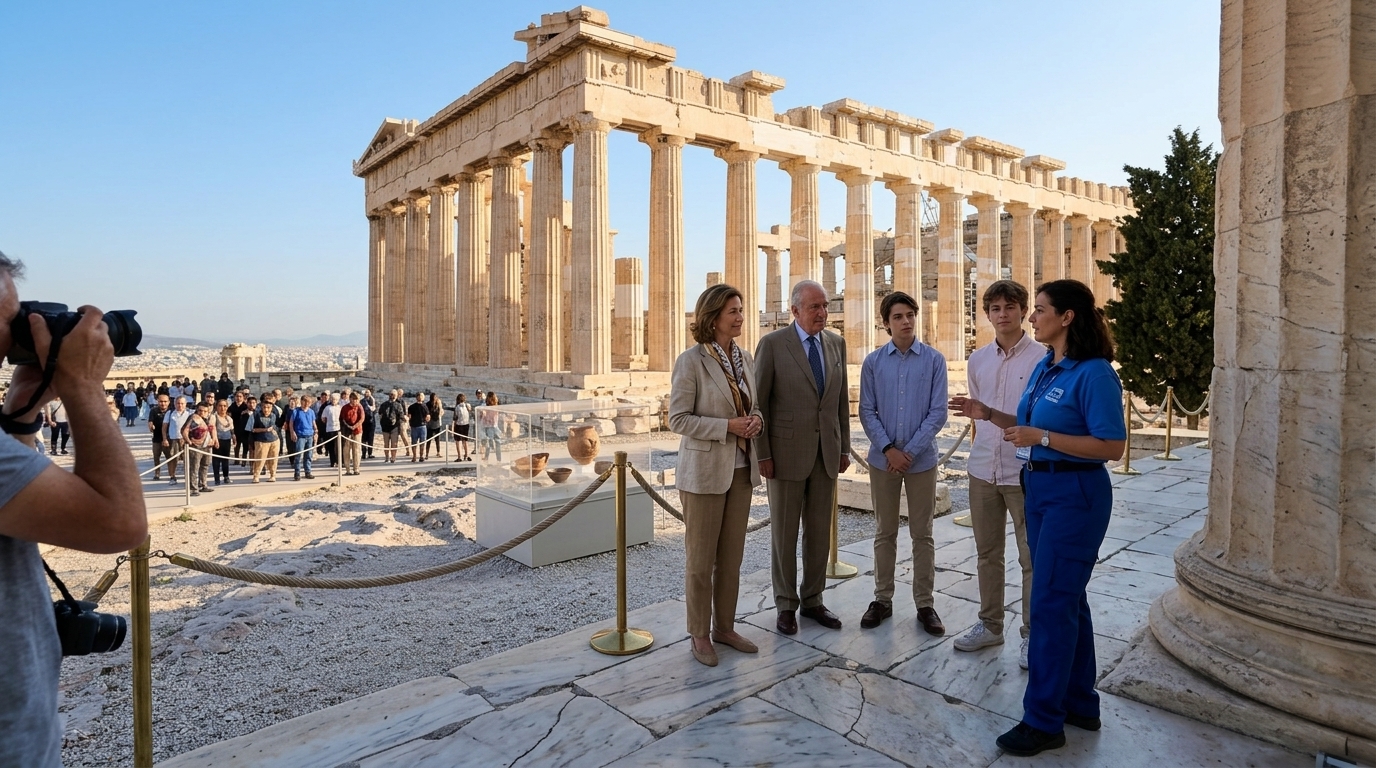
In the heart of Athens, where the Parthenon stands tall above the modern bustle, a new chapter is being written in the management of cultural heritage. The introduction of VIP tours at the Acropolis, with a cost reaching €5,000 per group, is not merely a tourist service; it is a statement of a strategic shift by Greece towards high-value tourism. "The Acropolis Experience" program promises a rare viewing of the monument without the congestion of thousands of visitors, offering exclusive access during hours when the Sacred Rock is closed to the general public.
The Acropolis as a Luxury Product and the Economic Dimension
This move by the Ministry of Culture and the Organization for the Management and Development of Cultural Resources (ODAP) responds to a global trend. From the Louvre to the Vatican, the world's great monuments have been offering "after-hours" experiences for years to those with the financial means. In the case of Athens, the tours take place early in the morning (07:00-09:00) or late in the evening (20:00-22:00), with a maximum of four groups of five people per time slot.
The revenue from these visits is not just a boost for the state coffers. According to ODAP, a significant portion of these resources is intended for the reciprocal support of the archaeological sites themselves, the maintenance of monuments, and the improvement of infrastructure for the average visitor. It is a model that seeks to balance commercial exploitation with the sanctity of the site, although critics of the program speak of the "commodification of history."
Strategic Expansion: From Sounio to Rhodes
The success of the Acropolis does not seem to be standing still. The plan envisages the expansion of these personalized services to other iconic sites. The Temple of Poseidon at Sounio, Ancient Olympia, Delphi, and the Medieval City of Rhodes are targeted for the implementation of similar programs. The logic is simple: creating a network of VIP destinations that will attract high-net-worth individuals, who will not only pay for access but also act as ambassadors of the Greek "brand" to a global elite audience.
"We are not selling our history, but the experience of understanding it in conditions that highlight it to the fullest," say tourism industry executives.
The challenge for the Greek state is to ensure that this shift does not alter the public character of the monuments. The Acropolis belongs to humanity, and any sense of exclusion could harm the country's moral standing. However, the reality of the 21st century dictates flexibility. The overtourism observed during peak hours often makes the visit unpleasant. VIP tours act as a decompression valve and simultaneously as a source of income that allows for free entry for thousands of students throughout the year.
Social Reactions and the Ethics of Access
As expected, the program sparked intense debate. Trade unions of archaeological guards expressed reservations regarding staff management and the security of monuments during after-hours visits. At the same time, there is a fear that creating two "speeds" of visitors—the haves and the have-nots—contradicts the democratic values born under the shadow of the Parthenon. The government's response is that culture requires resources to survive, and an elitist approach for a small minority is the price for maintaining accessibility for the vast majority.
In any case, the Acropolis model is now the guide for the future. Greece no longer wants to be just a "sun and sea" destination, but a center of global cultural excellence that knows how to properly price its heritage. The success of this venture will be judged by whether the revenue actually returns to the protection of the monuments and whether the experience of the average visitor is substantially improved by the profits left by the few and elite.