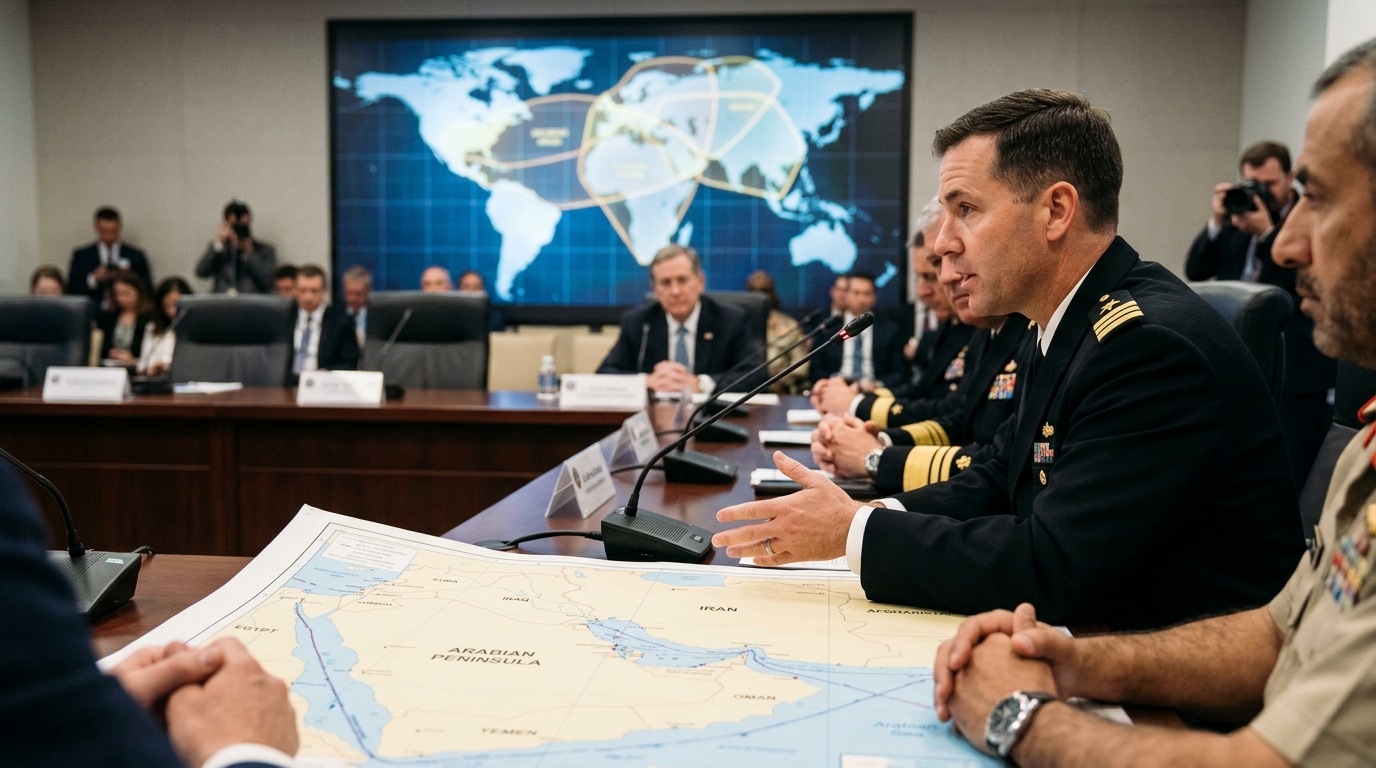
In a move that underscores the rapid militarization of artificial intelligence in the world's oceans, the US Navy has signed a landmark $100 million deal with a specialized AI firm. The contract aims to equip underwater drones with advanced mine-detection algorithms, featuring one critical capability: the power to update and retrain these systems within days, rather than the months previously required. This development is laser-focused on the Strait of Hormuz, a region where geopolitical friction meets global energy security.
The Strategic Weight of the Strait of Hormuz
The Strait of Hormuz is perhaps the most sensitive artery of global commerce. Approximately 20% of the world's daily oil consumption passes through this narrow waterway. Any disruption to navigation, such as the deployment of naval mines by regional actors, could trigger a global economic shock. Traditionally, minesweeping has been a slow, hazardous, and extremely costly process, relying on large vessels and human divers who put their lives at risk.
The introduction of Unmanned Underwater Vehicles (UUVs) changed the equation, but a software bottleneck remained. The algorithms these drones used to distinguish a mine from a rock or a shipwreck often required massive amounts of data and months of processing in land-based laboratories before an update could be deployed. In a modern theater of war, where threats evolve at lightning speed, this response time is no longer acceptable.
From Months to Days: The Edge AI Revolution
The new $100 million contract aims to implement what military analysts call "rapid iterative learning." Through the use of advanced neural networks and Edge Computing technology, drones will be able to collect sonar and visual data, process it locally, and transmit the most critical findings for analysis. The innovation lies in the ability for engineers to tweak detection code and push it back to the drone fleet within 48 to 72 hours.
This speed is decisive. If an adversary deploys a new type of mine with a different shape or material designed to "spoof" existing systems, the US Navy can adapt almost in real-time. This technology isn't just about object recognition; it's about the drones' ability to navigate environments with heavy currents and low visibility—conditions that define the Strait of Hormuz. By moving the intelligence to the "edge" (the drone itself), the Navy reduces its dependence on slow satellite links and centralized data centers.
Geopolitical Implications and Asymmetric Warfare
This move sends a clear signal to powers like Iran, which has historically threatened to close the Strait. The use of cheap but effective naval mines is the quintessential weapon of asymmetric warfare. By investing in AI-driven drones, the US seeks to nullify this advantage, making attempts to blockade the Strait a futile and technologically obsolete tactic.
However, this evolution also raises significant questions. Increasing reliance on autonomous systems in high-tension areas heightens the risk of accidents or misinterpretations. What happens if an AI drone misidentifies a commercial object as a threat, triggering a chain reaction of military escalations? Ensuring that a human remains "in the loop" for final decision-making remains the greatest challenge for the architects of these systems. The ethical framework for autonomous underwater warfare is still being written, even as the hardware is being deployed.
The Future of Maritime Dominance
This deal is part of a broader Pentagon shift toward the "Replicator" initiative, which envisions the use of thousands of inexpensive, autonomous systems to counter major adversaries. At sea, this means the future belongs not just to massive aircraft carriers, but to silent, intelligent swarms of underwater drones scouring the world's seabeds. The battle for 21st-century maritime dominance will not be decided solely by the tonnage of ships, but by the lines of code running on their processors. As algorithms become the new frontline, the $100 million spent today may be the most cost-effective deterrent in the Navy's modern history.