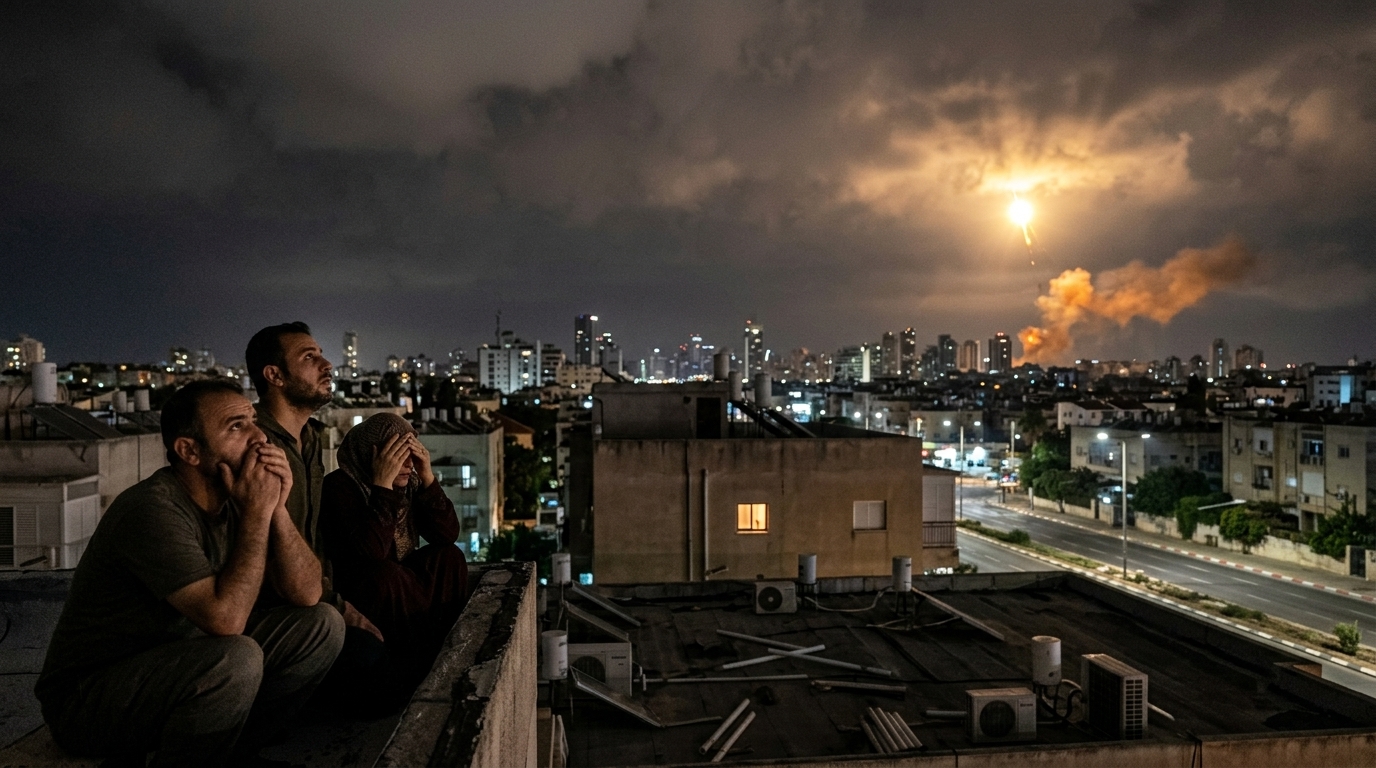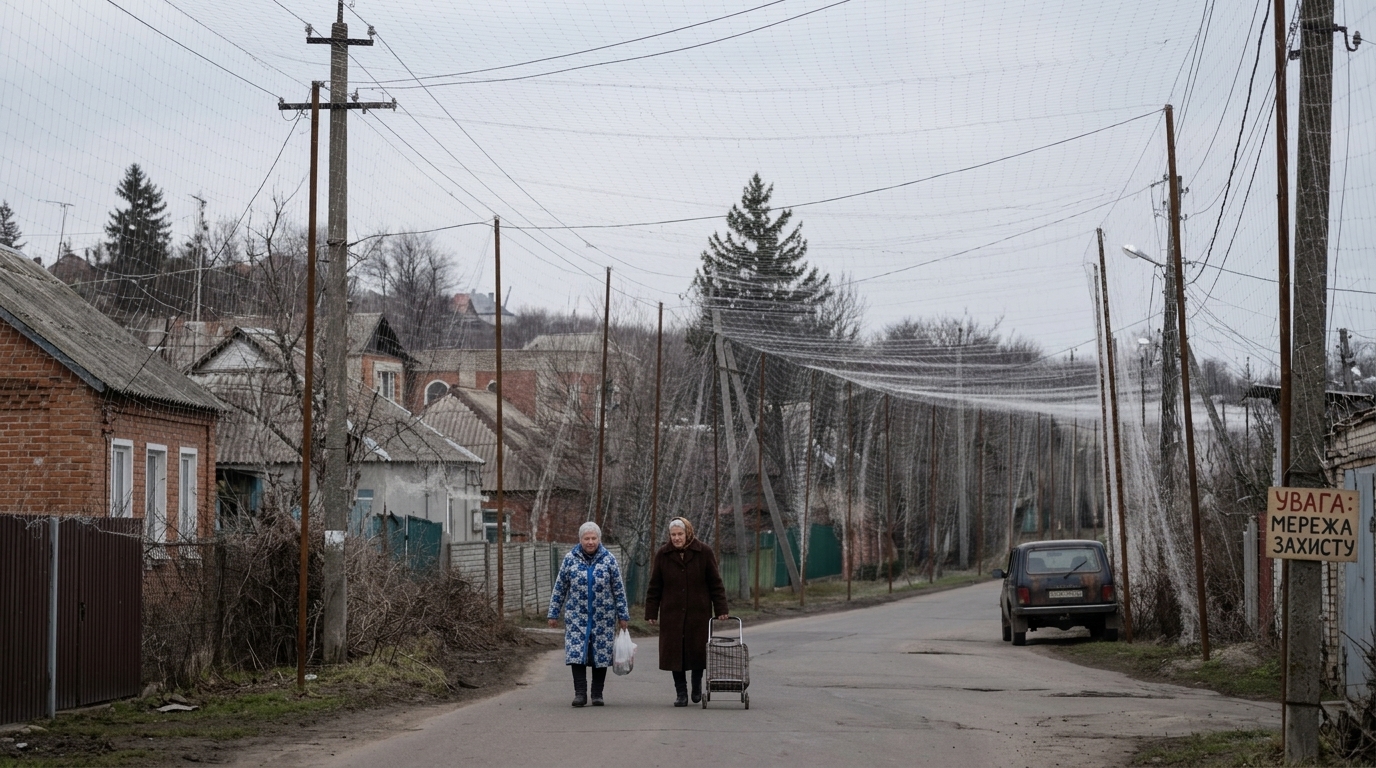
In contemporary warfare, where drones have rendered the battlefield a space of absolute transparency, Ukraine is turning to a solution that feels more like a relic of World War I than the era of Artificial Intelligence. According to recent data, the country has installed more than 820 kilometers of anti-drone protective netting along critical road arteries and infrastructure near the frontlines. This scale is staggering: it exceeds the total length of the Florida peninsula, highlighting both the magnitude of the threat and the ingenuity of the response.
The FPV Revolution and the Need for Physical Barriers
The rise of First-Person View (FPV) drones has fundamentally rewritten the rules of engagement. These small, agile, and remarkably cheap unmanned aerial vehicles, armed with explosives, can neutralize multi-million dollar armored vehicles or strike supply convoys with surgical precision. Ukraine, facing a constant barrage of Russian Lancet and FPV drones, realized that expensive Electronic Warfare (EW) systems are not always sufficient or available in the quantities needed.
The nets function as a passive but highly effective defense. Constructed from steel cables or reinforced mesh, they are positioned over roads, bridges, and near critical energy transformers. The goal is simple: to trap the drone or trigger the premature detonation of its shaped-charge warhead before it makes contact with the primary target. In many instances, the drone simply becomes entangled in the mesh, allowing Ukrainian personnel to neutralize it safely without the kinetic impact reaching the infrastructure below.
The Geography of Defense: From Kharkiv to Kherson
Installing 820 kilometers of netting is not merely a technical task; it is a titanic logistical undertaking. Ukraine's State Agency for Restoration and Infrastructure Development has coordinated this massive project. Work is often carried out under the cover of night or during artillery lulls, as the installation crews themselves are high-priority targets for Russian reconnaissance.
"This isn't just about protecting military vehicles. It’s about preserving the lifelines of the nation," officials state.
The comparison to Florida is not coincidental. The length of the Florida peninsula is approximately 720 kilometers. The fact that Ukraine has covered a greater distance with anti-drone nets in just a few months demonstrates the speed at which the country’s defense-adjacent industry is adapting. These nets now cover strategic points in the Donbas and protect the entrances to cities under constant pressure, creating a literal "Iron Curtain" against aerial threats.
Low-Tech vs. High-Tech: A Tactical Paradox
While the West focuses on developing expensive laser systems and sophisticated frequency jammers, the reality on the ground shows that simpler solutions are often the most reliable. An electronic warfare system can fail if the drone uses optical tracking (AI-based targeting) or if it switches to a non-standard frequency. A steel net, however, remains a physical reality that cannot be "hacked" or jammed.
- Cost-Efficiency: A net costs a few hundred dollars, whereas a Lancet drone costs approximately $35,000.
- Reliability: It requires no power source or high-tech maintenance.
- Psychological Impact: Drivers of supply trucks feel significantly safer passing through these protected "tunnels."
However, Russia has already begun to adapt, utilizing drones with dual-stage warheads or thermal cutters designed to penetrate the mesh. This has sparked a new arms race between engineers on both sides, with Ukraine now testing multi-layered nets and experimenting with different materials to counter these evolving tactics.
The Future of Infrastructure in Conflict Zones
Ukraine's experience will be a case study for NATO and other global military forces for decades. The necessity for "hardened infrastructure" is moving from theory to practice. In the future, the design of roads and bridges in high-risk areas may include permanent anti-drone structures as part of the initial engineering blueprint. The battlefield is no longer just on the ground; it is in the immediate airspace above every road.
In conclusion, the 820 kilometers of netting in Ukraine represent more than a technical feat. They are a symbol of the resilience of a nation that refuses to be defeated by technological superiority, using every available means to protect its freedom of movement and the integrity of its infrastructure. In a world increasingly dominated by bits and bytes, the humble steel wire is proving, once again, to be an invaluable asset in the defense of a nation.