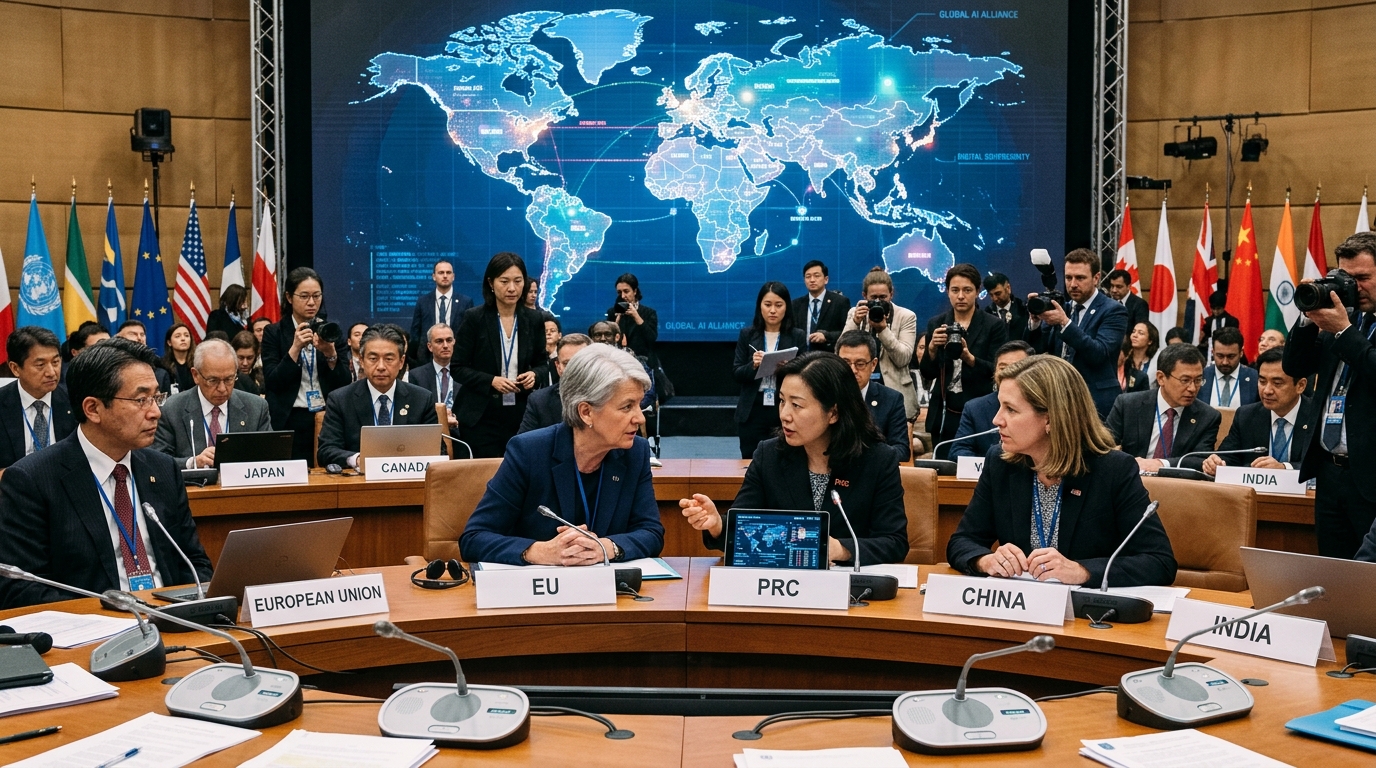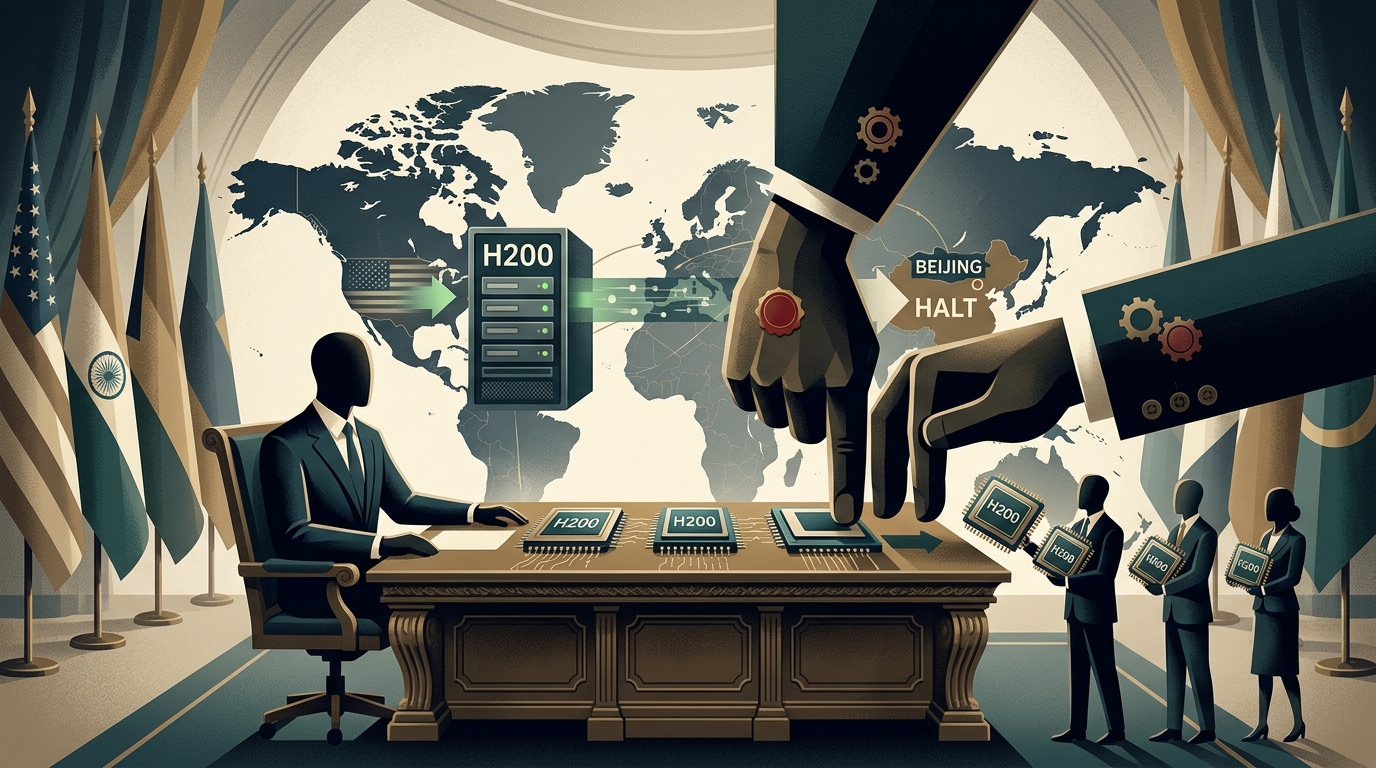
The global chessboard of technological supremacy is witnessing one of its most paradoxical moments. For years, Washington was the primary obstacle to China's access to advanced semiconductor technology. However, the situation appears to be reversing in a way that few analysts predicted. According to recent reports, the Trump administration has given Nvidia the 'green light' to sell its powerful H200 chips to ten leading Chinese groups, including Alibaba and Tencent. Yet, the real story isn't the American concession, but the Chinese refusal: Beijing has intervened to halt the deliveries.
Trump's Pragmatism and the Nvidia Lobby
The Trump administration's decision to allow sales of the H200—the processors that form the 'heart' of modern generative AI—is interpreted by many as a move of economic pragmatism. Nvidia, which has seen its market capitalization soar, has been systematically lobbying for a relaxation of export controls, arguing that restrictions simply accelerate the development of domestic competitors in China.
For Donald Trump, this move aligns with the logic of 'America First' through trade surpluses. By allowing Nvidia to dominate the Chinese market, the US ensures the flow of capital back to the American economy while maintaining a form of Chinese technological dependence on US standards. Sources close to the US Department of Commerce indicate the license was granted on the condition that the chips be used exclusively for commercial purposes, though enforcing such a term remains practically impossible.
"Technology is no longer just a tool for growth; it is the currency of power. When the seller wants to sell and the buyer refuses to buy, the rules of the game have changed."
Xi Jinping's 'Self-Reliance' Strategy
Beijing's intervention to stop the deliveries is a loud message to Washington and Silicon Valley. For the Chinese leadership, accepting H200s at this moment could act as a 'Trojan Horse.' There are three primary reasons behind this decision:
- Protection of Domestic Industry: China has invested billions into companies like Huawei, Biren Technology, and Moore Threads. An influx of H200s could 'smother' these efforts before they reach maturity.
- Fear of Backdoors and Future Sanctions: Beijing worries that dependence on Nvidia makes Chinese AI infrastructure vulnerable to future 'kill switches' or new rounds of sanctions that could paralyze the economy.
- Bargaining Chip: The refusal to import acts as leverage in broader trade negotiations, demonstrating that China is no longer desperate for Western technology.
Implications for Tech Giants
For Alibaba and Tencent, the situation is complex. On one hand, they need Nvidia's power to remain competitive against the likes of OpenAI and Google. On the other, compliance with Party directives is non-negotiable. The shift toward Huawei's domestic Ascend processors is now the only path forward, despite the fact they still lag behind in performance and software ecosystem (CUDA) compared to Nvidia.
The semiconductor market is reacting with nervousness. Nvidia's stock, though strong, faces the specter of losing a market that once represented over 20% of its revenue. The 'technological decoupling' that began as a US initiative is now being finalized with a Chinese seal.
Conclusion: The Dawn of Cold War 2.0
This move marks the end of the era of globalized technology. We are standing before an 'AI Iron Curtain,' where two different ecosystems will develop in parallel, without communication and without common standards. Beijing's decision to say 'no' to the world's best chips is a declaration of independence, but also a massive gamble: Can China reach the pinnacle of AI without Nvidia's tools? The answer will determine the balance of power for the remainder of the 21st century.