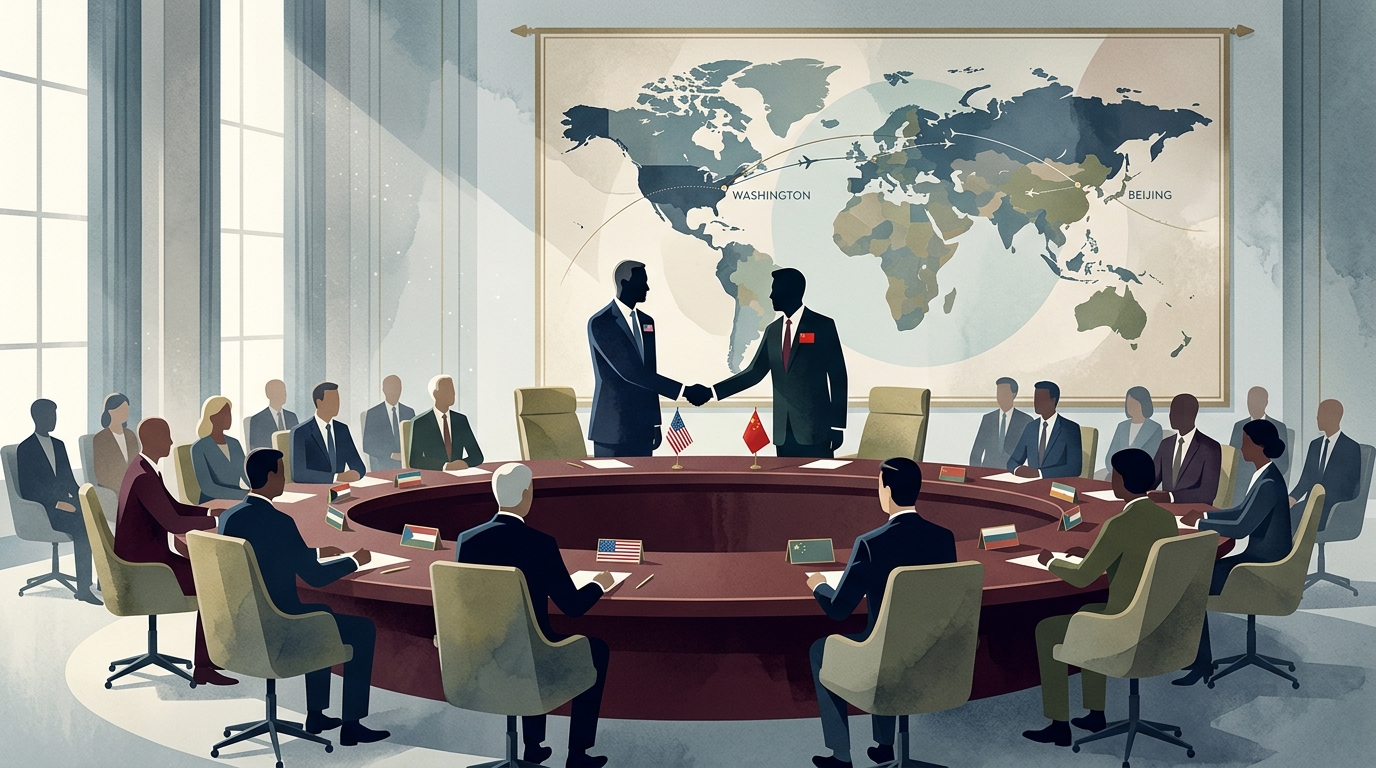
In a stunning move that has reverberated through world capitals, U.S. President Donald Trump has extended a formal invitation to Chinese President Xi Jinping for an official visit to Washington on September 24, 2026. This announcement, made during a formal gala, signals a potential shift from the bellicose rhetoric of recent years toward a form of 'transactional diplomacy' that has become the hallmark of the Trump administration's second term.
The Strategy of the 'Grand Bargain'
The invitation does not occur in a vacuum. After a period of intense trade friction and technological rivalry, Washington appears to be acknowledging that a complete 'decoupling' from the Chinese economy is a painful and perhaps impossible process. Trump, remaining true to his 'Art of the Deal' philosophy, seeks to bring Xi to the negotiating table to resolve issues that have plagued bilateral relations: from the massive trade deficit to the Taiwan crisis and dominance in artificial intelligence.
Analysts point out that September is a month of significant symbolism, coinciding with the UN General Assembly. A private meeting at the White House could provide necessary political capital for both leaders. For Trump, it is an opportunity to prove he can tame the U.S.'s primary geopolitical rival. For Xi, it offers a chance to stabilize a Chinese economy currently facing internal structural challenges.
Artificial Intelligence and Technological Hegemony
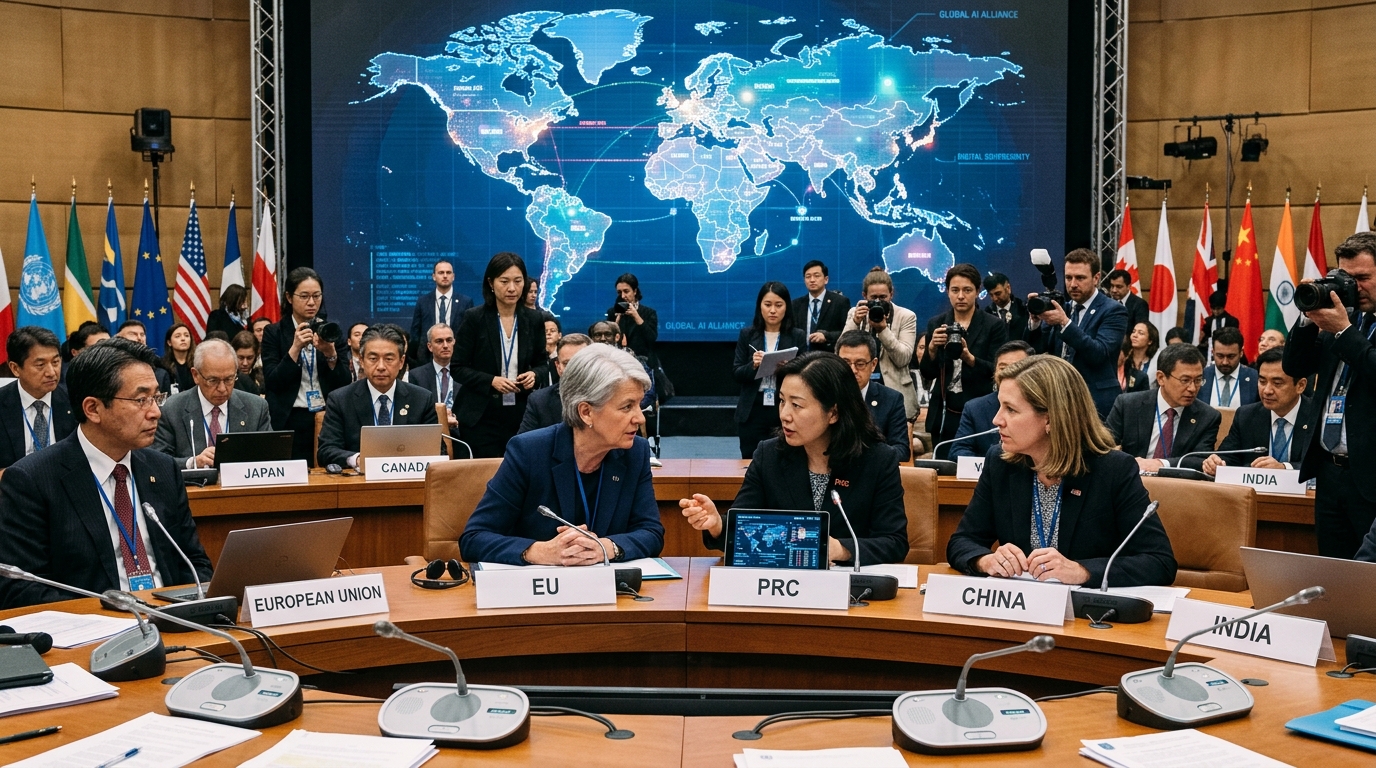
At the heart of the agenda is expected to be the AI arms race. The U.S. has imposed strict restrictions on the export of high-end semiconductors to China, a move Beijing has characterized as 'economic strangulation.' The September summit may serve as the framework for a first-of-its-kind AI arms control agreement, reminiscent of the nuclear treaties of the Cold War era.
- Export controls on advanced chips and semiconductor manufacturing equipment.
- Joint safety protocols for autonomous military technology.
- Regulatory frameworks for intellectual property protection in the age of generative AI.
China, for its part, is expected to seek a relaxation of tariffs and sanctions on technology firms like Huawei, offering in exchange greater access for American businesses to the Chinese domestic market. However, distrust remains deeply embedded on both sides of the Pacific.
The Geopolitics of Taiwan and Ukraine
Beyond economics, security remains the most thorny issue. Tensions in the Taiwan Strait are at an all-time high, and one misstep could trigger a global conflict. Trump has hinted that his approach will be more flexible—or perhaps more unpredictable—than that of his predecessors. Meanwhile, China's role as a potential mediator in the Ukraine conflict remains a powerful card that Xi can play to extract concessions from Washington.
"This is not just a visit; it is an attempt to redefine the global order for the next fifty years," says a senior diplomat speaking on condition of anonymity.
In conclusion, this invitation is a high-stakes gamble. If the summit succeeds, it could usher in a period of relative stability. If it fails, the confrontation between the two superpowers may enter a new, more dangerous phase where diplomacy gives way to raw power dynamics.