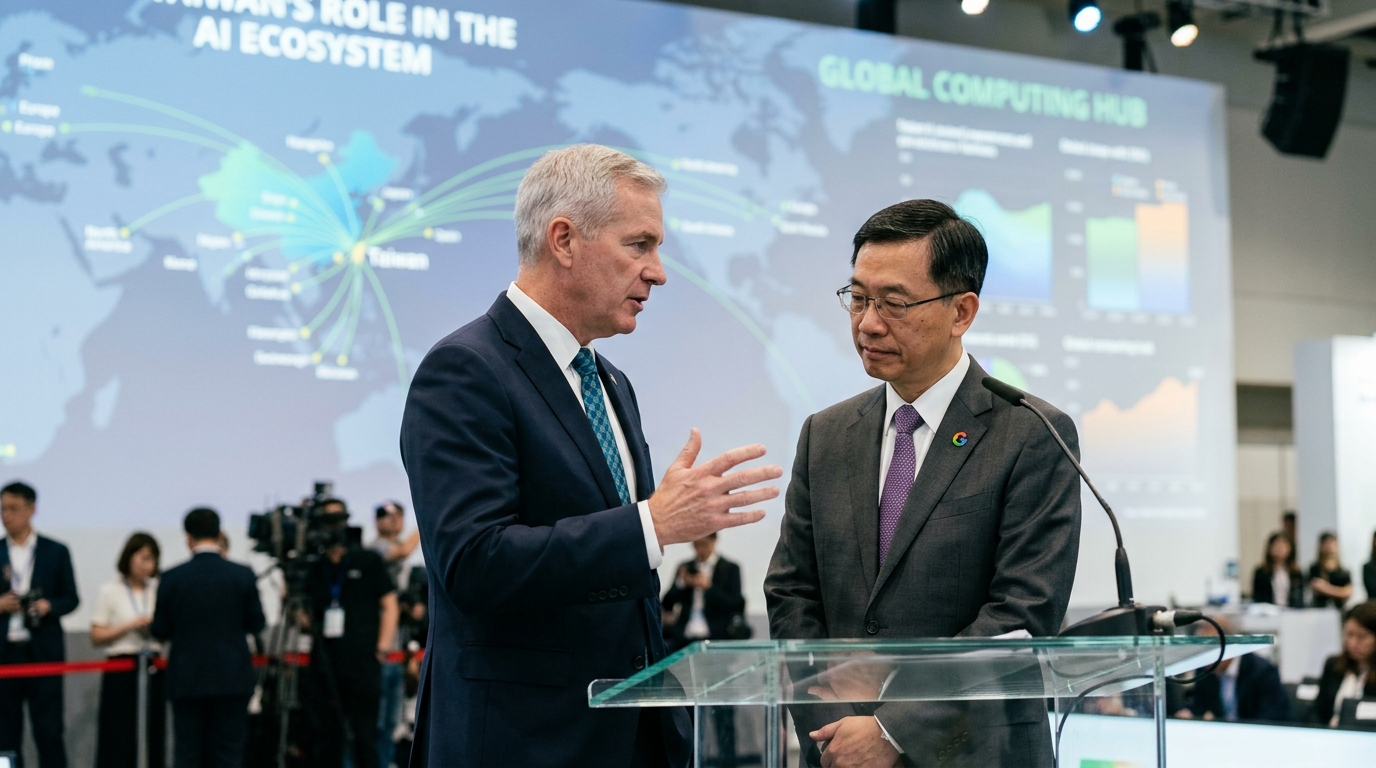
In the modern geopolitical and technological landscape, few names evoke as much awe and anxiety as Taiwan. While for decades the island was known as the "blacksmith" of personal computers and smartphones, the rise of Artificial Intelligence (AI) has transformed Taiwan into something far more fundamental: the nervous system of global computing power. Recent statements from Google executives, as reported by the Taipei Times, confirm that Taiwan is not just a supplier, but the central protagonist in the AI revolution.
Google, one of the world's largest buyers of AI hardware, spares no praise for Taiwan's ecosystem. The American giant's analysis highlights that the island's dominance is not limited to semiconductor manufacturing by TSMC, but extends across the entire value chain—from the design of advanced cooling systems to the construction of the massive servers that power large language models (LLMs) like Gemini.
Beyond Semiconductors: A Comprehensive Ecosystem
When we talk about Taiwan, the conversation usually begins and ends with Taiwan Semiconductor Manufacturing Co. (TSMC). However, Google points out that Taiwan's true strength lies in the density of its ecosystem. The island is home to giant companies such as Quanta Computer, Foxconn (Hon Hai Precision Industry), and Wistron, which manufacture most of the world's data center equipment. These companies have developed unique expertise in integrating Nvidia and Google (TPU) chips into complex server arrays.
The transition to AI requires more than just raw processing power. It requires advanced thermal management solutions, as AI chips generate enormous amounts of heat. Here, Taiwanese companies are pioneering liquid cooling technology, making them indispensable partners for any tech company wishing to scale its infrastructure. Google recognizes that without the speed and flexibility of Taiwan's manufacturers, the global pace of AI development would slow down dramatically.
Google’s Strategic Investment in the Island
Google's relationship with Taiwan is not just commercial, but deeply operational. Taiwan hosts Google's largest engineering hub in Asia, as well as one of its most important data centers in Changhua County. Google systematically invests in local talent, recognizing that the culture of precision and innovation that characterizes Taiwan's hardware sector is hard to find elsewhere.
Furthermore, Google uses Taiwan as a base for developing its own custom AI chips, the Tensor Processing Units (TPUs). The close collaboration between Google's designers and manufacturing engineers in Taiwan allows for an innovation cycle that is faster than any competitor. This symbiosis has made Taiwan the "lighthouse" for the future of cloud computing.
Geopolitics and the "Silicon Shield"
Taiwan's centrality to AI is not without risks. Geopolitical tension in the Taiwan Strait remains one of the greatest systemic risks to the global economy. The concept of the "Silicon Shield" suggests that global dependence on Taiwan for chip production acts as a deterrent to military conflict, as any disruption in production would lead to a global economic collapse.
However, Google and other tech giants are in a delicate balance. While attempting to diversify their supply chains (de-risking), they find that replicating Taiwan's ecosystem in other countries, such as the US or Germany, is extremely difficult and costly. Taiwan possesses a unique concentration of suppliers, factories, and specialized personnel that makes it irreplaceable in the near future.
Conclusion: The Future of AI Passes Through Taipei
As the race for Artificial General Intelligence (AGI) accelerates, Taiwan's importance will continue to grow. Google's analysis leaves no room for doubt: Taiwan is the cornerstone upon which tomorrow's digital world is being built. For international powers, ensuring the stability and prosperity of this small island is no longer just a matter of diplomacy, but a matter of survival for humanity's technological progress.