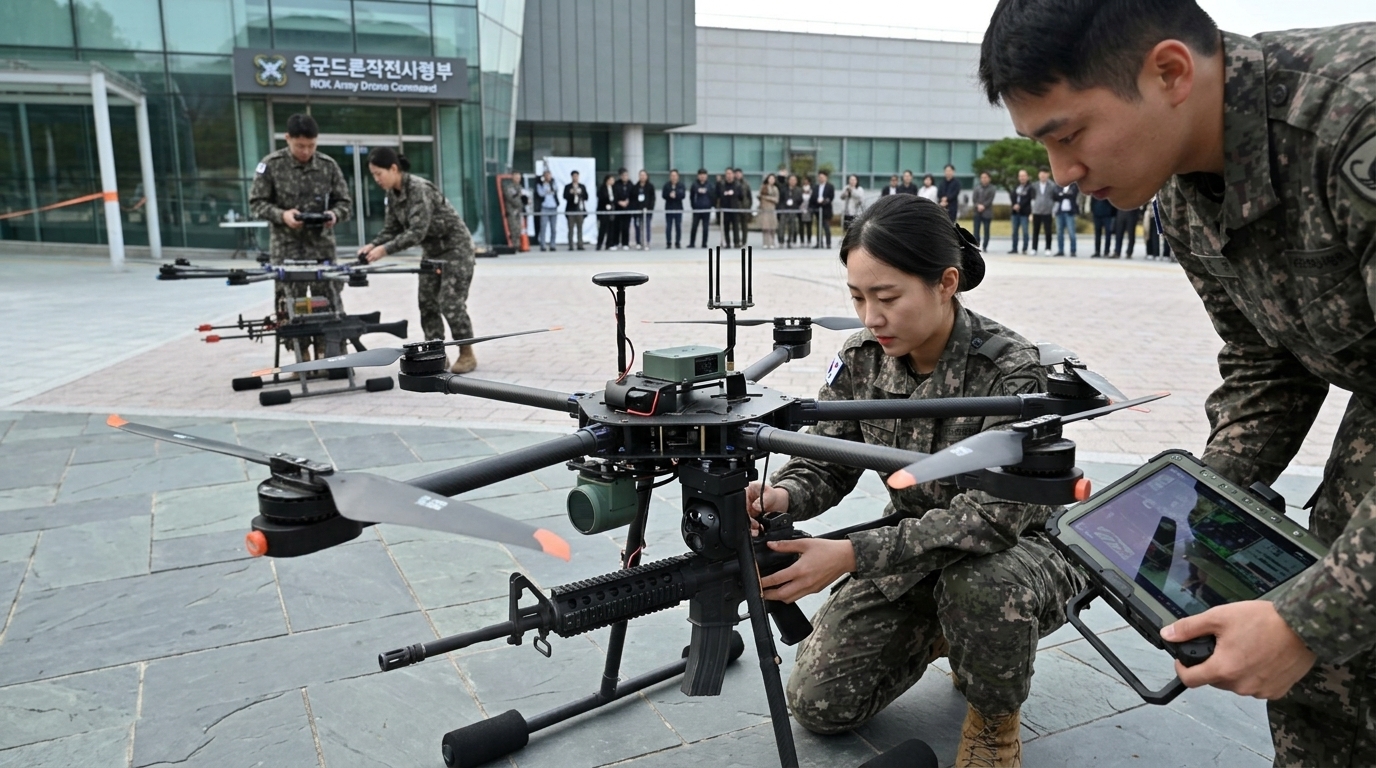
In a move set to redefine the doctrine of modern warfare, South Korea has announced an ambitious plan to train its entire military force—approximately 500,000 personnel—as "drone warriors." This decision is not merely a technological upgrade but an existential necessity for a nation facing a dual threat: North Korean aggression and a dramatic domestic population decline.
The South Korean Ministry of National Defense has clarified that drones will no longer be viewed as specialized tools for a few elite units but as a "universal combat tool," as fundamental as the standard-issue assault rifle. This strategy, expected to be fully implemented by the end of the decade, integrates drone training at every level of military service, from fresh conscripts to career officers.
The Demographic Cliff and the Power Multiplier
The primary driver behind this radical shift is demographics. South Korea maintains the world’s lowest fertility rate, meaning the pool of young men available for mandatory military service is shrinking at an alarming rate. To maintain a credible deterrent against the nuclear-armed North, Seoul must find ways to do more with fewer people.
Drones provide the ultimate "force multiplier." A single soldier, equipped with a swarm of kamikaze drones or AI-enhanced reconnaissance systems, can control territory that previously required an entire platoon. The use of Artificial Intelligence allows these systems to operate semi-autonomously, identifying targets and suggesting firing solutions, thereby reducing the cognitive load on the operator.
Lessons from Ukraine and the Northern Threat
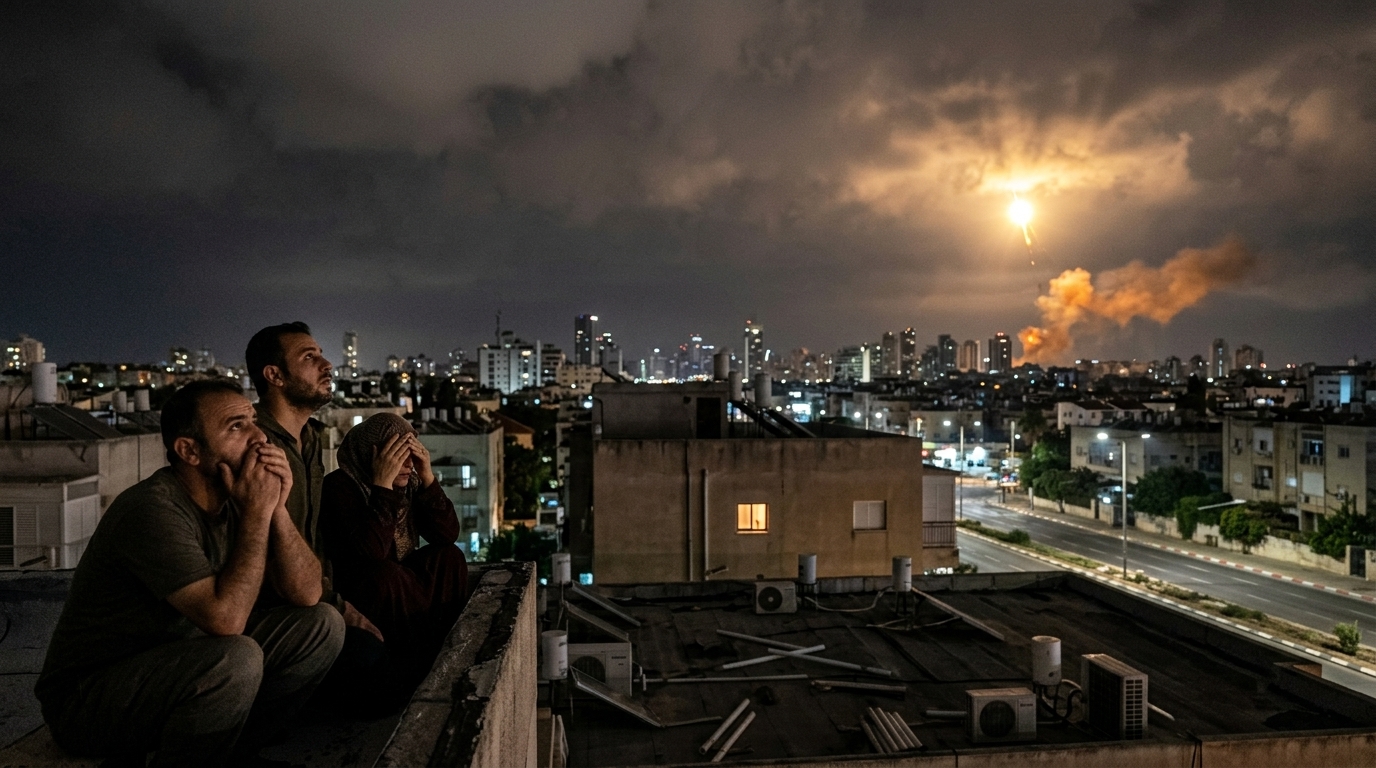
South Korea’s pivot did not happen in a vacuum. The conflict in Ukraine has served as a grim laboratory for the future of warfare. Seoul has observed how inexpensive, off-the-shelf drones can disable multi-million dollar tanks and how low-altitude air superiority is now critical for survival on the front lines. Furthermore, repeated incursions by North Korean drones into Seoul’s airspace in recent years have exposed defensive gaps, making a robust response imperative.
The plan involves the establishment of a new "Drone Operations Command," which will oversee the deployment of these systems across all branches: Army, Navy, and Air Force. Soldiers will be trained not only in piloting but also in rapid field repairs and programming under duress. The goal is to foster a culture of "technological agility," where a drone is the first choice for scouting, resupply, and precision strikes.
Challenges and Ethical Implications
Despite the strategic enthusiasm, transitioning to an army of "drone warriors" carries significant risks. Electronic warfare (EW) remains the most potent countermeasure. If an adversary successfully jams control signals or blinds GPS systems, a military overly reliant on drones risks being left defenseless. South Korea is already investing in jam-resistant communication links and edge-AI that can function without a continuous connection to the operator.
Moreover, the ethical dilemma of "detached killing" looms large. Turning warfare into an experience that resembles a video game may lower the psychological threshold for using lethal force. As drones become more autonomous, questions of accountability for collateral damage or errors in judgment become increasingly complex. Seoul maintains that a human will always remain "in the loop," but the sheer speed of modern combat makes this promise difficult to guarantee in practice.
"This isn't just about new weapons; it's about a new identity for the South Korean soldier," a Ministry of Defense official stated. "In the 21st century, sovereignty belongs to those who control the skies above their own trenches."
As South Korea moves forward with this historic shift, the world is watching. If the experiment succeeds, it will provide the blueprint for every developed nation facing demographic contraction. War will no longer be decided by who has the most boots on the ground, but by who has the most processors in the sky.