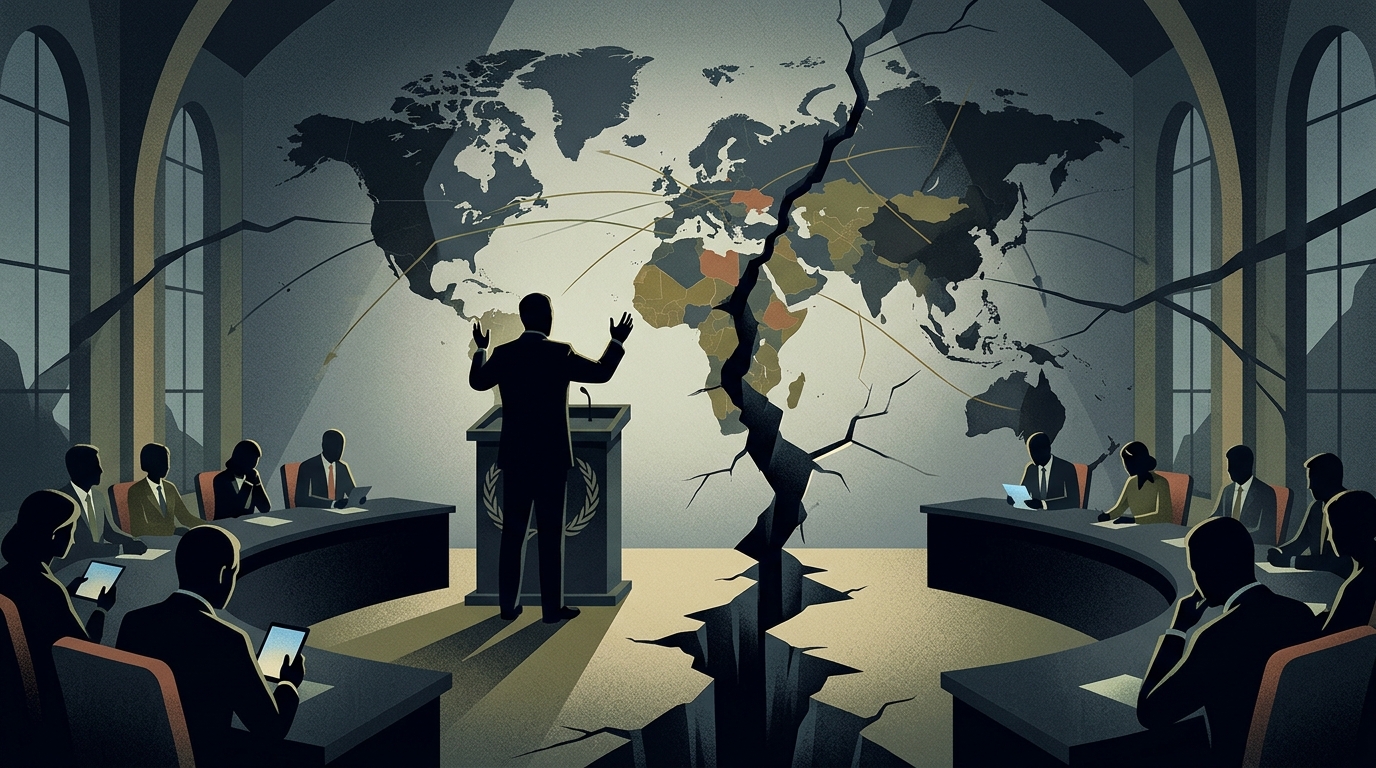
The recent statements by Israeli Prime Minister Benjamin Netanyahu during a press conference were far more than a mere military update. They constituted an ideological manifesto redefining the scope of the Middle East conflict. With the phrase "nothing is over," Netanyahu signaled to both his domestic audience and the international community that Israel is engaged in a protracted, multi-front war whose outcome will shape global history.
The Rhetoric of "Civilization vs. Barbarism"
Netanyahu deliberately employed language reminiscent of Samuel Huntington’s "Clash of Civilizations." By framing Iran and its proxies—Hamas, Hezbollah, and the Houthis—as the "Axis of Evil" and representatives of "barbarism," the Israeli leader seeks to imbue the conflict with a moral and universal character. This tactic is not new, but in the current context, it carries immense weight.
According to Netanyahu’s analysis, Israel is not just defending its borders; it is the "bulwark of the West" against an obscurantism that threatens democratic values worldwide. This rhetoric is aimed directly at Western allies, particularly the United States, attempting to frame support for Israel not as a strategic choice, but as a moral imperative for the survival of the free world.
The Strategic Depth of the Conflict with Iran
Beyond the rhetoric, the essence of the "nothing is over" declaration concerns the "Octopus Head" doctrine. For decades, Israel focused on fighting the tentacles (local proxies). Now, the strategy is shifting directly toward Tehran. The recent exchange of missile strikes between the two nations has shattered decades-long taboos regarding direct confrontation.
- The Nuclear Program: Tehran continues its uranium enrichment, nearing levels that Israel considers a non-negotiable "red line."
- Regional Influence: Iran’s attempt to create a "ring of fire" around Israel via Syria and Lebanon remains the primary target of Israeli defensive operations.
- Internal Destabilization: Netanyahu is betting on the internal contradictions of the Iranian regime, hoping that economic pressure and military attrition will lead to a change in stance or even regime change.
Political Dimensions and Netanyahu's Survival
It is impossible to ignore that this hardline stance also serves Netanyahu’s internal political needs. Facing legal challenges and a deeply polarized society, the role of a "wartime leader" provides him with a political lifeline. Presenting the war as a "battle of civilization" makes any domestic criticism appear as a subversion of national survival.
"We are at the beginning of the end of the Axis of Evil, but the road is still long and requires sacrifices," he stated, preparing public opinion for a war of attrition that could last years.
However, this stance carries significant risks. The absolute targeting of Iran could lead to a regional conflagration that would disrupt global energy markets and force the U.S. into a direct involvement that the Biden administration has been desperately trying to avoid. The "battle of civilizations" risks becoming a self-fulfilling prophecy of chaos.
International Reaction and the Path Ahead
International reactions are mixed. While Washington reaffirms its commitment to Israel’s security, calls for restraint are growing louder. The European Union remains divided, with some nations adopting Netanyahu’s rhetoric and others warning about the humanitarian consequences in Gaza and Lebanon, which tarnish the image of the "civilized" front Israel seeks to project.
Ultimately, Netanyahu’s assertion that "nothing is over" serves as a reminder that the Middle East is at a historic crossroads. Whether this is a genuine clash of values or a classic power struggle disguised as ideology, it is certain that the region has entered a phase where diplomacy has yielded to weaponry, and words are being used as ammunition to legitimize an uncertain future.