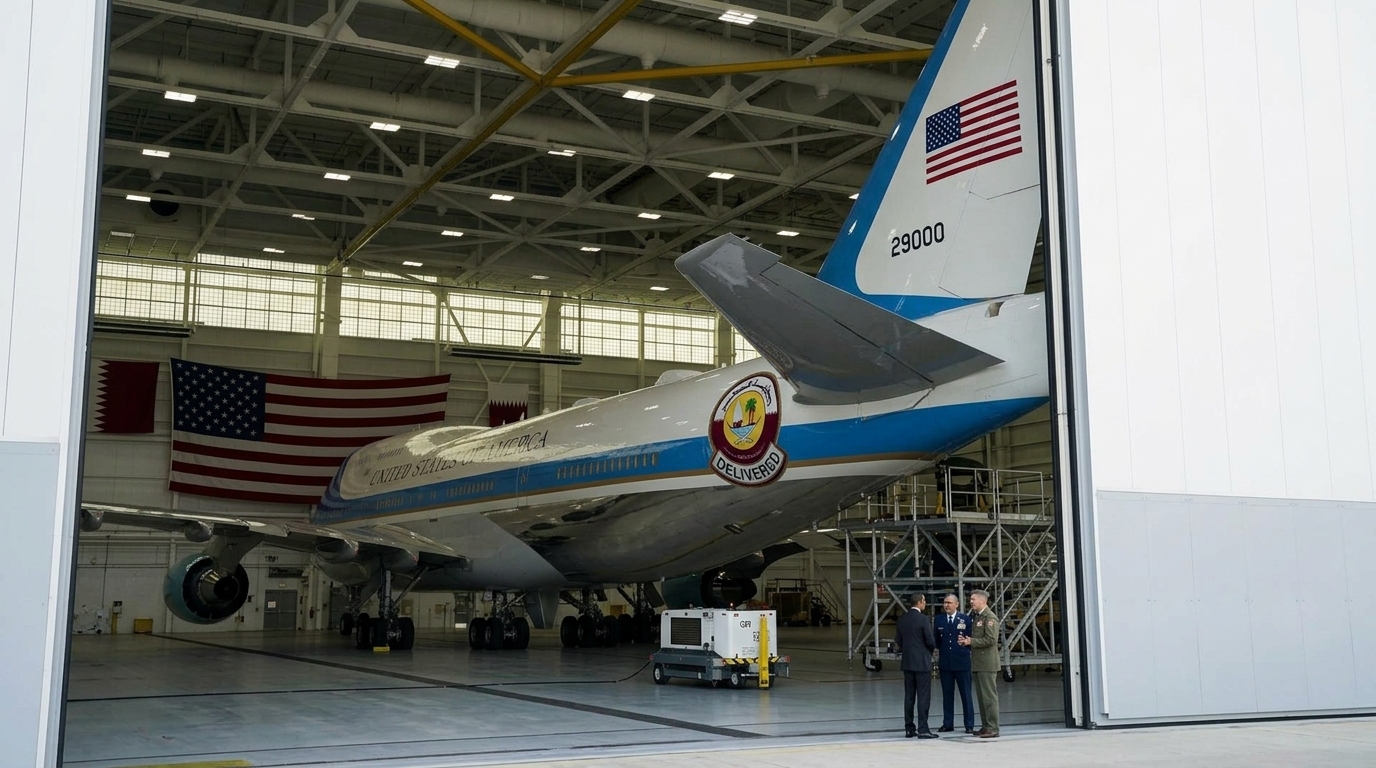
In a ceremony blending traditional military pageantry with the delicate nuances of international diplomacy, the United States Air Force (USAF) has officially unveiled the new aircraft destined to assume the iconic role of "Air Force One." However, what makes this specific upgrade to the presidential fleet a subject of intense debate in the corridors of global power is not just its technical specifications, but its provenance: a Boeing 747-8 provided by Qatar, a move that underscores the depth of strategic ties between Washington and the Gulf state.
A Necessary Upgrade in a Shifting World
The ongoing presidential aircraft replacement program, known as the VC-25B, has weathered a storm of delays and astronomical costs. The existing VC-25A aircraft, based on the Boeing 747-200 airframe, have served faithfully since the presidency of George H.W. Bush, but their maintenance has become prohibitively expensive. The integration of the Qatari-sourced aircraft into the USAF fleet is not merely a logistical solution; it is a strategic choice that accelerates the modernization of the U.S. President's "flying Oval Office."
The aircraft, formerly part of the Qatar Amiri Flight, represents the pinnacle of aeronautical technology in the heavy-lift passenger category. By integrating advanced self-protection systems, electromagnetic pulse (EMP) hardening, and a state-of-the-art telecommunications hub, the new Air Force One will allow the Commander-in-Chief to direct armed forces from anywhere on the planet, even under the duress of nuclear conflict.
Qatar as a Strategic Partner and the Symbolism of the 'Gift'
The transfer of the aircraft from Qatar cannot be viewed as a simple commercial or logistical transaction. In the world of geopolitics, such gestures serve as "hard currency" for diplomatic influence. Qatar, which hosts the Al Udeid Air Base—the largest U.S. military installation in the Middle East—consistently seeks to solidify its role as an indispensable mediator and ally of the United States in the region.
- Strengthening bilateral defense cooperation during a period of Middle Eastern instability.
- Demonstrating Doha's economic and diplomatic prowess on the global stage.
- Counterbalancing regional pressures and reinforcing its status as a "Major Non-NATO Ally."
This move comes at a time when the U.S. is seeking ways to reduce defense program costs without sacrificing operational readiness. Utilizing an existing, low-hour VIP aircraft saves billions for the American taxpayer while affording Qatar a unique place in the history of the American presidency.
Technical Challenges and the Future of Presidential Transport
Despite the impressive unveiling, converting a luxury civilian aircraft into a military fortress of the skies is no small feat. Engineers from Boeing and the USAF are working feverishly to install systems that exist on no other aircraft in the world. From missile-evasion systems to autonomous stairways that allow boarding without ground support, the new Air Force One is an engineering marvel.
"Air Force One is not just a plane. It is the symbol of American power, and its presence at any airport in the world conveys a message of resolve and leadership," a senior USAF official stated during the presentation.
In the future, the operation of this aircraft will serve as a constant reminder of the complexity of modern alliances. In a world where threats are multidimensional, the security of the American President now depends not only on domestic industry but also on the strategic generosity of international partners. "Aerial Diplomacy" has just gained a new, striking chapter.