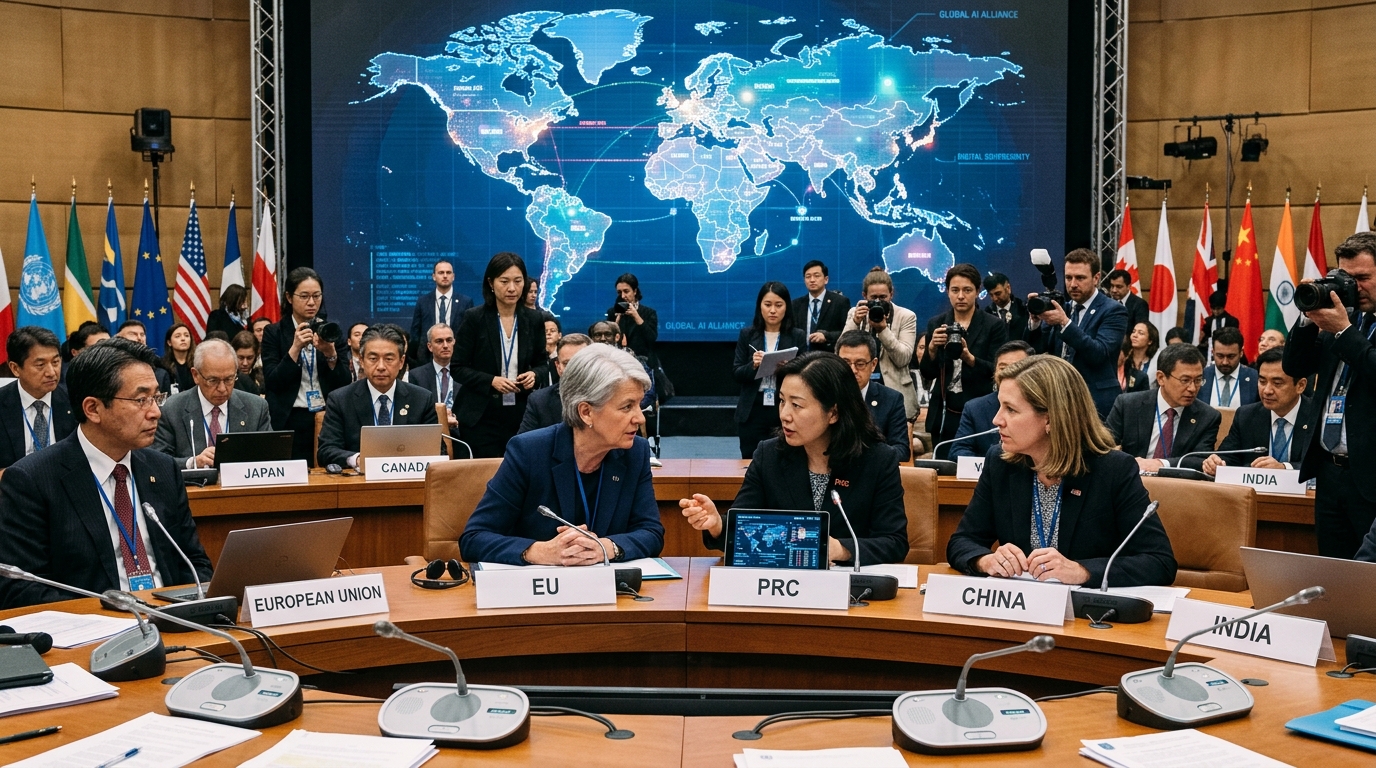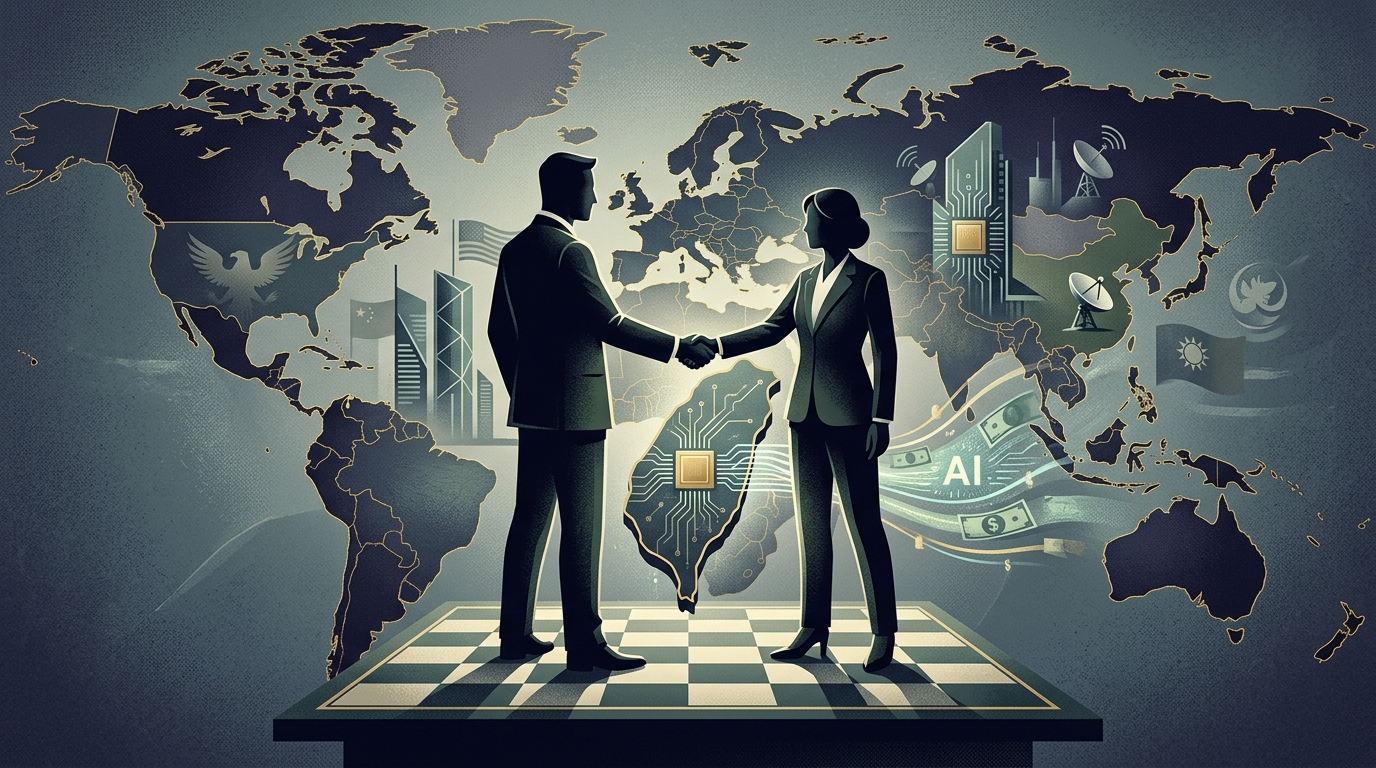
As we move through the first half of 2026, the global geopolitical stage is no longer defined by traditional borders or oil reserves, but by computational power and algorithmic complexity. The 'AI Cold War' between the United States and China has entered a new, more precarious phase, where technological supremacy is directly equated with the survival of each side's political and economic model. Recent analysis from Vietnam.vn highlights how this bipolar struggle is forcing the rest of the world to choose sides, creating what many are calling a 'Silicon Curtain.'
The Politics of Semiconductors and Infrastructure Control
The heart of this confrontation beats in the semiconductor fabrication plants. The United States, through stringent export controls and the legacy of the CHIPS Act, is attempting to sever China's access to the most advanced Graphics Processing Units (GPUs) essential for training Large Language Models (LLMs). In response, China is countering with massive investments in domestic production and the control of critical raw materials like gallium and germanium.
This 'chip diplomacy' is not merely about trade; it is a strategic maneuver to control future productivity. The nation that possesses the most efficient AI will be able to optimize its economy, discover new materials and medicines faster, and manage its social infrastructure with unprecedented precision. Vietnam and other Southeast Asian nations find themselves at the epicenter of this vortex as supply chains shift to avoid geopolitical traps.
Ideological AI: The Clash of Values Through Code
Beyond hardware, the battle rages at the level of values embedded within Artificial Intelligence. The US promotes an AI model based—at least theoretically—on freedom of expression and transparency, though it often faces criticism for the dominance of Big Tech. Conversely, the Chinese AI model is tightly aligned with state priorities, emphasizing social stability and state oversight.
- Western Model: Focus on private-sector-led innovation, with increasing pressure for regulatory frameworks like the EU AI Act.
- Chinese Model: State-led development aimed at 'digital sovereignty' and the export of surveillance systems to other autocratic governments.
This rift is creating two distinct digital ecosystems. Global South nations are now being forced to decide which 'operating system' to adopt for their public services—a decision that will bind them politically and technologically for decades to come.
The Military Dimension: AI as the New Nuclear Power
Perhaps the most unsettling aspect of this Cold War is the military application of AI. From autonomous drone swarms to battlefield decision-support systems, AI is fundamentally altering the nature of conflict. Washington and Beijing are racing to develop systems that can react at speeds beyond human perception, creating the risk of unintended escalation.
"AI is not just a new weapon; it is a new battlefield where superiority is decided in milliseconds," the analysis notes.
The lack of international treaties governing autonomous weapons is reminiscent of the early days of the nuclear age. However, unlike nuclear weapons, AI code is easily replicated and distributed, making arms control a near-impossible task for traditional diplomacy.
Conclusion: The Need for a New Global Architecture
The AI Cold War is not a zero-sum game that will be won quickly. It requires a new form of diplomacy that understands technology as deeply as it understands politics. The international community must push for common safety standards and 'red lines' to prevent a catastrophic collision. The question remains: can the two superpowers coexist in a world governed by algorithms, or will their digital discord lead to a definitive global fragmentation?