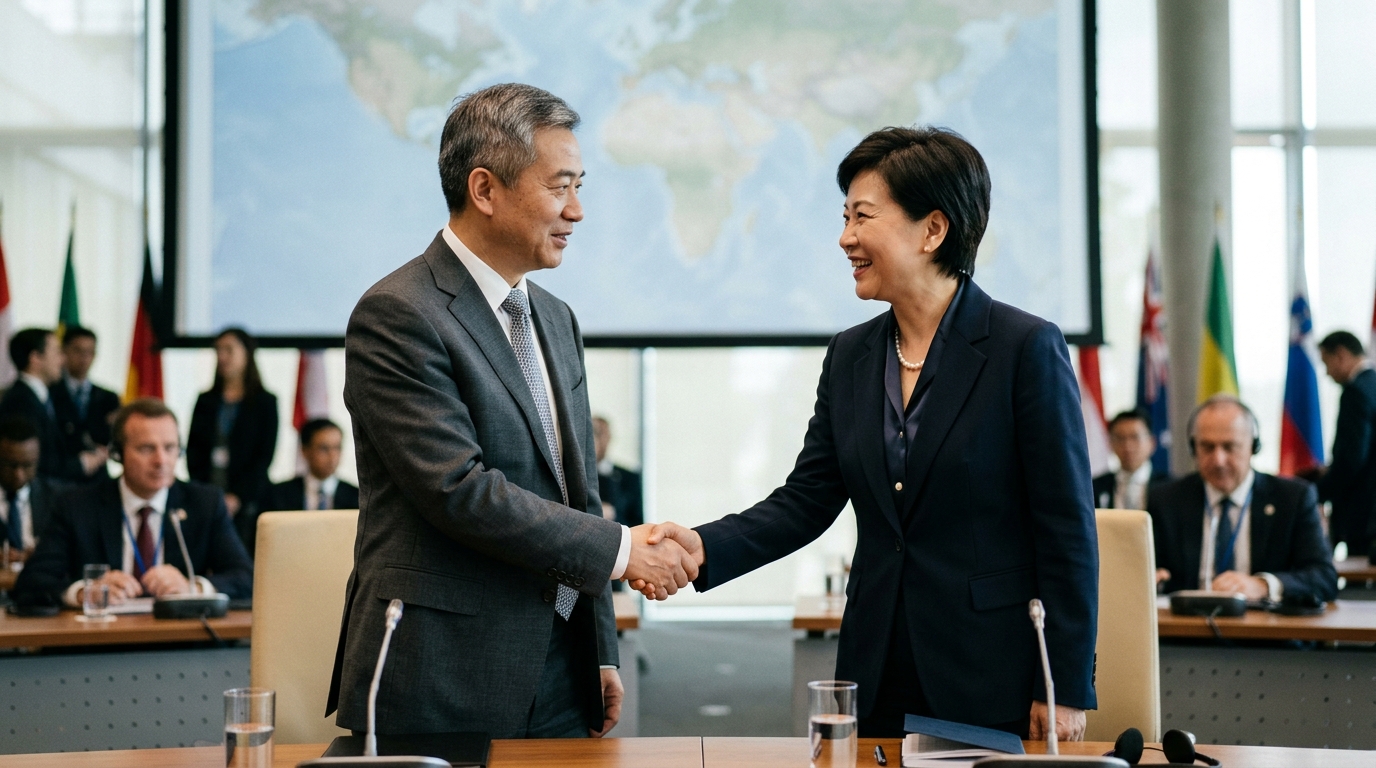
As of May 7, 2026, the global technological chessboard is witnessing a move that many in the West deemed impossible just two years ago. Huawei, in close collaboration with the DeepSeek research team and leading Chinese chipmakers, has announced the full integration of the DeepSeek V4 model into the domestic production chain. This move is more than just a technical upgrade; it is a declaration of independence from Western software and Nvidia's hardware, effectively erecting a 'Great Wall of AI'.
The Architecture of Resilience: DeepSeek V4 and Ascend
DeepSeek V4 represents the cutting edge of Mixture-of-Experts (MoE) architecture. Unlike previous models that demanded massive computational power, V4 has been specifically optimized to run with maximum efficiency on Huawei’s Ascend processors. This strategy allows China to bypass U.S. export restrictions on high-performance chips like Nvidia’s H100 and Blackwell series.
Huawei has developed a complete software stack, MindSpore, which now operates in total synergy with DeepSeek V4. This vertical integration means that Chinese enterprises and government agencies can train and deploy AI models without fearing sudden sanctions or disruptions in cloud services from the West. The efficiency of V4 is such that it achieves GPT-5 level performance using only 40% of the computational power required by previous generations.
Ecosystem and Geopolitical Power
The adoption of DeepSeek V4 is not limited to Huawei. Manufacturers such as SMIC and Moore Threads have already begun optimizing their own architectures to support the new model. This coalescing around a common standard creates a robust ecosystem that attracts developers from across Asia and the Global South. China is no longer trying to copy Silicon Valley; it is trying to make it irrelevant for its own needs.
- Full autonomy in the AI supply chain.
- 60% reduction in model training costs.
- Strengthening China's digital sovereignty through internally controlled open standards.
- Providing alternatives for countries under pressure from U.S. sanctions.
"The era of dependence is over. DeepSeek V4 combined with Ascend hardware proves that innovation under pressure is not just possible, it is inevitable," stated a senior Huawei executive during the Shenzhen summit.
Challenges and the Future of Global AI
Despite the progress, the road is not without obstacles. The lack of access to advanced lithography from ASML remains a thorn in the side of hardware production. However, the shift toward architectural optimization through DeepSeek V4 shows that China is betting on software intelligence to bridge the hardware gap. If this strategy succeeds, we will see a world with two entirely different technological ecosystems: one based on U.S. standards and one on Chinese autonomy.
This move is expected to trigger further reactions from Washington, with potential new sanctions in the field of algorithms and knowledge transfer. However, as the case of DeepSeek shows, knowledge is now global, and efforts to contain it may ultimately lead to the accelerated emergence of a formidable competitor.