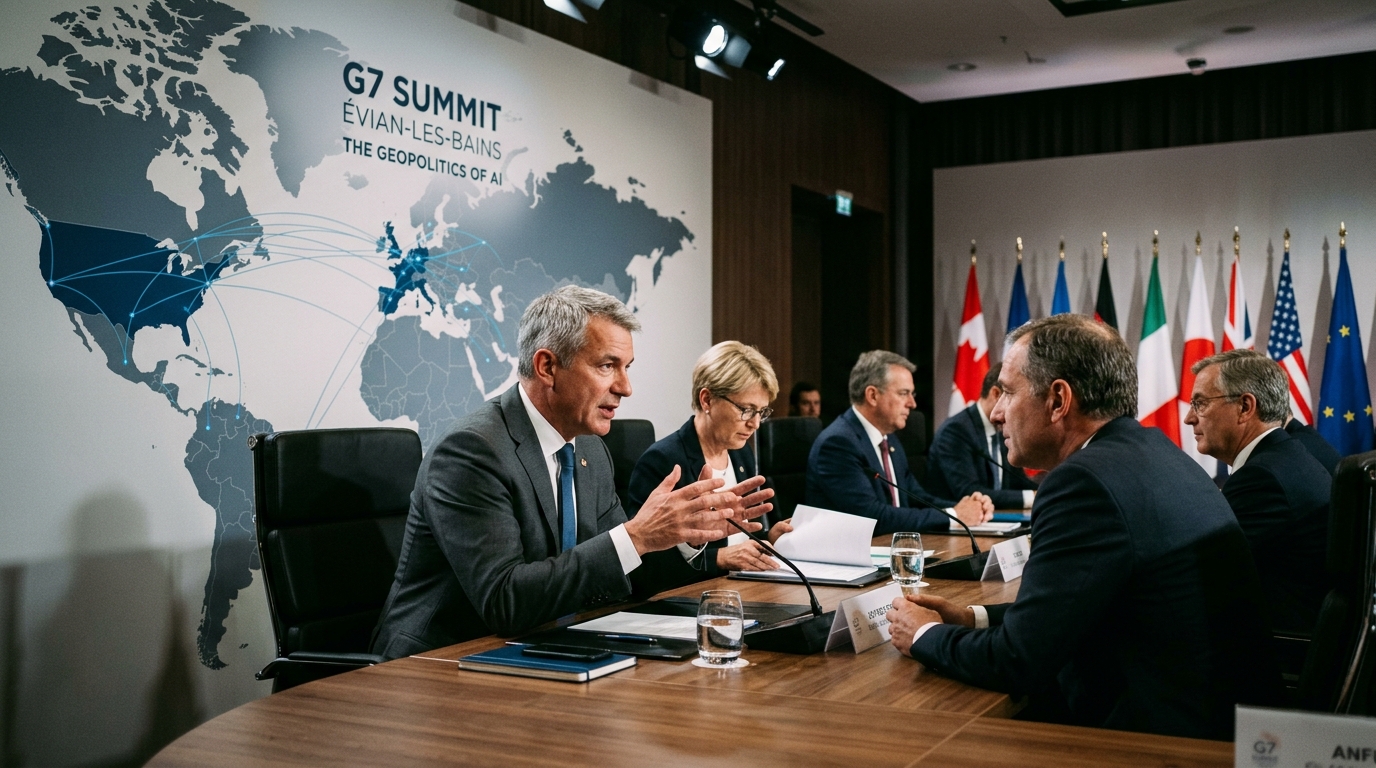
On the shores of Lake Geneva, the picturesque town of Évian-les-Bains has become the epicenter of global diplomacy as leaders of the G7 nations gather for a summit that many analysts describe as the most consequential of the decade. The year 2026 finds the world in a state of "polycrisis": ongoing conflicts in Ukraine and the Middle East, escalating trade tensions between the West and China, and the dizzying pace of Artificial Intelligence evolution create an explosive backdrop. The Évian agenda is no longer just about macroeconomic stability; it is about the survival of the liberal international order in the face of unprecedented technological and geopolitical challenges.
AI Regulation: From Declarations to Binding Acts
A central theme of the summit is the transition from the 2023 "Hiroshima Process" to a more rigorous, perhaps even legally binding, framework for AI safety. G7 leaders are tasked with finding the balance between fostering innovation and protecting against the existential risks posed by frontier models. The European Union, having already implemented the AI Act, is pushing for the adoption of global standards to prevent the use of AI for social control or the creation of biological weapons.
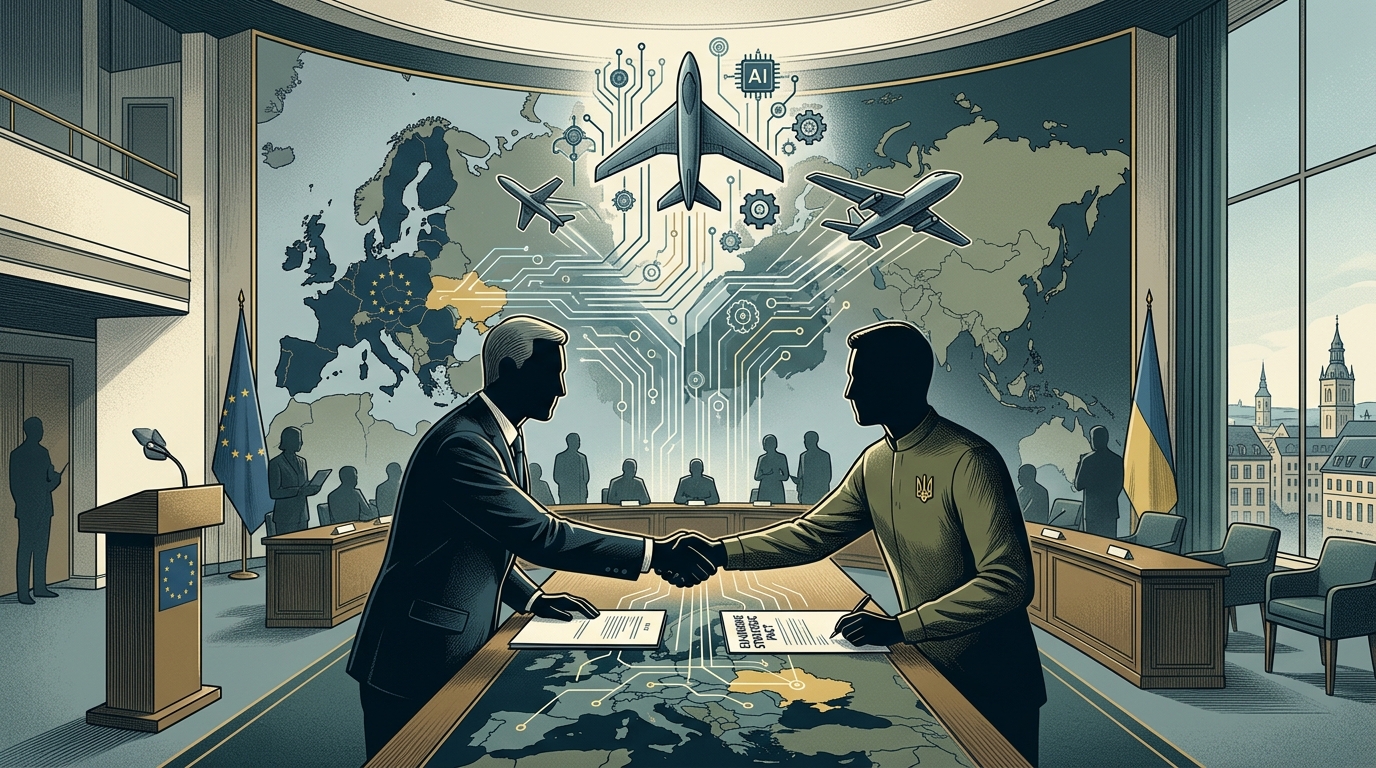
However, the discussion in Évian takes on a new, darker dimension: the use of AI on the battlefield. With reports of autonomous weapons systems already deployed in active theaters of war, the need for a "Code of Conduct for AI in Warfare" has become imperative. The US and the UK appear cautious regarding full bans, focusing instead on maintaining a "human-in-the-loop" for life-and-death decisions. The "Évian Declaration" is expected to lay the groundwork for a permanent oversight mechanism to monitor the development of military AI globally.
Trade Wars and Green Tariffs
The second major front in Évian is trade. Globalization as we knew it is giving way to "friend-shoring"—the tendency of democratic states to trade primarily with each other, reducing dependence on autocratic regimes. The tariffs recently imposed on Chinese electric vehicles and semiconductor technologies are the "elephant in the room." France, as the host, seeks a unified G7 stance against China's subsidy practices without triggering a full-scale trade war that would plunge the global economy into recession.
"Green tariffs" are another thorny issue. The EU's Carbon Border Adjustment Mechanism (CBAM) is causing friction with the US and Japan. Leaders will attempt to align their climate incentives with international trade rules so that the transition to clean energy does not devolve into a protectionist race. The link between AI and the climate crisis is also present: the massive energy consumption of data centers requires new commitments to sustainable computing power.
The Geopolitics of Technological Sovereignty
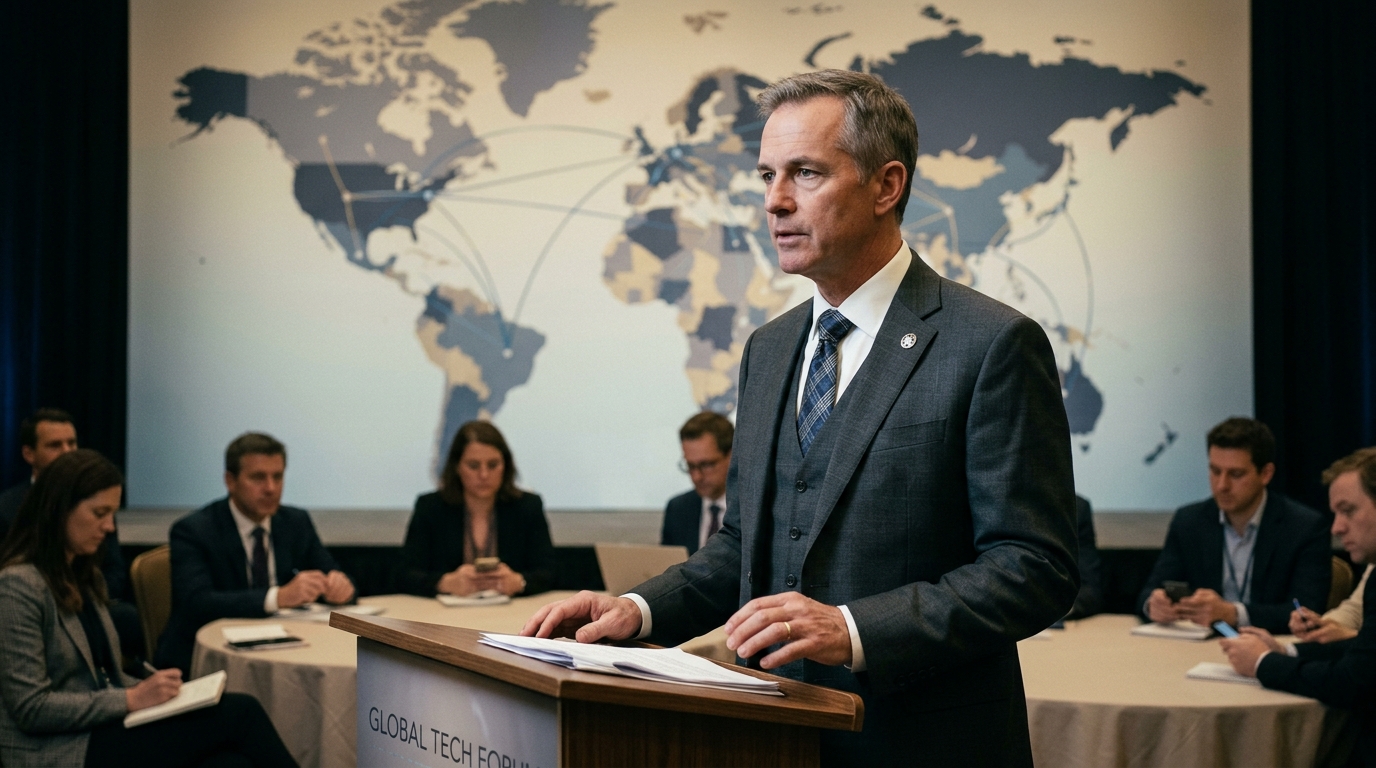
The Évian summit highlights that technology is now the primary tool of power projection. Leaders are discussing the security of undersea cables, control over rare earth elements, and the protection of democratic processes from AI-generated disinformation (deepfakes). In a year of elections for many member states, safeguarding the truth is considered a matter of national security.
- Establishment of a joint fund for investment in quantum computing.
- Agreement on intelligence sharing regarding cyberattacks from state actors.
- An initiative for AI technology transfer to the Global South to avoid a new "digital divide."
In conclusion, the G7 in Évian is not merely a summit; it is an attempt to redefine the West in a rapidly changing world. Its success will be judged not by the joint communiqués, but by the ability of its members to act in unison against challenges that know no borders: war, climate collapse, and the uncontrolled intelligence of machines.