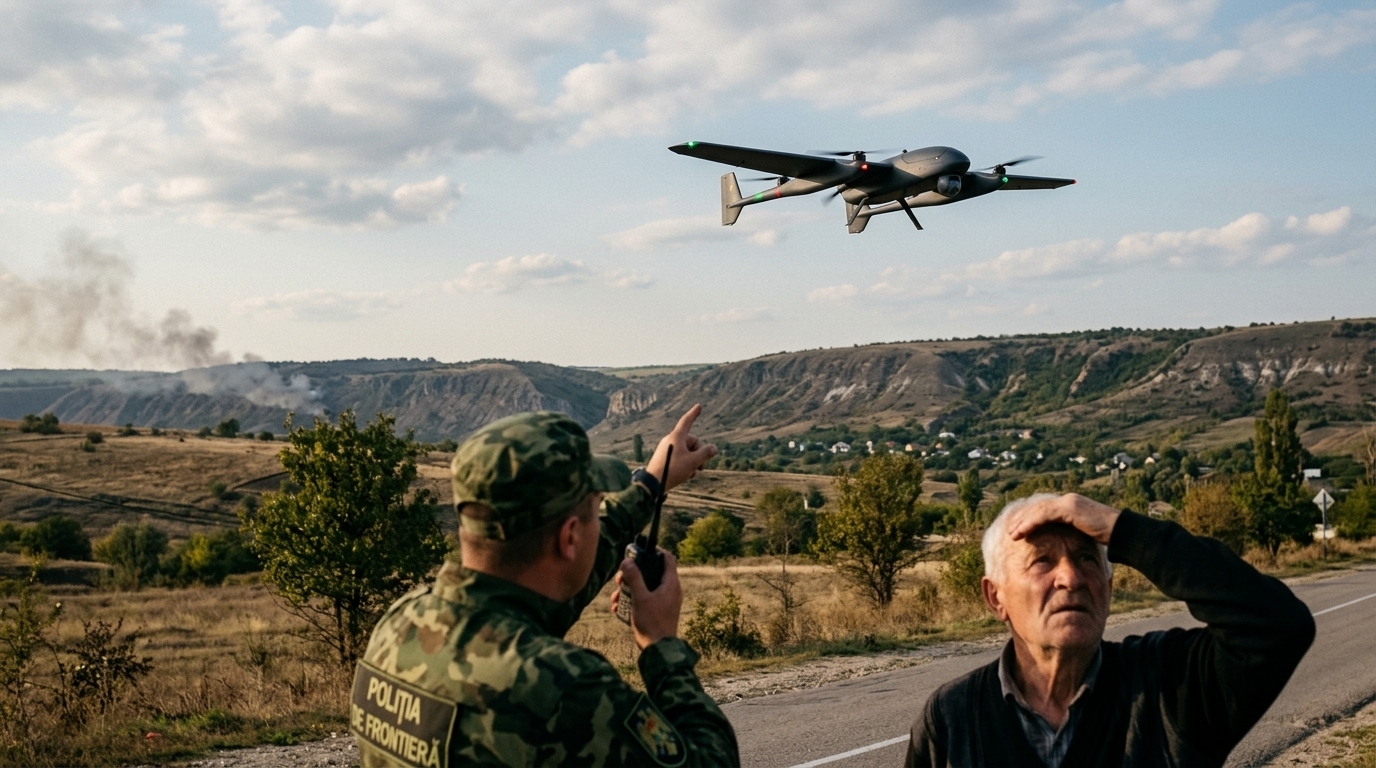
The nocturnal silence of Moldova's Orhei region was shattered around midnight when a drone exploded, triggering an immediate response from local authorities and reigniting security fears in a nation positioned at the precarious edge of a major geopolitical conflict. While no casualties were reported, the incident serves as a stark reminder that the war in Ukraine observes no borders, with Moldova increasingly becoming an involuntary stage for spillover effects, technical failures, and hybrid operations.
The Chronology of the Orhei Incident
According to official reports from the Moldovan police, the alert was raised by a local resident who heard a powerful blast near a residential zone. Security forces arriving at the scene discovered debris consistent with a drone, which likely crashed due to technical malfunction or electronic interference before detonating upon impact. The Orhei region, while not directly on the border, is strategically significant due to its proximity to the capital, Chisinau, a fact that amplifies concerns regarding the reach and potential impact of such incidents.
Moldovan authorities have launched a comprehensive investigation into the drone's origin. Although preliminary evidence points toward the types of unmanned aerial vehicles (UAVs) utilized in the hostilities in neighboring Ukraine, official identification remains pending. This is far from an isolated occurrence; since 2022, multiple instances of missile debris and drones falling on Moldovan soil have been documented, primarily in the northern sectors, leading to diplomatic friction and intensifying President Maia Sandu's calls for upgraded national air defense systems.
Moldova as a Geopolitical Chessboard
Moldova's geographical location renders it one of the most vulnerable actors in Eastern Europe. With the breakaway region of Transnistria hosting Russian troops and the central government in Chisinau resolutely pursuing European Union membership, every drone explosion on its territory carries immediate political weight. The Orhei incident is not merely a technical accident; it is a symptom of the 'gray zone' existence that the country has endured for several years.
The hybrid threat is multifaceted. On one hand, there is the physical danger posed by stray munitions. On the other, there is the psychological pressure exerted on the population, often used as a tool for destabilization. The government in Chisinau frequently accuses Moscow of attempts to undermine its democracy, while Russia denies involvement, often labeling such claims as provocations. In this context, the explosion in Orhei serves as a reminder that neutrality—as enshrined in the Moldovan constitution—is exceedingly difficult to maintain when one's airspace is violated by instruments of war.
Technology, AI, and Electronic Warfare
A critical dimension often overlooked in public discourse is the role of Electronic Warfare (EW). Many drones ending up in Moldovan territory are not necessarily targeted there. The use of sophisticated jamming systems and AI-driven autonomous navigation can lead to a loss of control. When a drone loses its GPS signal due to jamming, its onboard AI attempts to recalculate its path, frequently resulting in erratic flight paths and unintended landings.
This 'technological instability' creates a new paradigm of risk. Modern drones are significantly more advanced than those from the beginning of the decade, featuring radar-evasion capabilities and autonomous decision-making in signal-deprived environments. However, this very autonomy makes them unpredictable when they drift into the airspace of neutral states. For Moldova, addressing these threats requires more than traditional anti-aircraft batteries; it necessitates advanced Counter-UAS (C-UAS) technology, which the country is currently seeking through European defense funds and international partnerships.
Conclusion: The Challenge of the Day After
The explosion in Orhei may not have claimed lives, but it has left behind profound questions regarding the international community's ability to protect non-belligerent states. Moldova is on a path toward modernization and EU integration, yet its security remains hostage to regional dynamics. The need for international cooperation in airspace monitoring and the provision of technological assistance to Chisinau is now imperative. As long as the conflict persists, the sky over Moldova will remain a high-risk zone where technology and geopolitical conflict collide with unpredictable consequences.