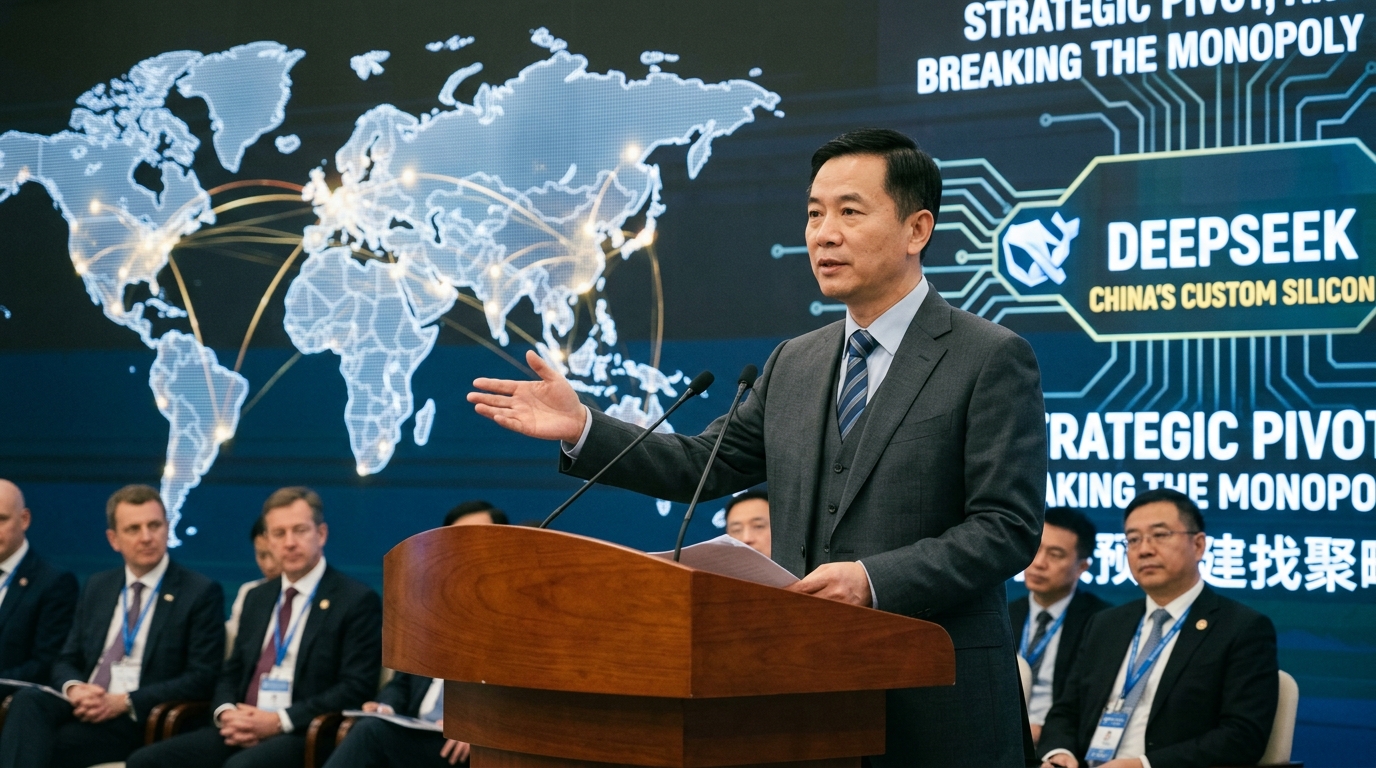
In the height of July 2026, the global semiconductor landscape is witnessing a seismic shift. DeepSeek, the Chinese AI disruptor that previously sent shockwaves through the industry with its hyper-efficient models, is reportedly moving into the next phase of its strategic evolution: custom AI silicon. This move is far more than a corporate expansion; it is a calculated act of survival and a bid for dominance in an era of unprecedented geopolitical friction.
Necessity as the Mother of Innovation
For DeepSeek, reliance on Nvidia has always been an "Achilles' heel." As US export controls on high-end GPUs—such as the H100 and the newer Blackwell series—tighten into a virtual embargo, Chinese tech firms have faced a stark choice: settle for aging hardware or innovate their way out of the bottleneck. DeepSeek has chosen the latter, doubling down on vertical integration.
Industry insiders suggest that DeepSeek’s custom chip is being designed specifically to complement its unique Mixture-of-Experts (MoE) architecture. Unlike general-purpose AI accelerators, this silicon aims for a specialized instruction set that maximizes the throughput of DeepSeek’s specific algorithms. This co-design of software and hardware could theoretically allow them to achieve state-of-the-art performance even on older manufacturing nodes.
Geopolitics and the Quest for Sovereignty
This initiative fits perfectly into Beijing’s broader mandate for technological self-reliance. As Washington seeks to throttle China’s access to the raw compute power necessary for frontier AI, the creation of domestic hardware capable of rivaling Nvidia’s performance is a national priority. DeepSeek, having already proven it can produce world-class software with a fraction of the capital used by its US counterparts, is now the vanguard of this movement.
- Vertical Integration: Controlling both the code and the silicon allows for optimizations that are impossible for companies reliant on off-the-shelf hardware.
- Sanction Resilience: By designing custom chips, DeepSeek can tailor its hardware to the capabilities of domestic foundries like SMIC, using architectural cleverness to compensate for less advanced lithography.
- Cost Leadership: Eliminating the "Nvidia tax" enables DeepSeek to maintain its aggressive pricing strategy, putting immense pressure on Western AI labs.
The Challenges Ahead and Market Implications
However, the path to silicon success is fraught with peril. Designing a chip is only half the battle; mass-producing it with high yields in Chinese foundries remains a significant hurdle. Furthermore, Nvidia’s CUDA software ecosystem is a formidable moat. DeepSeek will need to build a robust software stack that can entice developers away from the industry standard.
"The race is no longer about who has the largest data center, but who can extract the most intelligence per watt and per transistor," notes a senior industry analyst in Beijing.
In conclusion, DeepSeek’s foray into custom silicon marks the end of the globalized AI supply chain as we knew it. The world is bifurcating into two distinct technological spheres. China is betting that specialized, efficient hardware can close the gap created by export bans, potentially turning a strategic disadvantage into a long-term competitive edge.