In the corridors of power in Beijing, the atmosphere is not merely tense; it is electric with the conviction that China has reached a critical turning point. The 'Blue Whale,' a metaphorical moniker for the new generation of Chinese Large Language Models (LLMs)—most notably the rise of DeepSeek-V3—is not just a technological feat. It is a declaration of independence. As the world braces for the high-stakes summit between President Donald Trump and Xi Jinping, Beijing is sending a clear signal: Washington’s silicon siege has failed to stifle Chinese innovation.
The Architecture of Resistance: Efficiency Over Brute Force
For years, Western consensus held that controlling the flow of high-end NVIDIA semiconductors would relegate China to a permanent second-tier status in the AI race. However, the Chinese response has been a strategic pivot. Instead of attempting to match the U.S. in raw compute power, Chinese engineers have focused on 'architectural efficiency.' DeepSeek-V3 proved that it is possible to train a world-class model at a fraction of the cost and resources required by giants like OpenAI or Anthropic.
This shift has profound geopolitical implications. If China can produce top-tier AI using legacy-node chips or domestic alternatives from SMIC, the leverage of American sanctions diminishes dramatically. The 'Blue Whale' symbolizes this very capability: a massive entity navigating the deep waters of global competition, indifferent to the nets cast by Western regulators. It represents a move from quantity to quality, from dependency to self-reliance.
The Trump Factor and the 'Tech-Yalta'
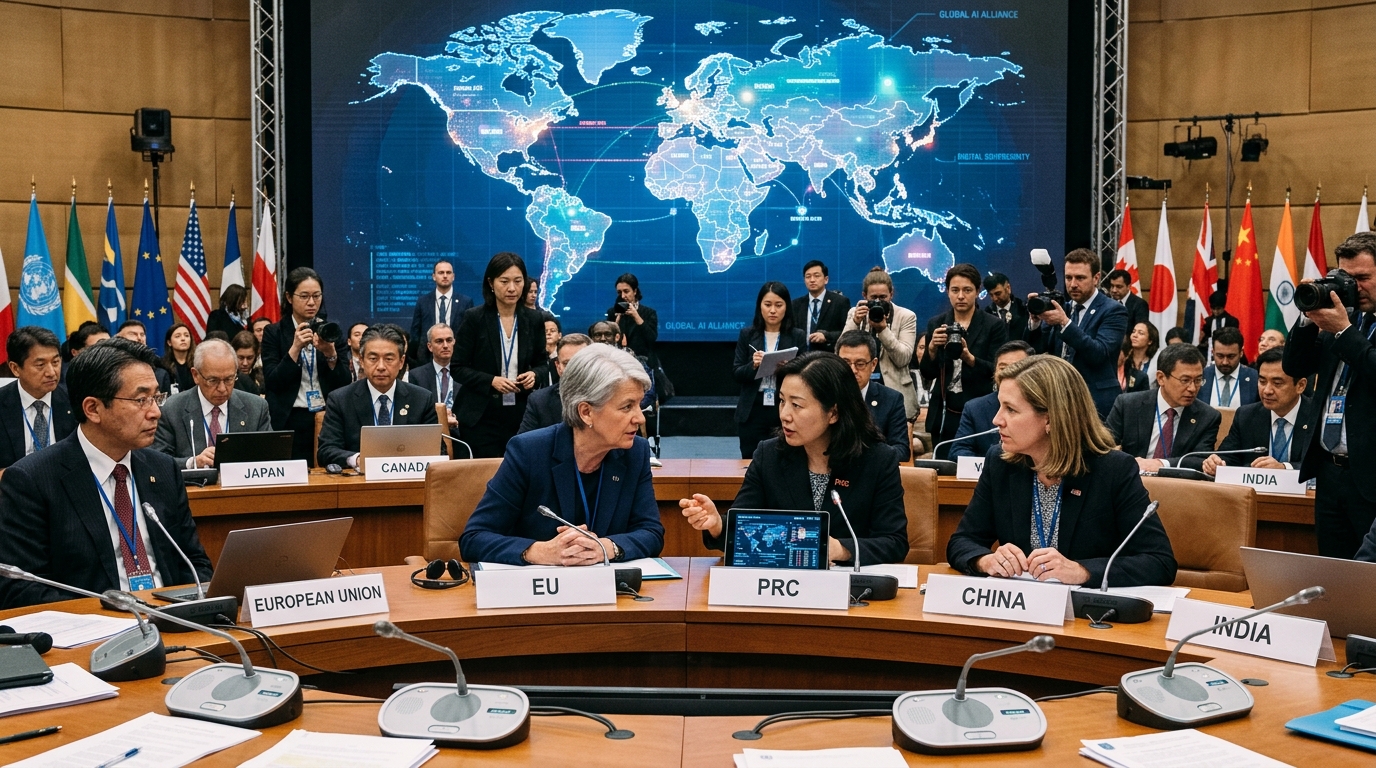
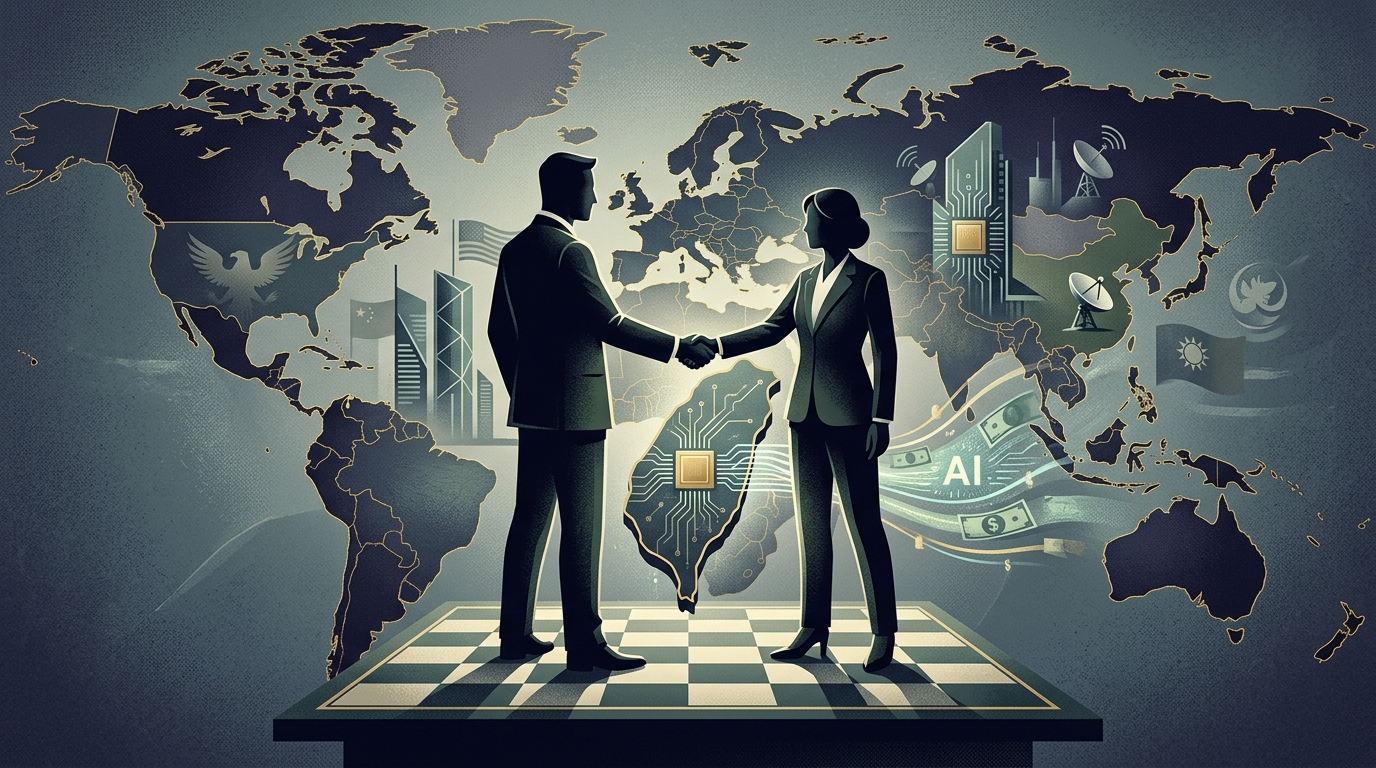
Donald Trump’s return to the White House brings a renewed sense of 'transactional diplomacy.' For Trump, technology is not just an issue of national security, but a potent bargaining chip in a broader game involving trade deficits and tariffs. The upcoming meeting with Xi Jinping is being viewed by analysts as a modern-day 'Tech-Yalta,' where the two superpowers will attempt to redefine digital spheres of influence.
Beijing, however, is not approaching the table from a position of weakness. The success of models like DeepSeek-V3 allows Xi to argue that China is now an equal pole in the AI landscape. Analysts suggest Beijing’s message is twofold: 'We can survive without you, but cooperation would be more profitable for everyone.' This balance of terror between interdependence and isolationism will dictate the future of the global economy for the next decade.
The Chip War: Beyond the Numbers
The battle for microchips has entered a phase where physics meets politics. While the U.S. pressures ASML and other critical suppliers to sever ties with China, Beijing is funneling billions into its 'Big Fund III' to catalyze domestic lithography breakthroughs. The 'Blue Whale' of Chinese AI is not just software; it is the culmination of a national mobilization reminiscent of the Manhattan Project.
- Domestic Breakthroughs: SMIC is reportedly achieving yields on 7nm and 5nm processes that many thought impossible without Western extreme ultraviolet (EUV) tools.
- Algorithmic Optimization: China is leading the way in developing models that require significantly less memory and energy, effectively bypassing the 'GPU wall.'
- Resource Dominance: Beijing maintains its grip on the rare earth elements essential for the hardware that powers AI, a card it has yet to play fully.
In this context, the Trump-Xi summit will transcend traditional trade talk. It will be about who sets the rules for intelligence in the 21st century. If China successfully exports its AI model to the Global South, American software hegemony could be fundamentally challenged, creating a bifurcated internet and a divided global intelligence infrastructure.
"Artificial Intelligence is the new ocean, and whoever controls its depths controls the future of civilization," notes a senior advisor to the Chinese Ministry of Science and Technology.
Conclusion: One World, Two Systems
As we approach the summit, it is becoming increasingly clear that the era of globalized technology is ending. The emergence of the 'Blue Whale' marks the birth of a robust, alternative digital ecosystem. The challenge for the international community, particularly Europe, will be navigating between these two technological tectonic plates without being crushed. Beijing’s message is unmistakable: China no longer fears isolation because it has built its own sanctuary in the digital deep.