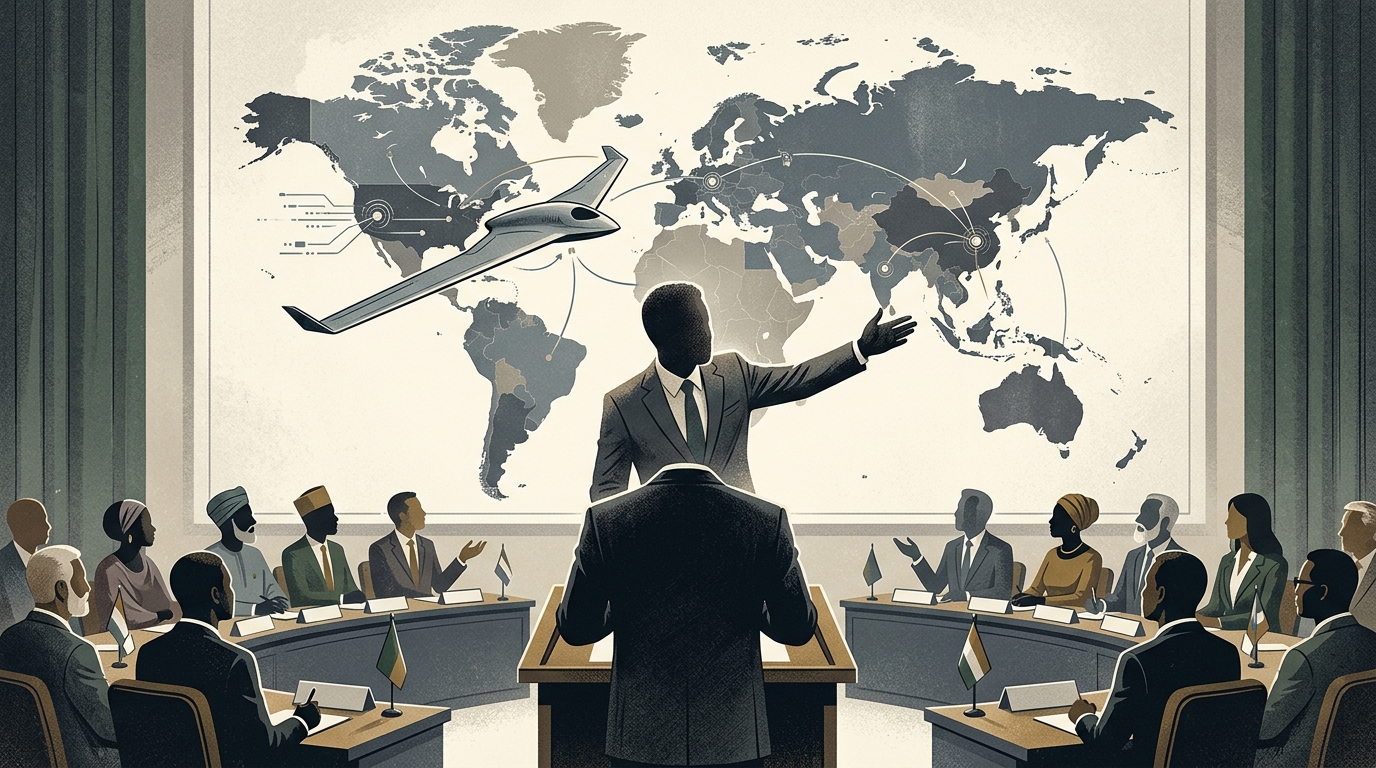
In a historic turning point for modern military technology, Anduril Industries announced today, June 18, 2026, that it has secured the highly coveted production contract for the U.S. Air Force’s Collaborative Combat Aircraft (CCA) program. This development is not merely a business victory for Palmer Luckey’s firm; it marks the official transition from the era of hyper-expensive, manned fighters to the age of autonomous, mass-produced "intelligent" war machines.
Disrupting the Military-Industrial Complex
For decades, the U.S. Department of Defense relied on a tight-knit circle of "traditional" primes, such as Lockheed Martin and Boeing. Anduril’s dominance in this competition is a resounding slap to the establishment. The company, which began as a Silicon Valley startup, has successfully proven that software is now more critical than hardware. The CCA program aims to create a fleet of at least 1,000 autonomous combat aircraft that will operate as "loyal wingmen" for existing F-35s and the future NGAD (Next Generation Air Dominance) platforms.
Anduril’s approach is centered on the Fury platform, an autonomous aircraft designed to be "attritable"—expendable in high-threat environments—yet highly capable. Unlike traditional fighters that cost hundreds of millions of dollars, Anduril’s drones are designed for mass production at a significantly lower cost, allowing the U.S. military to accept their loss in combat without risking human lives or the financial stability of the program.
The Lattice OS: The Brain of the Battle
The true power of Anduril lies not in the aerodynamics of the Fury, but in its Lattice operating system. This is an AI-powered platform that allows a single human operator to oversee entire swarms of autonomous aircraft. Lattice manages split-second decision-making, from target identification to evading enemy radar, drastically reducing the cognitive load on the pilot in the manned lead aircraft.
"We aren't just building a plane. We are building an autonomous agent capable of executing complex missions in contested environments where communication is impossible," said Brian Schimpf, CEO of Anduril.
Anduril’s ability to integrate continuous software updates (DevOps) directly into the field is what set it apart from its competitors. While traditional manufacturers take years to upgrade fire-control systems, Anduril can adapt its algorithms in weeks, responding to new threats emerging in the Indo-Pacific theater.
Geopolitical Implications and the China Factor
The Pentagon’s rush to deploy the CCA program is no coincidence. China’s growing military might and its ability to mass-produce drones have alarmed Washington. The Department of Defense’s "Replicator" initiative aims exactly at this: countering Chinese quantity with American quality and automation.
- Deterrence in the Pacific: The presence of hundreds of autonomous fighters around Taiwan fundamentally alters Beijing’s strategic calculus.
- Scaling Production: Anduril’s new "Arsenal" factory concept promises to produce thousands of units annually, a feat traditional defense primes struggle to match.
- Ethical Dilemmas: Delegating life-and-death decisions to algorithms remains the most thorny issue in international relations.
As we head toward the end of the decade, Anduril’s victory is the prelude to a new arms race. It is no longer about who has the fastest pilot, but about who possesses the most sophisticated code and the greatest production capacity for autonomous systems. The era of "Silicon Valley Defense" has arrived, and the rules of the game have changed forever.