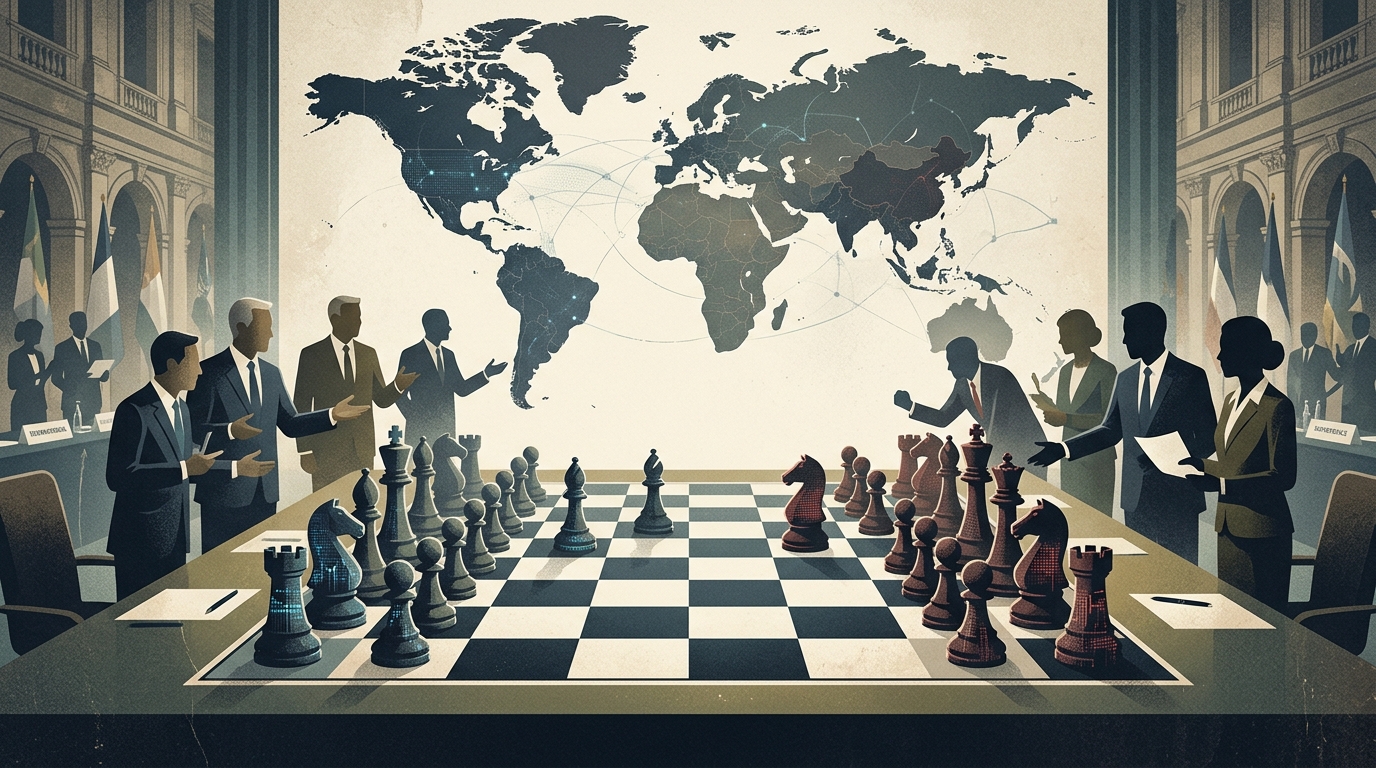
Alibaba, once the undisputed titan of Chinese e-commerce and technology, finds itself at one of the most critical junctures in its history. The company is under fire from two distinct yet equally powerful fronts: the United States legal system and Beijing’s stringent regulatory machinery. With a massive settlement totaling nearly $600 million—including the resolution of US shareholder class-action lawsuits—and a fresh, aggressive campaign by the Cyberspace Administration of China (CAC) targeting Artificial Intelligence models, Alibaba serves as the quintessential case study of the geopolitical pressure exerted on modern tech superpowers.
The US Front: The Price of 'Misleading' Investors
The recent news that Alibaba agreed to pay $433.5 million to settle a US shareholder class-action lawsuit—a figure that, when combined with legal fees and other related liabilities, nears the $600 million mark—is a stark reminder of the risks associated with listing on foreign exchanges. Investors accused the company of concealing critical information regarding its monopolistic practices and the then-imminent collapse of the Ant Group IPO in 2020.
This legal saga is more than just a financial burden. It is a symbolic defeat highlighting the vulnerability of Chinese giants to Western transparency standards. While Alibaba denies any wrongdoing, the decision to settle reflects a desire to close a chapter of uncertainty that has haunted its stock for years. However, the market reacted with skepticism, as investors wonder whether this settlement marks the end of legal woes or merely the tip of the iceberg in an environment of increasing hostility between Washington and Beijing.
Beijing’s AI Iron Fist
While Alibaba attempts to appease American shareholders, it faces a far more existential threat at home. The Chinese government, via the CAC, has launched a new wave of crackdowns aimed at controlling Generative AI. New regulations require companies to ensure their models "reflect core socialist values" and do not undermine state power or national unity.
For Alibaba, which has invested billions into its 'Tongyi Qianwen' model, these restrictions act as a drag on innovation. Every response generated by the AI must be filtered through an incredibly complex censorship system. This creates a paradox: China wants to lead the global AI race to surpass the US, yet it simultaneously fears the freedom of information that the technology requires to flourish. Alibaba is caught in the center of this contradiction, trying to balance technological excellence with political subservience.
Geopolitical Implications and the Future of BABA Stock
The impact on the company’s stock has been immediate and painful. Volatility has spiked as institutional portfolios reassess the "China risk premium." Alibaba is no longer judged solely on its earnings or cloud growth, but on its ability to survive a minefield of geopolitical rivalries. The "AI-first" strategy announced by leadership last year now seems harder to implement, as US export restrictions on high-end chips (like those from Nvidia) combine with domestic Chinese crackdowns.
"The era of 'unbridled growth' for Chinese tech is over. We are now in the era of 'compliant growth,' where the state sits at the boardroom table," notes a senior analyst.
As we move further into 2026, the stakes for Alibaba couldn't be higher. The company must navigate a landscape where technology is no longer just a business, but a primary instrument of national security for both the US and China. The $600M fine might be a one-time hit, but the ongoing AI crackdown represents a permanent shift in the operating environment.
- Loss of investor trust due to transparency issues in the US.
- Strangulation of AI creativity by Chinese regulatory frameworks.
- Difficulty accessing critical hardware due to international sanctions.
In conclusion, Alibaba is the mirror of a bipolar world. On one hand, the need for global capital forces it to comply with Wall Street's rules. On the other, its survival depends on remaining in the good graces of the Communist Party. In this "perfect storm," the company is forced to redefine itself—no longer as the "Amazon of the East," but as a controlled national champion that must innovate under constant surveillance.