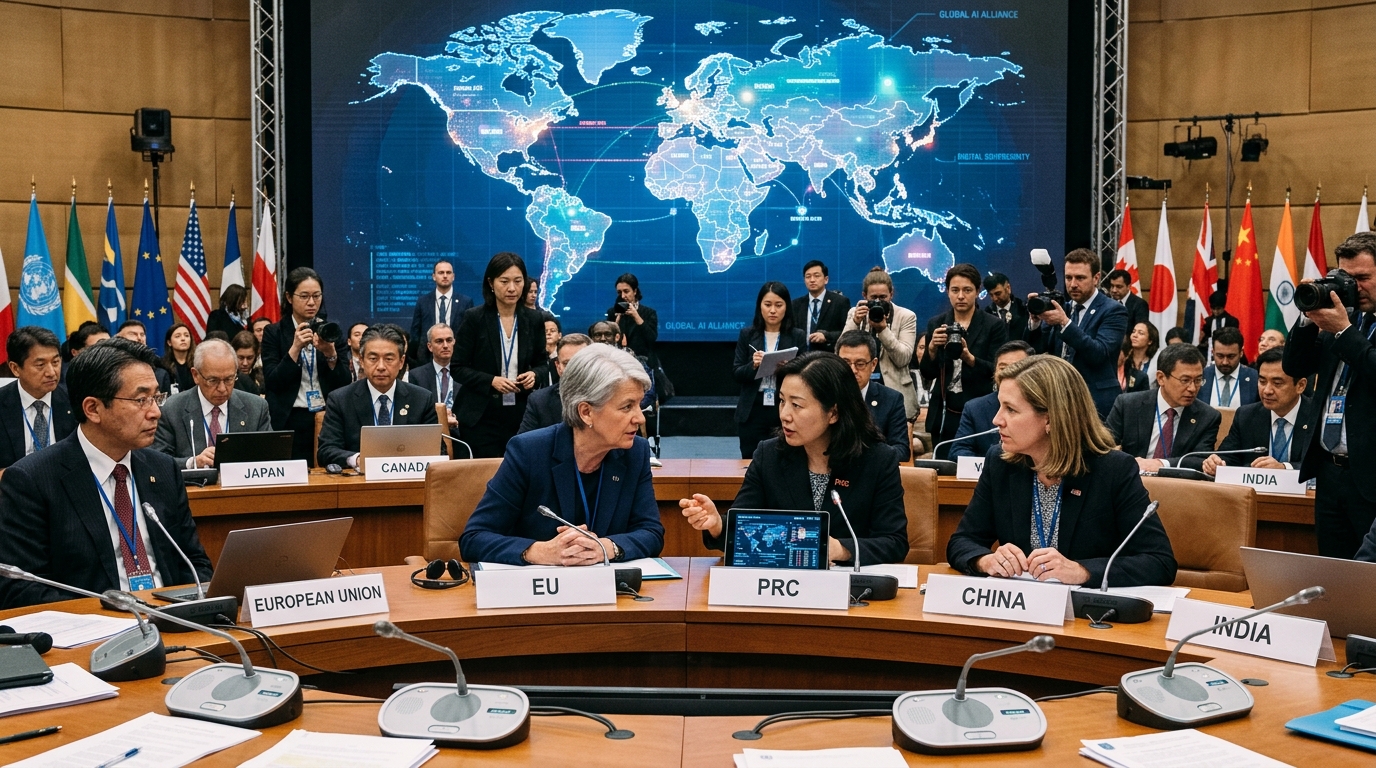
The global geopolitical chessboard of artificial intelligence is navigating one of its most critical turning points. As we move through May 2026, the image of the Chinese tech industry is no longer monolithic. The two pillars of the Chinese internet, Alibaba and Tencent, which once walked parallel paths of growth, are now in a process of profound strategic divergence. The cause? Stifling pressure from the United States through export controls on advanced semiconductors and a selective approval process for AI chips that is forcing Beijing to rethink its doctrine of digital sovereignty.
Alibaba’s Vertical Integration Strategy
Alibaba, the e-commerce and cloud computing giant, has chosen the path of direct confrontation with the supply chain crisis. Through its T-Head (Pangu) chip design unit, the company is investing billions in developing its own processors based on the RISC-V architecture, attempting to decouple from NVIDIA and Intel. For Alibaba, AI is not just a tool, but the backbone of the cloud services it offers to third parties. Lack of access to NVIDIA's H100 or H200 processors represents an existential threat to its profit margins, as leasing compute power requires maximum efficiency.
Recent tightening of U.S. controls has made Alibaba more insular. While it continues to apply for licenses for less powerful American chips, the company's leadership seems to accept that its future depends on domestic production. This entails a massive increase in capital expenditures (CAPEX), which is squeezing its balance sheets but is deemed necessary to maintain its leadership in the Chinese cloud market, where competition from state-controlled entities is intensifying.
Tencent: The Pivot to Ecosystem and Applications
In contrast, Tencent is following a more flexible and perhaps more realistic approach. Rather than trying to replace the entire semiconductor value chain, the Shenzhen-based company is focusing on software optimization and integrating AI into the vast ecosystem of WeChat and gaming. Tencent seems to be betting that "raw compute power" is less important than access to high-quality data and user experience.
According to analysts, Tencent has managed to build a stockpile of semiconductors that allows it to train its model, Hunyuan, for the next two years without an immediate need for new imports. This "cushion" allows it to avoid the costly race for hardware development that preoccupies Alibaba. Instead, it is investing in tailoring AI models to specific vertical markets, such as advertising and entertainment, where profits are more immediate and less dependent on Washington's whims.
The Geopolitical Game of Licenses
The central issue testing both companies is the opacity and volatility of U.S. approvals. The U.S. Bureau of Industry and Security (BIS) uses export licenses as a tool of diplomatic and economic leverage. The recent decision to allow the export of certain "downgraded" chips to China has created a new status quo: Chinese companies must now design their strategy around what they are permitted to buy, rather than what is technologically optimal.
This situation is creating a "digital iron curtain." On one side, the West continues to gallop ahead with the full power of latest-generation chips, and on the other, China is forced to innovate under conditions of artificial scarcity. Alibaba and Tencent represent the two different experiments of this new reality. Their success or failure will determine whether China can remain competitive in the AI race or if it will be relegated to a secondary, local market with outdated infrastructure.
Implications for the Future
The divergence of these two giants shows that there is no longer a single "Chinese response" to U.S. sanctions. Alibaba chooses autonomy at a high cost, while Tencent chooses adaptation with high efficiency. As the U.S. prepares for the next round of restrictions, which will likely target access to overseas cloud services, the pressure on Beijing to accelerate its national chip strategy becomes imperative. The question remains: can innovation flourish in an environment of restrictions, or is the split between Alibaba and Tencent the prelude to a broader technological stagnation for the region?