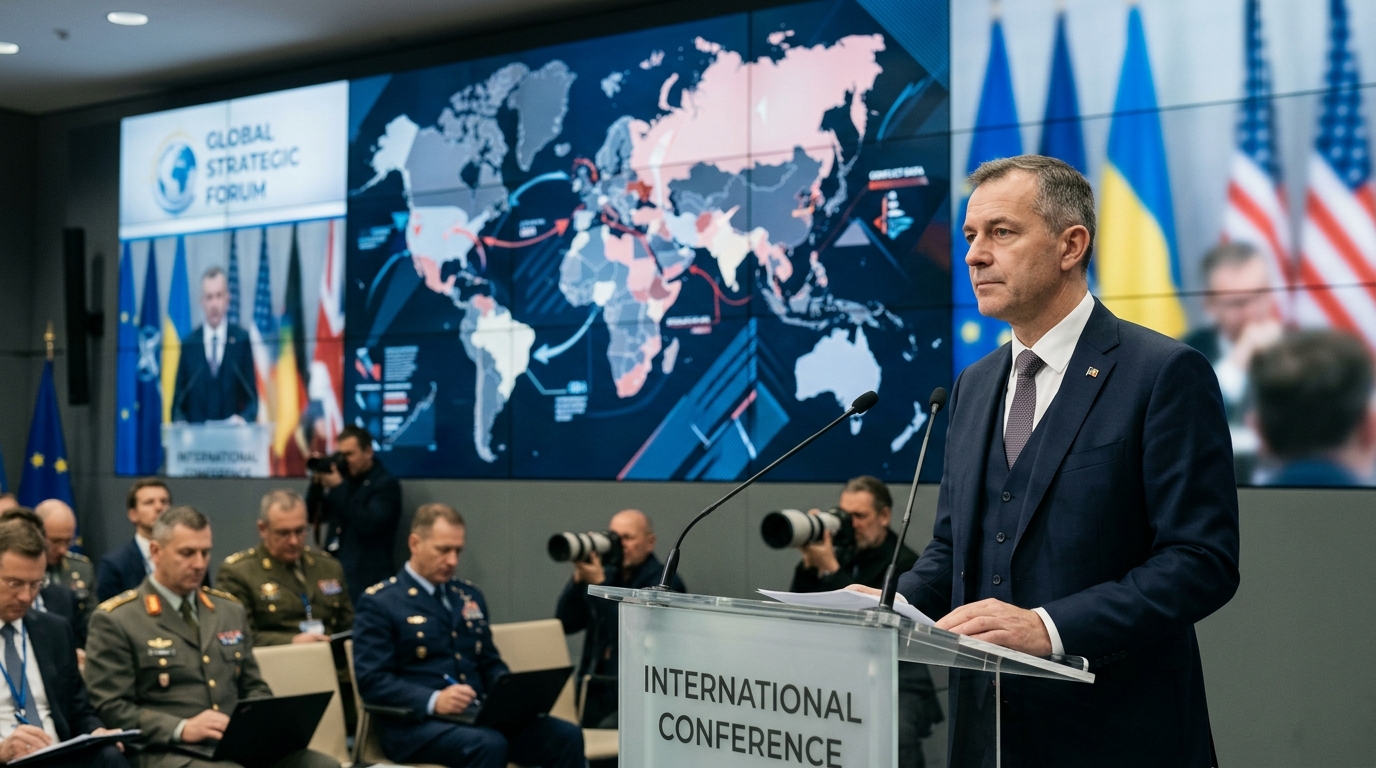
The history of warfare is punctuated by moments of tectonic shifts: the advent of gunpowder, the industrialization of conflict in World War I, and the dawn of the nuclear age. Today, we stand on the threshold of a comparable transition. According to recent statements from officials at the Ukrainian Ministry of Defense, Artificial Intelligence (AI) is no longer a peripheral support tool but the central pillar of a new model of warfare that is fundamentally reshaping the battlefield.
Due to its current geopolitical position, Ukraine has become a living laboratory for the application of cutting-edge technologies. The necessity for asymmetric responses against a numerically superior adversary has led to the rapid integration of information technology into military operations. As analysts note, the "war of algorithms" is now a reality, and the lessons learned on the front lines will form the military doctrine of armed forces worldwide for decades to come.
From Trenches to Data: The Digitization of the Front
The traditional image of war, based on mass mobilization of infantry and armor, is giving way to a structure where information is the most valuable ammunition. The Ukrainian Ministry of Defense emphasizes the creation of an ecosystem where AI processes vast amounts of data from satellites, drones, and signals intelligence in real-time. The "Delta" system, for instance, serves as a situational awareness platform that integrates data from multiple sources, allowing commanders to view the battlefield with a clarity that was unthinkable a decade ago.
The use of AI in target identification has dramatically reduced the "sensor-to-shooter cycle." Where it once took hours and multiple levels of approval, machine learning algorithms can now identify enemy positions through camouflage or in low-visibility conditions, suggesting the ideal method of neutralization. This speed is not just a tactical advantage; it is the foundation of survival in modern warfare.
Autonomous Assets and the Rise of Drones
Perhaps the most visible aspect of this new model is the evolution of Unmanned Aerial Vehicles (UAVs). While early drones required constant operator control, the new generation being developed in Ukraine incorporates autonomous navigation and terminal guidance capabilities. This is critical in environments of intense electronic warfare (EW), where GPS signals and telecommunications are frequently neutralized by enemy jamming systems.
Once an algorithm "locks" onto a target visually, the drone can complete its mission even if it loses contact with its operator. This transition from remote-controlled to autonomous weaponry changes the rules of engagement. The Ministry of Defense emphasizes that mass production of cheap, smart drones can neutralize the power of expensive weapon systems, such as main battle tanks, making traditional investments in "heavy" hardware less effective.
- Image Analysis: Using neural networks to detect hidden enemy forces.
- Predictive Maintenance: Algorithms that predict when a weapon system will need repair before it fails in the field.
- Logistics: Optimizing supply chains under fire, ensuring ammunition reaches where it's needed at the right moment.
Geopolitical Implications and Ethical Dilemmas
Ukraine's declaration that AI will shape the new model of warfare is not just about its internal defense. It is a message to the international community and Western defense industries. The success of these systems creates a new global hierarchy of power, where technological superiority in computing can offset the sheer size of an army.
However, this evolution brings with it daunting questions. The concept of "Lethal Autonomous Weapon Systems" (LAWS) triggers intense backlash from human rights organizations. Who bears responsibility for an algorithmic error? Can a machine accurately distinguish between a combatant and a civilian in a chaotic conflict? The Ukrainian Ministry of Defense maintains that human oversight remains central, but the pressure of time on the battlefield tends to grant more and more initiative to machines.
In conclusion, the war in Ukraine is not merely a local conflict but the catalyst for a global military revolution. Artificial Intelligence is no longer a promise of the future but the harsh reality of the present, requiring new doctrines, new ethical safeguards, and a radical reassessment of what "power" means in the 21st century.