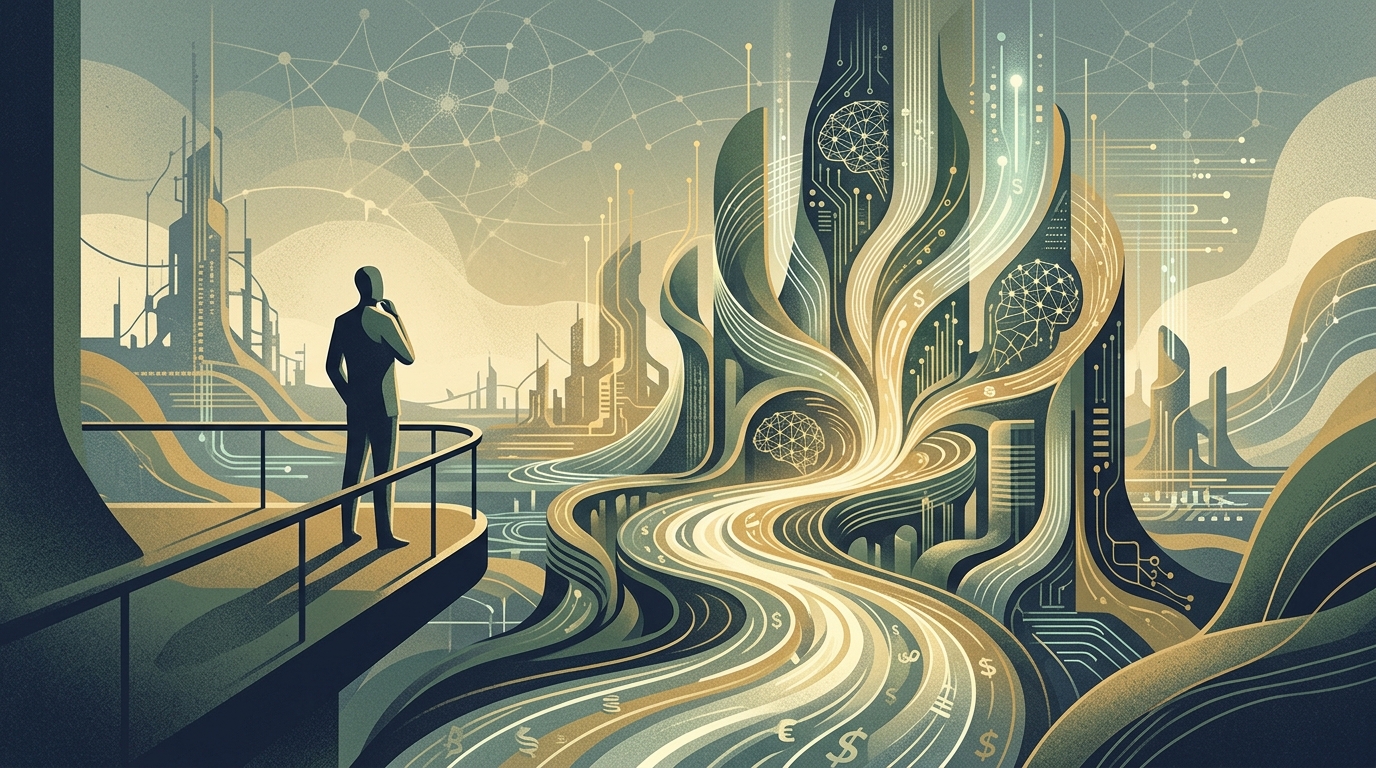
In an era where the traditional rules of economic advancement seem to have collapsed, a new generation of investors is redefining its relationship with money and risk. The image of the young professional patiently saving in mutual funds for decades is being replaced by the teenager or twenty-something betting their savings on hyper-volatile cryptocurrencies, options, and so-called "meme stocks." This is not merely a trend of recklessness, but a rational—if dangerous—response to an economic landscape that feels increasingly hostile.
The Collapse of the Traditional Dream
For previous generations, the recipe for success was clear: education, a stable job, and homeownership. Today, this equation has fractured. With real estate prices rising at rates many times higher than wages, owning a home in major global metropolises—from New York and London to Athens—now feels like an unattainable dream. When entering the housing market requires capital that an average wage earner cannot possibly accumulate, the incentive for "safe" saving evaporates.
According to analysts, this sense of exclusion leads to "financial nihilism." If you can't buy a house no matter how much you save, then why not risk everything on an asset that could decuple in value overnight? Risk is no longer seen as an option, but as the only escape route from wage slavery.
The Shadow of AI Over the Job Market
A new, unpredictable factor has been added to the mix: the rapid evolution of Artificial Intelligence. Young people entering the workforce today face not only inflation but also the possibility that their skills will become obsolete within a few years. The traditional 40-year career now appears as an anachronistic illusion.
Uncertainty about the future of work is driving many to seek "passive income" or "fast wealth" through the technology they understand better than their parents. The irony is palpable: while AI threatens their jobs, they use AI-driven tools to analyze stock charts and execute algorithmic trades, attempting to beat the system at its own game.
The Digitization and Gamification of Investing
The rise of commission-free trading apps, like Robinhood, has turned the stock market into something resembling a video game. The ease of use, combined with the influence of social media (TikTok, Reddit), has created a culture where investing is simultaneously entertainment and a social statement. Communities of investors share not just tips, but a sense of belonging, often rallying against the large institutional investors of Wall Street.
"We aren't investing to be rich at 60. We want to live now, because no one guarantees what the world will look like in 30 years," says one 24-year-old trader.
This YOLO (You Only Live Once) mentality reflects a deep distrust of traditional financial institutions. Young people view index funds as too slow for a world moving at the speed of light. Volatility, once considered the enemy, is now embraced as an opportunity.
Conclusions and Implications
The pivot toward high risk is not a simple fad. It is the symptom of an economy that has failed to provide stability to younger generations. While the risks are enormous—with many losing their entire fortunes to scams or sharp market corrections—this trend is expected to persist as long as the structural issues of housing and job insecurity remain unresolved. Society must decide whether to continue treating these investors as "gamblers" or to recognize the need for a new social contract that makes security attainable once again.