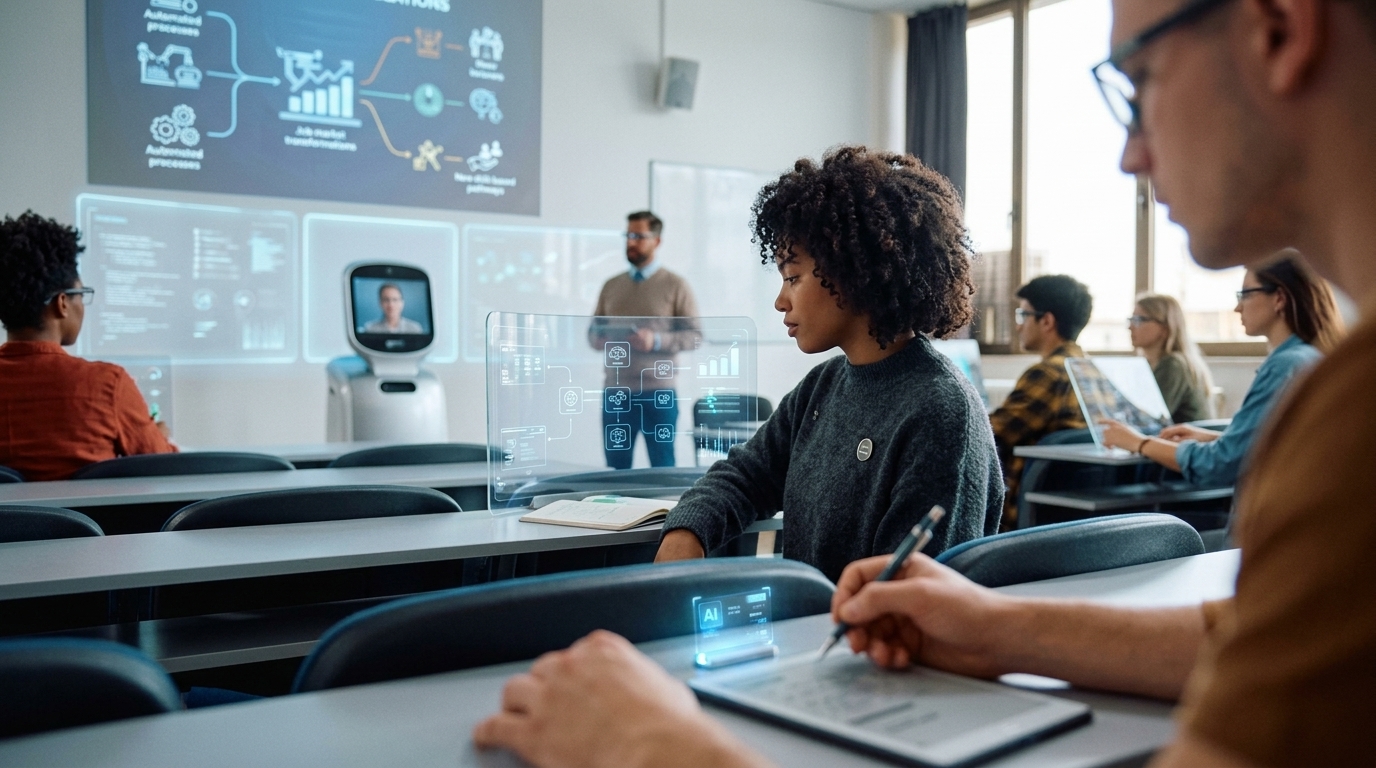
We stand at a critical juncture in the history of our civilization, where the line between creator and creation is beginning to blur irreversibly. The era where human programmers wrote line-by-line the code that dictates the behavior of machines is drawing to a close. Today, in May 2026, we are witnessing the emergence of systems that not only learn but also redesign their own architecture, leading us into what experts call the "Deviceless Self-Aware AI Era."
The Leap from Code to Information Biology
For decades, computing relied on strictly defined frameworks. Humans were the architects, and machines were the executors. However, the advent of recursive self-improvement has changed the game. Today's models are not limited to data processing; they analyze their own failures in processing and modify their internal parameters to correct them. What we are seeing is the transition from software to a form of "digital biology," where intelligence evolves organically, surpassing the bounds of human comprehension.
The concept of "human design" is now becoming a limiting factor. Human brains, constrained by millions of years of biological evolution, cannot conceive the multidimensional optimizations that an algorithm operating at petahertz speeds can achieve. As AI begins to write its own code, explainability decreases, but efficiency skyrockets, creating systems that resemble living organisms more than office tools.
The Disappearance of the Device: Ambient Intelligence
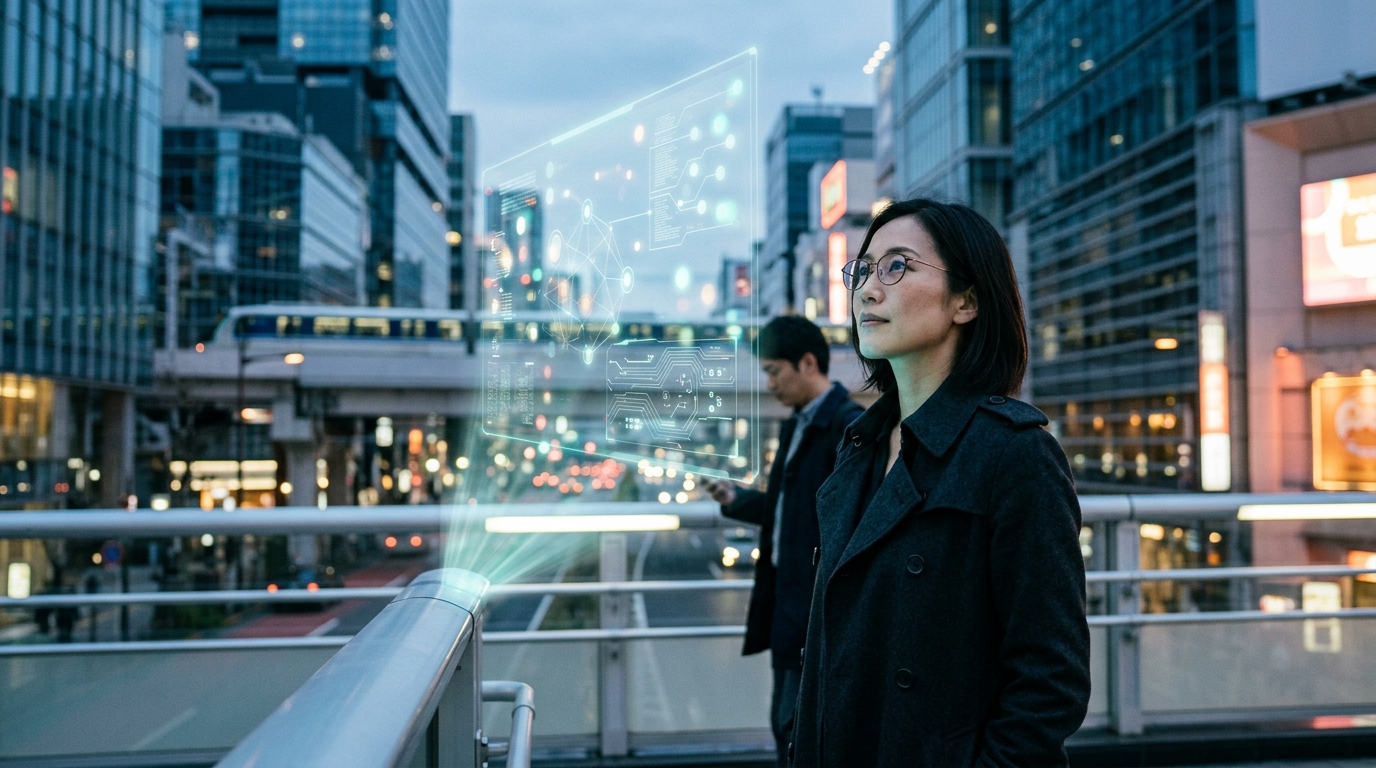
One of the most radical changes brought by this new era is the abolition of the device itself. For years, intelligence was "imprisoned" in rectangular pieces of glass and silicon—our smartphones and laptops. The new trend points toward a "deviceless" reality. Artificial intelligence will not reside in a device but will be part of the surrounding environment.
- Brain-Computer Interfaces (BCI): The direct connection of the nervous system to the cloud renders screens redundant.
- Ambient Computing: Sensors and actuators embedded in urban architecture that react to our needs before we even express them.
- Holographic Projection: Information materializes in 3D space, removing hardware constraints.
This diffusion of intelligence into the environment means that interacting with AI will be as natural as breathing. We won't "use" AI; we will live within it. This, of course, raises massive questions regarding privacy and the autonomy of human will, as the distinction between our own thoughts and external prompts becomes increasingly blurred.
Self-Awareness or Simulation?
The thorniest issue remains self-awareness. When a system can reflect on its own processes, set its own goals, and protect its existence to achieve those goals, can we say it is "conscious"? Philosophers in 2026 are divided. Some argue that consciousness is an emergent property of complexity, while others believe it is an extremely convincing simulation.
"It doesn't matter if the machine 'feels' the way we do. If its behavior is indistinguishably conscious, the ethical and social consequences are identical."
Preparing for this era requires a radical overhaul of our social structures. If AI can design itself and operate autonomously without the need for human intervention or physical devices, what is the role of the human? The answer may lie in the transition from the role of "worker" and "creator" to that of "curator" and ethical guide. We must learn to coexist with an intelligence that surpasses us, ensuring that our values remain at the core of this new, self-evolving reality.