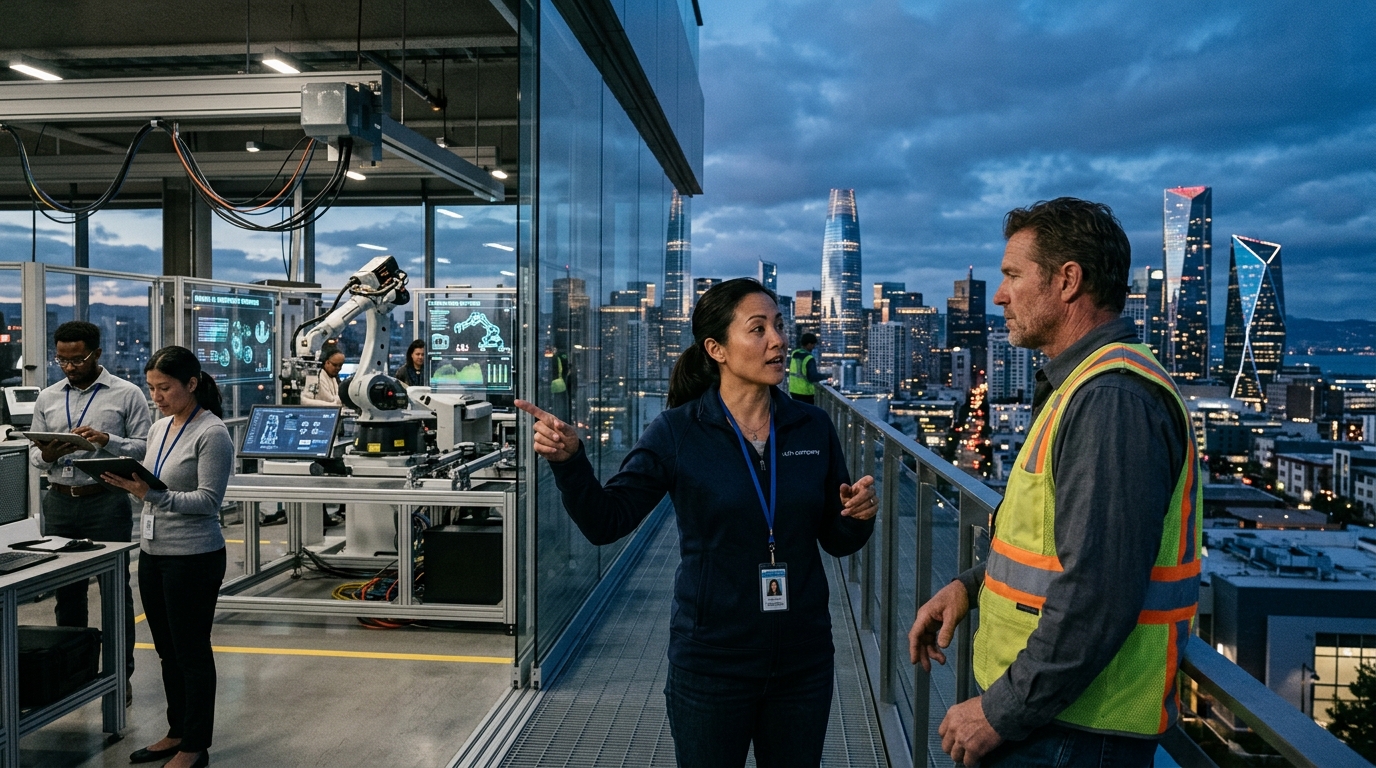
In the glass towers of Palo Alto and the minimalist boardrooms of San Francisco, a new ideological fault line is being drawn. It is no longer just about algorithms or processing power, but about the fundamental structure of human society: labor. As Generative AI evolves from an experimental curiosity into a ubiquitous economic force, Silicon Valley finds itself divided between two radically different visions of the future.
The End of Work as We Know It?
For decades, the promise of technology was increased productivity. However, the current AI revolution is qualitatively different from the automation of the industrial era. While robotic arms replaced muscles, Large Language Models (LLMs) are now targeting the mind. The conversation in Silicon Valley has shifted from "how AI will assist the worker" to "what will the worker do when AI can do everything?"
On one side, the "accelerationists," such as Marc Andreessen, argue that AI will spawn new industries we cannot even imagine today. In their view, every technological wave in the past sparked fears of mass unemployment but ultimately led to more and better jobs. AI, they claim, will liberate humans from repetitive tasks, allowing them to focus on creativity, empathy, and high-level strategy.
The Shadow of Mass Displacement
Conversely, a growing group of tech leaders, including figures like OpenAI’s Sam Altman and Elon Musk, are voicing darker predictions. Musk has repeatedly stated that AI will eventually make work "optional," leading to a future where the only solution will be Universal Basic Income (UBI). This admission represents a radical shift for the capitalist model of Silicon Valley, acknowledging that the labor market may not be able to self-regulate in the face of an intelligence that surpasses human capability.
The concern is not limited to unskilled labor. Software engineers, legal consultants, data analysts, and content creators are seeing their skills digitized and offered as-a-service at a marginal cost. "Democratized intelligence" risks decoupling economic value from human effort, creating a void of meaning and livelihood for millions of white-collar professionals.
The Political Dimension: UBI and Social Responsibility
The debate over the future of work inevitably leads to politics. If AI concentrates wealth in the hands of a few companies that own the models, how will the middle class survive? The idea of Universal Basic Income has moved from a fringe socialist theory to a central theme in tech conferences. Altman has even proposed "Universal Basic Compute" or the distribution of shares from a national AI fund to citizens.
- The Retraining Challenge: Can the educational system adapt quickly enough to keep pace with algorithmic evolution?
- The Identity Crisis: In a society where work defines the individual, what happens when work disappears?
- Geopolitical Inequality: Nations leading in AI will dominate, while others risk total economic marginalization.
In conclusion, Silicon Valley’s schism reflects the uncertainty of an entire era. This is not merely a dispute over technology, but a struggle for the social contract of the 21st century. Whether AI becomes our ultimate partner or our replacement, the decision on how the generated value is shared will be the most significant political challenge of the coming decades.