In the evolving landscape of electric mobility, where discussions are dominated by battery range and the ability of algorithms to replace humans at the wheel, Rivian is attempting something radical with the new R2: putting the joy of driving back in the spotlight. While the industry hurtles toward robotaxis and Level 4/5 autonomous systems, the R2 arrives to remind us that a car isn't just a "smartphone on wheels," but a tool for freedom and adventure.
A Strategic Shift from Luxury to Mainstream
Rivian began its journey with the R1T and R1S, two vehicles that impressed with their performance and aesthetics but remained out of reach for the general public due to their premium price tags. The R2, with a starting price of approximately $45,000, is the vehicle that will determine the company's future. It's not merely a smaller version of its predecessors; it's a fundamental reimagining of Rivian's philosophy for the mass market.
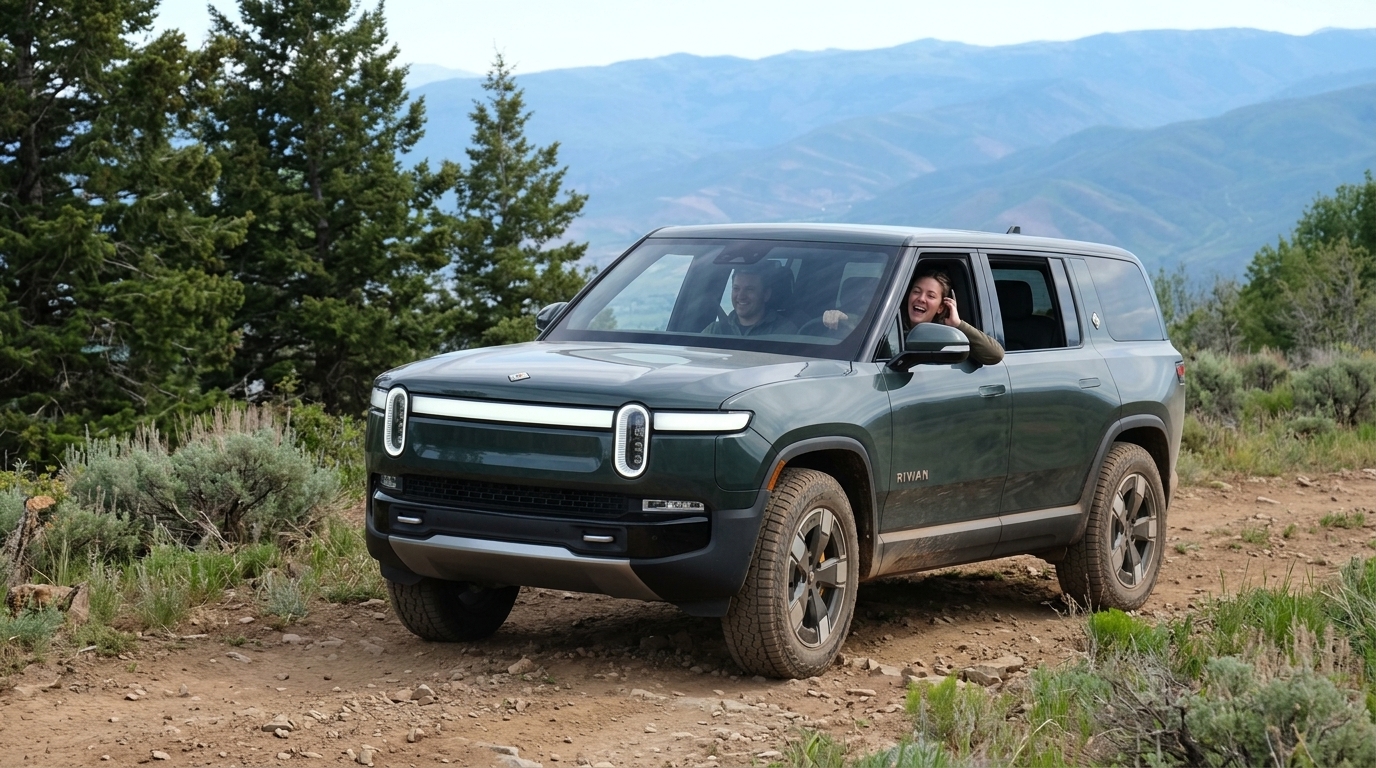
Design-wise, the R2 retains the brand's iconic "friendly" face, featuring vertical headlights that make it look like a Pixar character. However, beneath the skin lies a platform optimized for high-volume production. Utilizing the 4695 battery cell architecture, it promises a range exceeding 300 miles, placing it in direct competition with the Tesla Model Y and the Hyundai Ioniq 5.
The Paradox of Artificial Intelligence
While the title suggests a resistance to automation, Rivian has not fallen behind technologically. The R2 is equipped with 11 cameras and 5 radars, powered by a robust computing stack that enables "hands-off" driving on select highways. The irony lies in the fact that while the software is capable of taking control, the vehicle's dynamics are so engaging that drivers rarely want to hand it over.
The R2's suspension has been tuned to offer a sense of road connection that is rare in electric SUVs of its class. The immediate steering response and linear acceleration create an experience that feels "organic," despite its digital core. This creates an interesting tension: AI exists as a safety net, but Rivian seems to be betting that its buyers still value the sensation of control.
Interior Design: Functionality as Experience
Inside the R2, Rivian has avoided the trap of excessive minimalism that defines Tesla. There are physical scroll wheels on the steering wheel—albeit with haptic feedback—and a central display running one of the most beautiful operating systems on the market, built on Unreal Engine. The ability to fold all seats completely flat (including the driver and passenger seats) transforms the car into a mobile tent, reinforcing the adventure narrative.
- Dual gloveboxes for increased storage capacity.
- Pop-out rear windows for better airflow and carrying long items like surfboards.
- Integrated flashlight in the door, a signature Rivian touch.
These details show that the company understands its customer: someone who wants technology, but wants it at the service of real life, not as a replacement for it. Rivian isn't just selling transportation; it's selling a lifestyle connected to nature and exploration.
Economic Stakes and Competition
Rivian is at a critical juncture. The partnership with Volkswagen, which invested billions to gain access to Rivian’s software stack, provided much-needed financial breathing room. However, the success of the R2 is essential to prove the company can achieve profitability. The EV market has become hyper-competitive, with Chinese manufacturers driving prices down and legacy giants re-evaluating their strategies.
Conclusion: The Machine as a Companion
The Rivian R2 is a statement of intent. In an era where AI tends to homogenize the driving experience, turning it into a passive process of content consumption, Rivian chooses a different path. It offers a vehicle that is smart enough to protect you, yet "analog" enough in feel to make you smile on a mountain road. Perhaps the future of motoring isn't full automation, but the enhancement of human experience through technology.