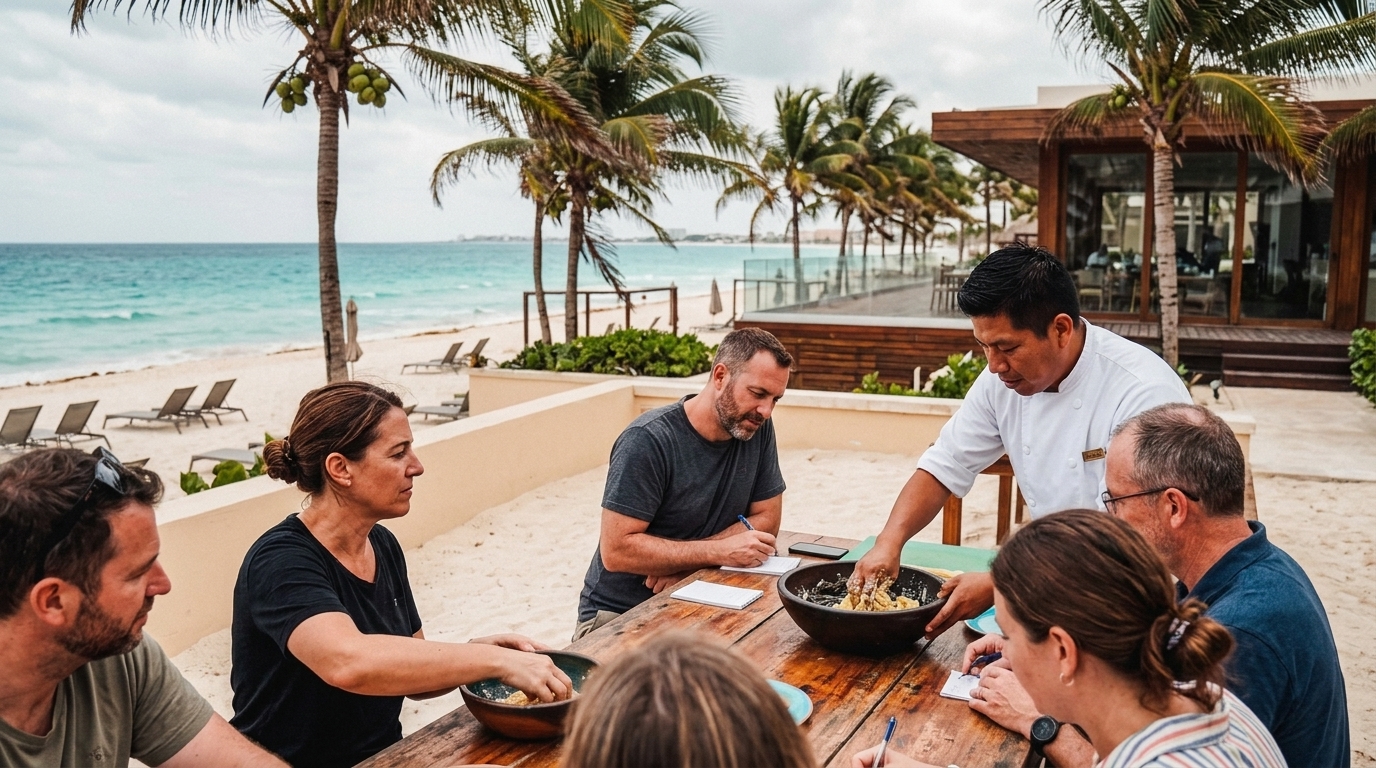
The image of the tourist spending eight hours a day motionless under a Mediterranean beach umbrella is starting to look increasingly anachronistic. According to recent research by Mastercard, a new trend called 'skillidays' (a portmanteau of skill and holidays) is rapidly gaining ground across Europe. Modern travelers are no longer just seeking a disconnection from their daily routine, but a reconnection with themselves through the acquisition of new knowledge and skills.
This shift from passive tourism to active, experiential tourism is not just a passing fad. It represents a deeper change in the priorities of Gen Z and Millennials, who view their leisure time as an investment in their 'personal capital.' Whether it's cooking classes in Tuscany, intensive pottery workshops in the Cyclades, or even coding bootcamps in mountain retreats, learning is becoming the new currency of travel satisfaction.
The Psychology Behind the Trend: Why Now?
The rise of skillidays is inextricably linked to the state of the global labor market and the dominance of Artificial Intelligence. In a world where technical skills depreciate quickly, the need for lifelong learning has permeated every aspect of our lives, including vacations. However, there is also a psychological dimension: the concept of 'flow.' Travelers are discovering that engaging in a new activity provides deeper mental rejuvenation than absolute idleness, as it reduces stress through creative focus.
Furthermore, the pandemic acted as a catalyst. After periods of confinement, the desire for authentic human contact and the touch of physical matter—such as working with clay or local culinary ingredients—became imperative. Skillidays offer exactly that 'tangible' experience that is missing from our digital everyday lives. It is a rebellion against the screen, even if the skills learned are sometimes digital themselves.
Mastercard's Economic Data
Mastercard's research highlights that spending on experiences is growing at a much faster rate than spending on material goods. European consumers appear willing to allocate a larger portion of their budget to trips that offer a 'certificate' or a new skill as a souvenir, rather than traditional trinkets. This is creating a new ecosystem in the tourism industry.
- Specialized Accommodations: Hotels transforming into learning centers, offering on-site workshops and masterclasses.
- Local Economy Boost: Empowering local artisans and producers who take on the role of instructors, keeping traditional crafts alive.
- Season Extension: Learning doesn't necessarily require 40-degree heat, allowing for the growth of tourism in autumn or spring, combating overtourism.
For countries like Greece, Italy, and Spain, this trend is a golden opportunity. These nations possess a vast wealth of intangible cultural heritage that can be transformed into an educational product. From traditional weaving and marble sculpting in Tinos to the revived Mediterranean gastronomy, the possibilities for high-value, low-impact tourism are limitless.
The Challenge of 'Productivity' on Vacation
However, the skillidays trend is not without its critics. Some sociologists warn about the 'colonization' of leisure time by the ideology of productivity. If even on vacation we feel the need to 'produce' a result or improve our CV, are we losing the essence of rest? The fine line between creative engagement and forced self-improvement is something the tourism industry will have to navigate carefully.
"The vacation of the future will not be about where you went, but who you became during the journey," notes a travel industry executive in the report.
In conclusion, skillidays reflect a maturing traveler. In the age of information abundance, the pursuit of knowledge through experience becomes the ultimate luxury. Europe, with its rich history and tradition in the arts and sciences, stands at the heart of this revolution, transforming tourism from an industry of spectacle into an industry of self-actualization. As we move toward 2027, expect to see your holiday itinerary looking more like a syllabus than a simple checklist of sights.