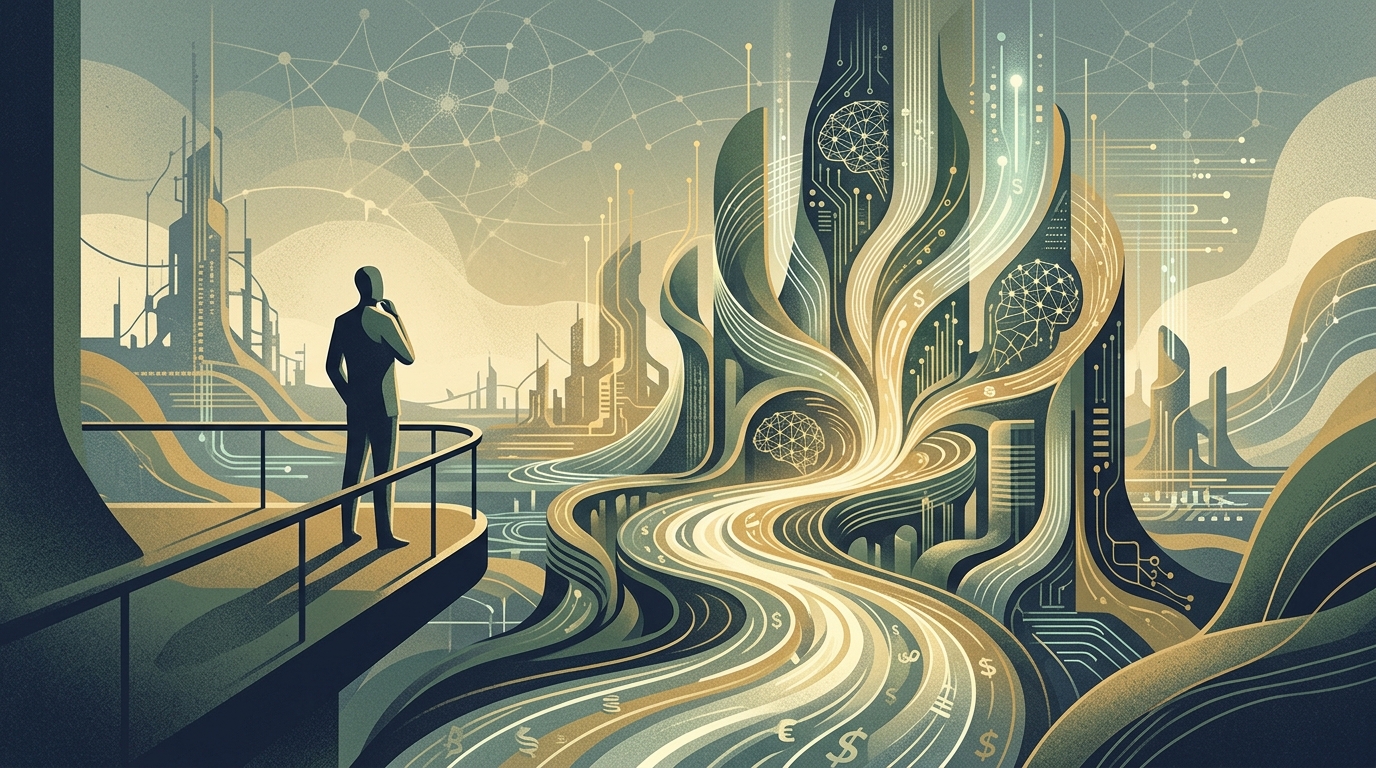
The rise of Generative AI is not merely a technological milestone; it is a structural seismic shift at the foundations of the global labor market. As algorithms increasingly take over tasks once considered the exclusive domain of university graduates—from drafting legal documents to complex coding and data synthesis—a pressing question emerges: What is the true value of a university degree in 2026?
Recent analysis, highlighted by sources like Newmoney, underscores a critical pivot. The labor market is no longer seeking mere repositories of knowledge but individuals capable of synthesizing technological power with nuanced human judgment. For higher education to remain relevant, it must move away from the "information storage" model and focus on cultivating skills that AI, despite its computational prowess, cannot authentically replicate.
The Shift from 'What' to 'How'
Historically, the university served as the gatekeeper of specialized information. Today, information is ubiquitous and largely free. Consequently, the value of a degree is shifting from "what you know" to "how you think." Critical thinking, the ability to assess source credibility, and the synthesis of conflicting data points have become the new "hard skills" of the modern era.
Employers are now looking for a "Meta-degree" in adaptability. As market analysts point out, a graduate who can leverage AI to accelerate their workflow, while possessing the ethical framework to audit its outputs, is infinitely more valuable than one who simply follows instructions. The university of the future must teach "Prompt Engineering" not as a technical gimmick, but as a sophisticated dialogue between human creativity and machine logic.
Human-Centric Skills as a Strategic Moat
Despite the advancement of Large Language Models (LLMs), certain facets of the human experience remain beyond the reach of code. Emotional Intelligence (EQ), empathy, negotiation in high-uncertainty environments, and value-based leadership are the areas where university education can offer its highest Return on Investment (ROI).
- Emotional Intelligence: The ability to manage teams and understand human psychology remains irreplaceable.
- Ethics and Accountability: In a world saturated with deepfakes and algorithmic bias, the philosophical and ethical grounding of students is vital.
- Interdisciplinary Synthesis: The capacity to bridge technology with humanities, arts, and economics to solve holistic problems.
"Education is not the learning of facts, but the training of the mind to think," Einstein once remarked, and this sentiment has never been more relevant than in the age of automation.
The Future of Lifelong Learning
The concept of a "degree for life" is obsolete. The labor market now demands a continuous cycle of reskilling and upskilling. Universities are being called to transform into lifelong learning hubs, offering micro-credentials that certify a professional's ability to keep pace with rapid technological shifts.
This transition requires a fundamental redesign of the academic experience. Instead of passive lectures, the focus is shifting toward experiential learning, case studies, and collaborative projects that mirror the complexities of the modern workplace. AI should not be viewed as a threat to job security, but as a "copilot" that liberates workers from repetitive cognitive labor, allowing them to focus on high-level strategy and innovation.
In conclusion, the value of university education in the AI era does not lie in providing answers, but in cultivating the right questions. The human ability to envision the future and solve complex problems with ethical integrity remains the most resilient defense against automation. The degree of the future is not a certificate of completion, but a testament to an individual's capacity for perpetual intellectual evolution.