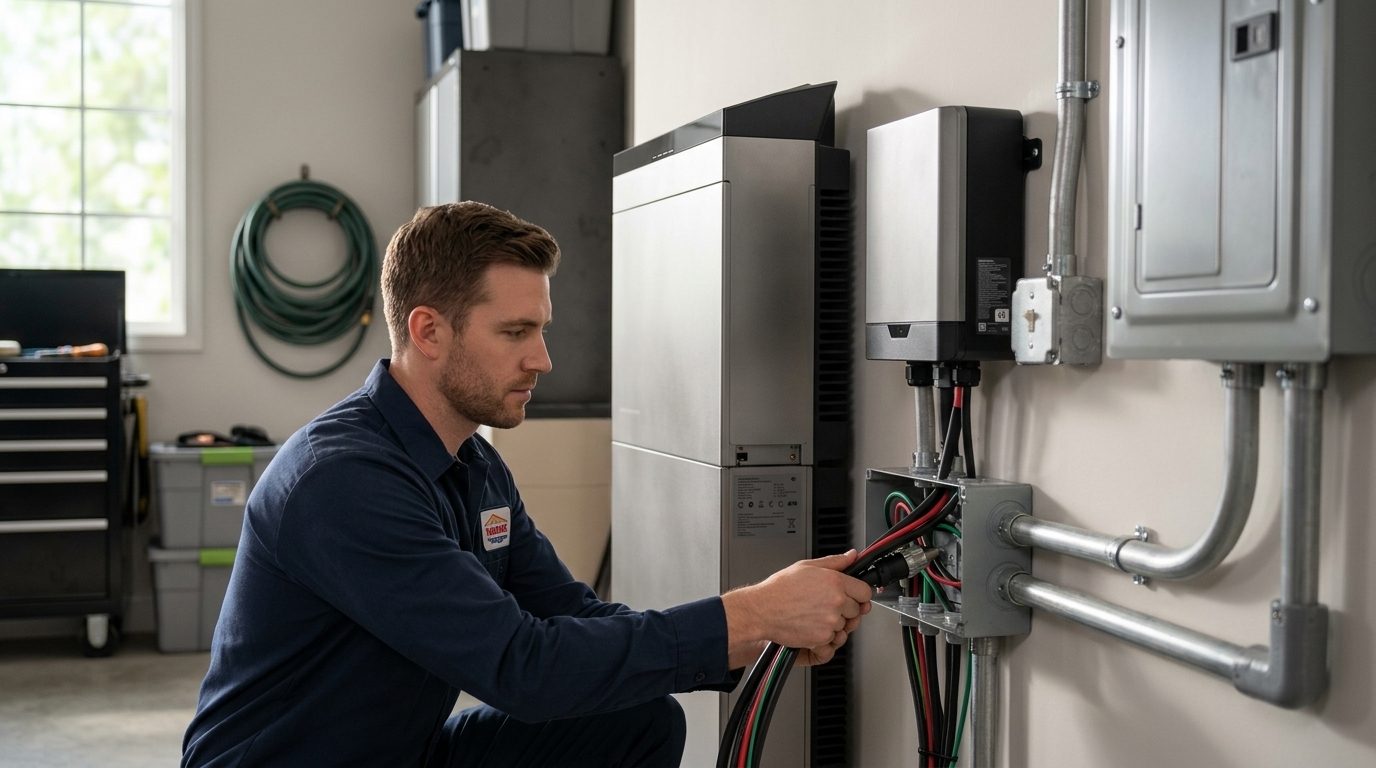
The vision of a home operating autonomously, insulated from electricity price fluctuations and sudden blackouts, was once a science fiction scenario or a privilege for survivalist preppers. Today, in June 2026, the home battery has transformed from an expensive gadget into a critical component of the modern residence. As power grids worldwide are strained by climate change and increased demand, the ability to store energy in our garage or utility room is no longer a luxury, but a strategic choice.
Why Invest in a Home Battery?
The primary reason for purchasing a battery isn't always complete disconnection from the grid (off-grid), which remains technically difficult and expensive for most urban homes. Instead, its value lies in "energy resilience" and economic optimization. With the rise of dynamic pricing, where the cost per kilowatt-hour spikes during evening hours, a battery allows the user to consume cheap energy stored at noon from the sun or at night from the grid.
Furthermore, the climate crisis has made power outages more frequent. Whether it's heatwaves buckling the grid or intense storms, a battery like the Tesla Powerwall 3 or the Enphase IQ Battery can keep lights, refrigerators, and Wi-Fi running for hours or even days, especially when paired with solar. The sense of security offered by this autonomy is often the deciding factor for many homeowners.
The Technology Inside the Box
Most modern home batteries utilize lithium technology, with Lithium Iron Phosphate (LFP) prevailing over Nickel Manganese Cobalt (NMC). LFP batteries are considered safer, have a longer lifespan (more charge cycles), and do not use cobalt, the mining of which raises significant ethical concerns.
A critical point in selection is the distinction between AC-coupled and DC-coupled systems. AC (alternating current) systems are easier to install in homes that already have solar panels, as they connect directly to the main panel. DC (direct current) systems are more efficient for new installations, as energy from the panels is stored directly in the battery without unnecessary conversions, reducing energy losses.
Real Costs and Incentives
Let's talk numbers. In 2026, the cost of a typical 10kWh home battery ranges between €7,000 and €12,000, including the inverter. However, installation can add another €2,000 to €5,000, depending on the complexity of the home's electrical panel. Often, a panel upgrade or the installation of a "smart" transfer switch is required to isolate the house from the grid during an outage.
In the US, the federal tax credit (ITC) remains at 30%, making the return on investment much faster. In Europe, various national subsidy programs (like Greece's "Photovoltaics on the Roof") have changed the landscape, offering significant grants that can cover up to 40-50% of the battery cost. Despite this, pure financial return on investment (ROI) remains a challenge, with the average payback period estimated at 7 to 10 years, depending on local electricity rates and usage patterns.
The Installation Process: What to Watch For
Installation is not a simple "plug-and-play" affair. It requires licensed electricians and, in many jurisdictions, approval from the grid operator. Placement is also critical: although many batteries are waterproof (IP65), their performance is affected by extreme temperatures. A shaded garage or an indoor controlled environment is ideal for maintaining the longevity of the cell chemistry.
Furthermore, proper sizing is essential. A home with a heat pump and an electric vehicle has completely different needs than a small apartment. Experts recommend identifying "critical load" circuits (lights, fridge, internet, a few outlets) so the battery can support them for an extended period, rather than trying to power the entire house during a blackout, which would deplete it in just a few hours.
The Future: Virtual Power Plants (VPP)
An exciting development is the participation of home batteries in Virtual Power Plants. Utility companies can, with the owner's permission, "draw" energy from thousands of home batteries during peak demand to stabilize the grid. In exchange, owners receive credits or cash. This transforms the battery from a passive storage medium into an active source of income, accelerating the investment's payback.
In conclusion, buying a home battery in 2026 is a decision that balances economic logic with a desire for autonomy. As technology matures and prices stabilize, the question is no longer "if" we will get a battery, but "when" and "which one."