As we navigate the middle of 2026, the discourse surrounding Artificial Intelligence (AI) has matured significantly. We have moved past the hyperbolic tropes of robot uprisings and entered a more profound, existential territory: the realization that AI is not our replacement, but our most demanding coach. The recent analysis by Parallaxi underscores a fundamental shift in the human-machine dynamic. AI is acting as a catalyst, forcing us to shed the mechanistic aspects of our labor and return to the core of our humanity.
The Replacement Myth and the Historical Arc
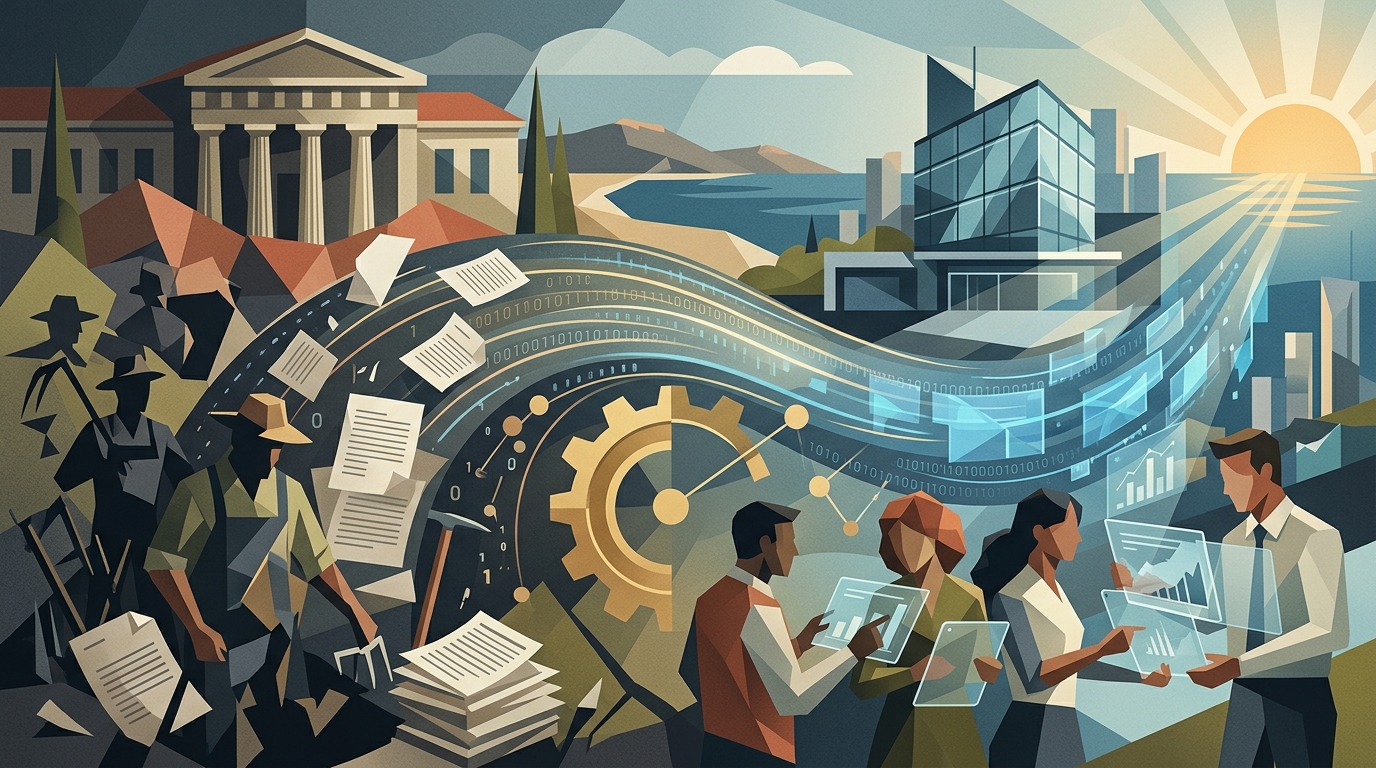
Historically, every technological leap—from the steam engine to the internet—has been accompanied by a chorus of existential dread regarding the future of work. Yet, history consistently demonstrates that technology does not destroy work; it redefines it. AI is following this pattern, but with a unique cognitive twist. For the first time, we are not just automating physical tasks, but intellectual ones as well. The machine is no longer just replacing our hands; it is augmenting and, in some cases, substituting parts of our analytical minds.
What we are witnessing is the automation of "cognitive routine." Tasks involving data processing, standard documentation, or basic coding are now the domain of algorithms. This creates a vacuum that many perceive as a threat. However, this vacuum is precisely where human judgment, ethics, and complex emotional intelligence are meant to flourish. By delegating the mundane to the machine, we are forced to reclaim the creative and strategic heights of our intellect.
The Shift from Doing to Curating
In the workforce of 2026, the value of a professional is no longer measured by their ability to generate output, but by their ability to curate intent. We are moving from a world of "Homo Faber" (Man the Maker) to an era where human excellence lies in "Intent Orchestration." AI can write code, but it cannot understand the societal impact of a software's bias. It can generate legal briefs, but it cannot navigate the delicate emotional nuances of a courtroom or a negotiation table.
This evolution requires a radical shift in our educational and professional frameworks. The traditional model of learning a single skill and applying it for forty years is officially dead. In its place, we find the necessity for perpetual adaptability. The "evolution" mentioned by Parallaxi is essentially the democratization of high-level thinking. When the barrier to technical execution is lowered by AI, the differentiator becomes the quality of the human idea and the ethical framework within which it operates.
The Human Advantage in an Algorithmic World
To evolve alongside AI, we must focus on the traits that remain stubbornly un-programmable. These are not just "soft skills," but the very bedrock of civilization. As AI becomes more agentic—capable of planning and executing complex tasks autonomously—the human role shifts toward oversight, empathy, and moral direction.
- Critical Empathy: Understanding not just what a person says, but the unexpressed needs and cultural context behind their words.
- Ethical Governance: Providing the moral compass for autonomous systems that lack a sense of justice or fairness.
- Strategic Synthesis: The ability to connect disparate fields—like philosophy, biology, and economics—to solve problems that a specialized AI cannot grasp.
The Greek perspective offers a unique lesson here. In a culture that values "phronesis" (practical wisdom), the integration of AI should not be seen as a surrender to the machine, but as a tool to enhance our capacity for wise action. The challenge for the modern worker is to stop competing with the machine on its terms (speed and volume) and start excelling on our own (meaning and purpose).
In conclusion, the narrative that AI will replace us is a failure of imagination. AI will indeed replace the versions of ourselves that act like machines. By doing so, it grants us the ultimate opportunity—and the heavy responsibility—to finally act like humans. This evolutionary leap is not optional, but it is the most promising path we have ever taken.