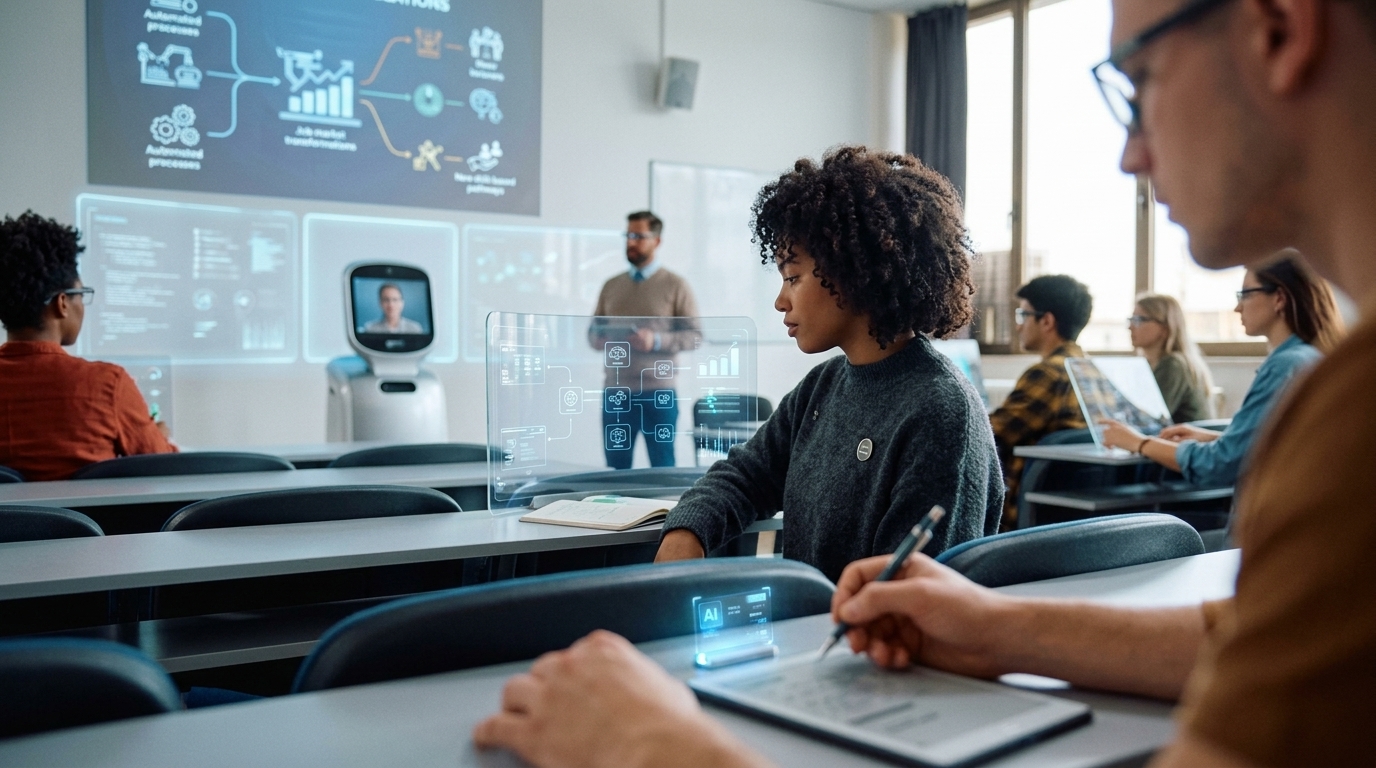
As the graduation ceremonies of 2026 draw to a close across the globe, from the lecture halls of Hanoi to the historic universities of Athens and London, a new reality dominates the conversations of young graduates: a degree alone is no longer enough. The recent report from Vietnam.vn highlights a global truth that has now become firmly established: Artificial Intelligence (AI) skills are the catalyst that separates candidates in an increasingly demanding job market. It is no longer a niche for computer scientists, but a horizontal competency that permeates every sector, from law and medicine to the humanities.
The Recruitment Transformation: From CVs to 'AI Portfolios'
Human Resources (HR) directors in 2026 are not just looking for academic credentials. They are seeking evidence that a candidate can coexist and collaborate with autonomous systems. A student's ability to use Generative AI tools for data analysis, coding, or content creation is now considered as fundamental as literacy was in the previous century. According to market analysts, graduates who demonstrate 'AI Literacy' are 40% more likely to be hired for high-skilled positions within the first quarter after graduation.
"AI will not replace humans, but humans who use AI will replace those who do not," says a senior executive at a major tech firm in Vietnam, echoing a sentiment that now prevails worldwide.
The Vietnam Example and the Convergence of Emerging Markets
The case of Vietnam is indicative of the speed at which emerging economies are adopting AI to bridge the gap with the West. With a young, tech-savvy population, the country is investing heavily in integrating AI into university curricula. This strategic choice is creating a new generation of workers who do not fear automation but see it as a lever for productivity. For many European nations, the lesson is clear: economic competitiveness depends directly on the ability of universities to produce graduates who speak the language of algorithms. Academic institutions must overcome bureaucratic hurdles and introduce AI not as a standalone course, but as a problem-solving philosophy across all departments.
The Challenge of the 'AI Divide': Social and Economic Implications
However, the rising importance of AI skills brings with it the risk of a new social divide. If access to AI education remains a privilege of the few or those attending expensive private institutions, the job market will become even more polarized. Students from less privileged backgrounds risk being left behind, not due to a lack of talent, but due to a lack of access to the right tools and mentorship. Governments and corporations must collaborate to create 'knowledge bridges,' offering free certifications and workshops to ensure equality of opportunity.
- Redefining Critical Thinking: AI can generate answers, but humans must know how to ask the right questions.
- Interdisciplinarity: The most sought-after employees are those who combine humanities with technical AI training.
- Lifelong Learning: AI knowledge depreciates quickly; students must learn how to learn continuously.
Conclusion: AI as a Tool for Empowerment
In conclusion, Artificial Intelligence is not a threat to be avoided, but a tool for empowerment. Students who embrace it, understanding both its ethical and practical dimensions, gain an advantage that transcends the boundaries of the local job market. They become citizens of a global economy, capable of solving complex problems with speed and precision that was unthinkable a decade ago. The message to the youth is clear: AI is your new partner. Learn to lead it before it leads you.