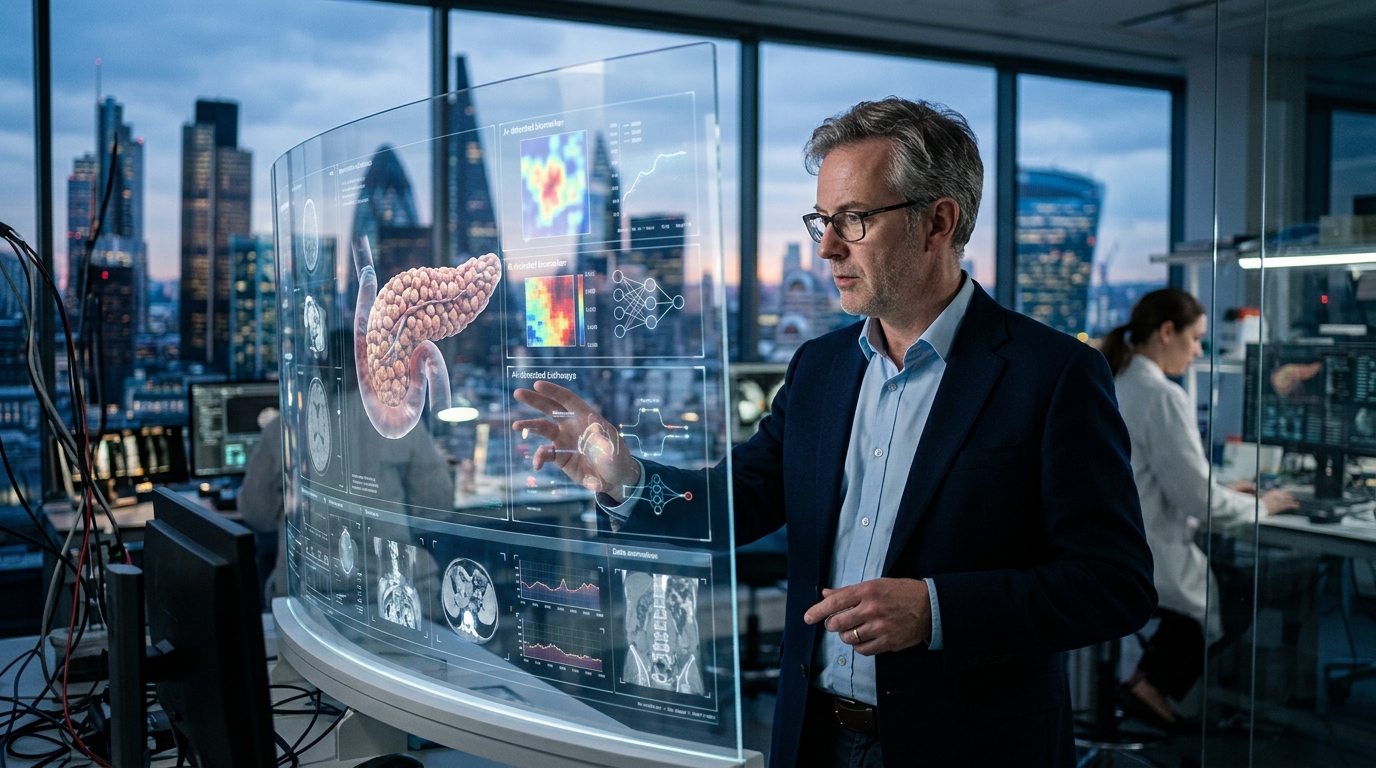
Pancreatic cancer has long been characterized as medicine's "silent killer." This moniker is well-earned, as the disease typically remains asymptomatic in its early stages, leading to the majority of patients being diagnosed only after the tumor has metastasized. However, a revolutionary development in Artificial Intelligence is promising to rewrite this narrative, offering a window of hope where previously there was often only despair.
According to recent studies, deep learning algorithms have been trained on millions of electronic health records (EHRs), successfully identifying patterns that escape the human eye. These patterns do not just concern imaging data, but a combination of seemingly unrelated data points: from minor fluctuations in glucose levels and the onset of Type 2 diabetes to subtle changes in body weight and the use of specific medications months or even years before a tumor becomes visible on a scan.
The Technological Architecture of Prediction
The power of this approach lies in the ability of AI to process vast amounts of longitudinal health data. Researchers utilized data from health systems in the US and Denmark to build a model capable of predicting the risk of pancreatic cancer up to three years before clinical diagnosis. Rather than searching for a single "magic bullet" biomarker, the model analyzes the temporal sequence of symptoms and clinical events.
For instance, a patient presenting with sudden pancreatic inflammation (pancreatitis) combined with an unexpected rise in blood glucose is automatically flagged as high-risk by the algorithm. While a human physician might treat these as isolated incidents, the AI connects them within a broader pathological trajectory. The precision of these models is remarkable, distinguishing individuals at true risk from those with similar but benign symptoms with unprecedented accuracy.
From Detection to Survival: Clinical Implications
The importance of early diagnosis in pancreatic cancer is a matter of life and death. Currently, the five-year survival rate remains depressingly low because most cases are caught at Stage IV. If the cancer is detected at Stage I or II, however, the chances of successful surgical resection and long-term survival increase dramatically.
- Targeted Screening: AI allows for the creation of high-risk screening programs, making surveillance economically viable compared to mass population screening.
- Closing the Gap on Missed Opportunities: Patients often visit doctors with vague symptoms. AI acts as a digital safety net, alerting clinicians to consider further investigation.
- Personalized Surveillance: Predictive capabilities allow doctors to monitor specific patients more closely with regular endoscopic ultrasounds or MRIs.
However, implementing this technology into daily clinical practice is not without hurdles. There is always the risk of false positives, which can cause unnecessary patient anxiety and strain healthcare resources with invasive follow-up tests. Balancing the sensitivity and specificity of the algorithm remains the central challenge for data scientists and clinicians alike.
Ethical Dilemmas and the Future of Digital Health
As we move toward an era where AI is integral to diagnosis, serious questions arise regarding data privacy and equitable access. Who gets access to these algorithms? Could insurance companies use this predictive data to hike premiums for individuals deemed "high risk" by an AI model?
"AI does not replace the oncologist; rather, it provides the vision necessary to see the invisible," researchers noted during the presentation of their findings.
In conclusion, the use of AI to detect signs of pancreatic cancer before tumors develop represents one of the most promising frontiers in modern medicine. If we can integrate these tools with responsibility and ethical rigor, we can hope for a future where pancreatic cancer is no longer an automatic death sentence, but a manageable or even curable condition. The transition from reactive to proactive oncology is finally within our reach.