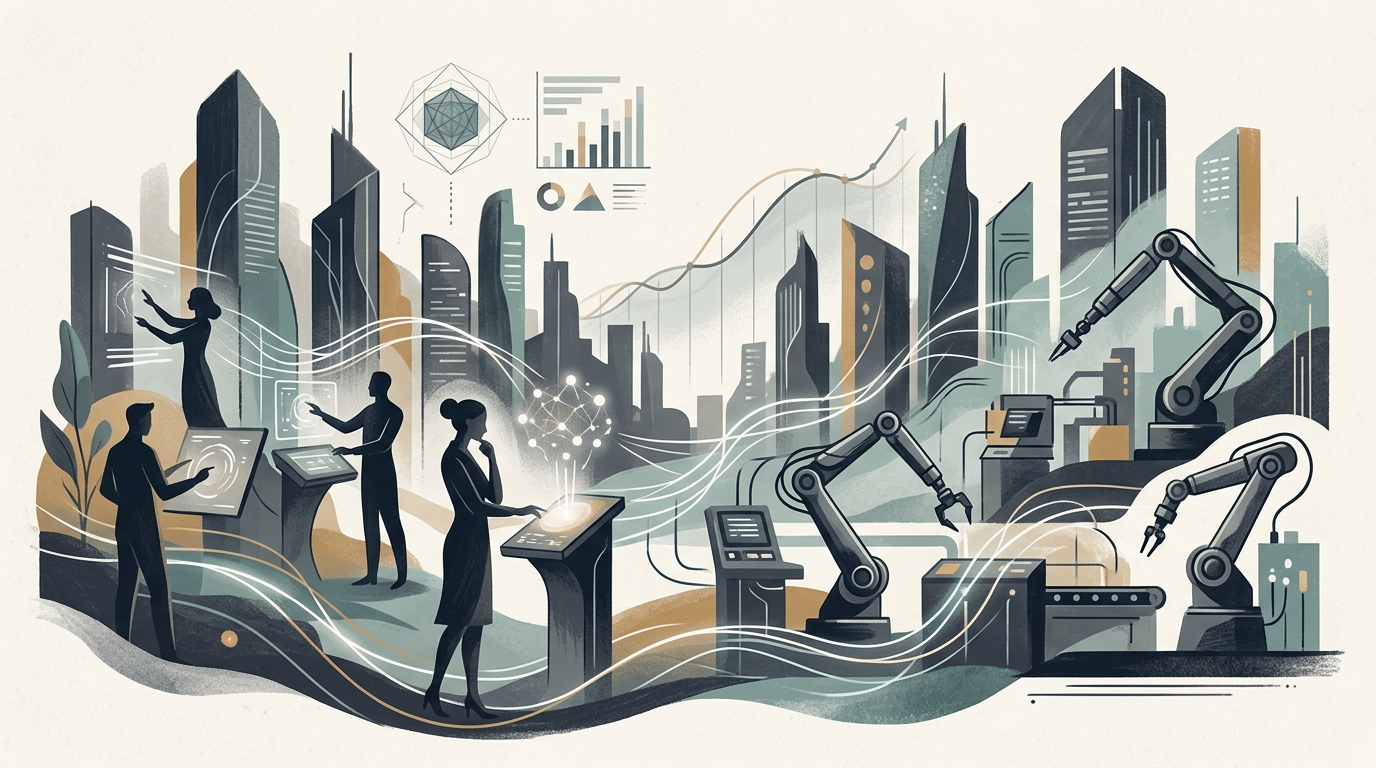
The discourse surrounding Artificial Intelligence (AI) often oscillates between utopia and dystopia. While many analysts warn of mass unemployment caused by the automation of cognitive tasks, Jeff Bezos, the man who transformed global commerce through Amazon, offers a different, more nuanced perspective. According to Bezos, we are not at the end of work, but at the beginning of a "Golden Age" where AI will act as the ultimate multiplier of human capability.
The Philosophy of Augmentation vs. Replacement
Bezos argues that the history of technology is a history of tools that make humans more efficient. From the wheel to electricity, every major innovation initially sparked fears of job loss but ultimately led to greater economic activity. In the case of AI, the Amazon founder envisions a "renaissance" of productivity. Instead of the technology replacing the worker, it will take over the "drudge work" and repetitive parts of their duties, allowing them to focus on creativity, strategy, and human connection.
This approach is not merely theoretical. In Amazon's logistics centers, robots have not replaced humans; rather, they have changed the nature of their work. The challenge remains: how to ensure this transition is equitable for everyone involved?
The White-Collar Upheaval
The significant difference between the current AI revolution and previous ones is its scope. While the Industrial Revolution automated manual labor, AI targets "cognitive" labor. Lawyers, programmers, journalists, and analysts are now at the forefront of change. Bezos estimates that professionals who adopt AI as a "co-pilot" will see their market value skyrocket, while those who resist will find themselves at a disadvantage.
- Process Automation: AI will handle document drafting and data analysis.
- New Specialties: Roles will be created that we cannot even imagine today, such as "AI Ethics Trainers."
- Personalization: Work will become more tailored to client needs thanks to the speed of information processing.
The Reskilling Challenge and the Social Contract
Despite Bezos's optimism, the transition will not be bloodless. The need for mass reskilling is urgent. Governments and corporations must invest in programs that help workers acquire "digital intelligence." Bezos emphasizes that education should no longer stop at the university level but must be a lifelong process.
"Artificial Intelligence won't take your job. A person who knows how to use Artificial Intelligence will."
In economies heavily reliant on services, such as Greece or the UK, Bezos’s prediction holds particular weight. Integrating AI into tourism, shipping, and public administration could provide a necessary boost to national economies, provided there is a proper strategic framework.
The Future: A Symbiotic Relationship
In conclusion, Jeff Bezos’s prediction invites us to see AI not as an adversary, but as a powerful partner. The "upheaval" in the labor market is not about the disappearance of professions, but about the redefinition of human value. In a world where information is abundant and its processing instantaneous, judgment, empathy, and ethics will become the most valuable currencies in the labor market.