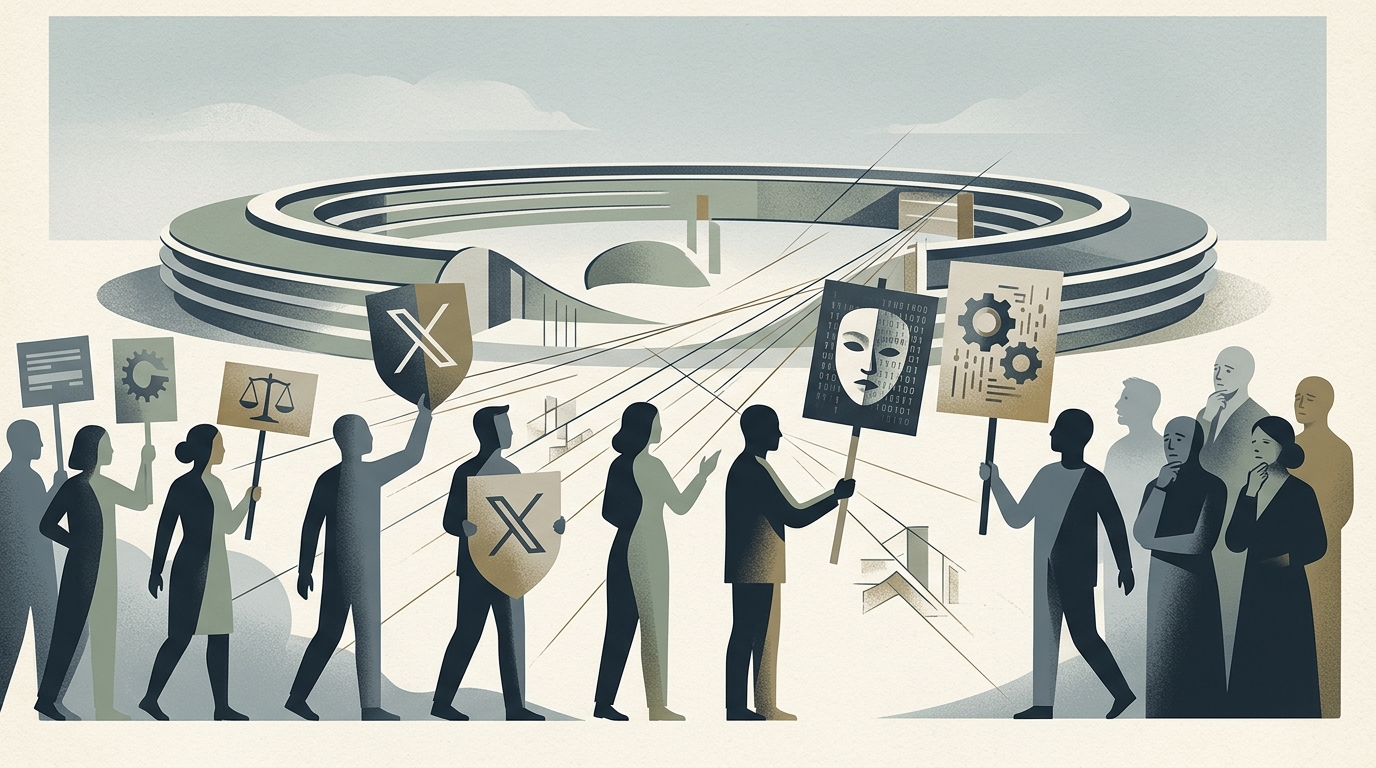
In the heart of Cupertino, where the architectural perfection of Apple Park meets the cutting edge of technological innovation, this year’s Worldwide Developers Conference (WWDC) began with a sharp note of discord. While Apple executives prepared to unveil the latest advancements in Artificial Intelligence and operating systems, a group of protesters outside the visitor center reminded the tech giant of the dark price of its digital dominance. The organizations UltraViolet and the HEAT Initiative led a mobilization that wasn't just about technical specs, but about the very ethical foundation of Apple’s ecosystem.
The Deepfake Plague and Gatekeeper Responsibility
The central demand of the protesters is clear and urgent: Apple must immediately remove "nudify" apps from the App Store. These applications, which utilize Generative AI to create non-consensual nude images from ordinary photos, have evolved into a tool for mass harassment, primarily targeting women and underage girls. Despite the strict guidelines Apple claims to enforce, activists argue that the review process is riddled with holes.
"Apple markets safety and privacy as the bedrock of its brand," an UltraViolet spokesperson stated. "Yet, it continues to profit from apps that facilitate digital sexual violence. Tolerance of such tools is nothing less than a silent endorsement." This critique hits Apple at its most sensitive spot: the image of the "walled garden" that is supposed to protect users from the dangers of the open internet. The protesters argue that if the garden allows predators to roam, the walls are meaningless.
The Red Flag Named Elon Musk
Perhaps the most controversial demand of the protest is the call to ban Elon Musk’s apps, specifically targeting the social network X (formerly Twitter). Protesters argue that under Musk’s leadership, the platform has become a "haven" for deepfakes, hate speech, and child sexual abuse material (CSAM). X’s recent decision to officially allow pornographic content, combined with the drastic reduction in content moderation teams, is seen by activists as a flagrant violation of App Store terms of service.
Apple’s relationship with Musk has been historically complex. On one hand, Tim Cook seeks to maintain a diplomatic stance, as X remains a significant channel for communication and advertising. On the other, Apple is under pressure to apply the same rules that led to the past banning of other apps like Parler. The accusation is that Apple exhibits selective sensitivity, fearing a head-on collision with the unpredictable billionaire, while smaller developers are penalized for much lighter infractions. The protesters are essentially asking: Is Elon Musk too big to be regulated by the App Store?
The iCloud Dilemma and Child Protection
Another burning issue brought to the fore by protesters is the management of CSAM on iCloud. Apple had previously announced a photo-scanning system to detect such material but backtracked after fierce backlash from privacy groups who feared the creation of a "backdoor" for state surveillance. Today, the HEAT Initiative accuses Apple of using privacy as a "smokescreen" to evade its responsibility in protecting children.
The situation is further complicated by the fact that AI technology makes the creation and distribution of illegal material easier than ever. Protesters are calling for Apple to invest in technologies that protect victims without sacrificing end-to-end encryption—a balance that Apple’s engineers argue is extremely difficult to achieve technically. However, for the parents and activists outside Apple Park, technical difficulties are no longer an acceptable excuse. They demand proactive measures, not just reactive statements.
Conclusion: Apple at a Crossroads
The protest at WWDC 2026 highlights a broader identity crisis for Apple. As the company transforms into an AI leader, it can no longer limit itself to the role of a hardware manufacturer. It is now a regulator of the social fabric. The pressure to ban Musk and deepfake apps is a signal that society demands tech giants take ethical responsibility for their power. Apple’s response to these demands will determine whether its "walled garden" will remain a safe haven or if it will turn into a gilded cage where profitability takes precedence over human dignity. As the keynote ends and the developers head to their sessions, the chants from outside remain a haunting reminder that technology does not exist in a vacuum.