In an era where technological evolution seems to outpace human imagination, the United Nations (UN) is sounding a critical alarm. According to recent reports and statements from high-ranking officials, the development of safety protocols for Artificial Intelligence (AI) is moving at a snail's pace, while the capabilities of AI models are galloping at the speed of light. This disparity is not merely a technical issue; it is an existential challenge to international stability, human rights, and social cohesion.
The Gap Between Innovation and Oversight
The core of the UN's concern lies in the fact that technology companies, driven by intense competition and the pursuit of profit, are prioritizing the release of increasingly powerful models while sidelining exhaustive safety testing. The AI "arms race" has created an environment where the old Silicon Valley motto—"move fast and break things"—is now applied to technologies that can impact critical infrastructure, the global economy, and public health.
UN Secretary-General António Guterres has repeatedly emphasized that the international community is ill-prepared. While initiatives like the EU AI Act exist, they remain regional in scope. AI, however, knows no borders. A dangerous model developed in a jurisdiction with lax rules can cause global disruption in seconds. The lack of a unified, global scientific panel—akin to the Intergovernmental Panel on Climate Change (IPCC)—makes it difficult to objectively assess risks across the board.
Geopolitical Tensions and the Power Race
One of the most significant hurdles to establishing global safety standards is geopolitical rivalry, primarily between the US and China. The concern that imposing strict safety rules might slow down national innovation leads to a "race to the bottom" regarding regulation. The UN warns that if safety is viewed as an obstacle to national power, then humanity as a whole will be exposed to unpredictable consequences.
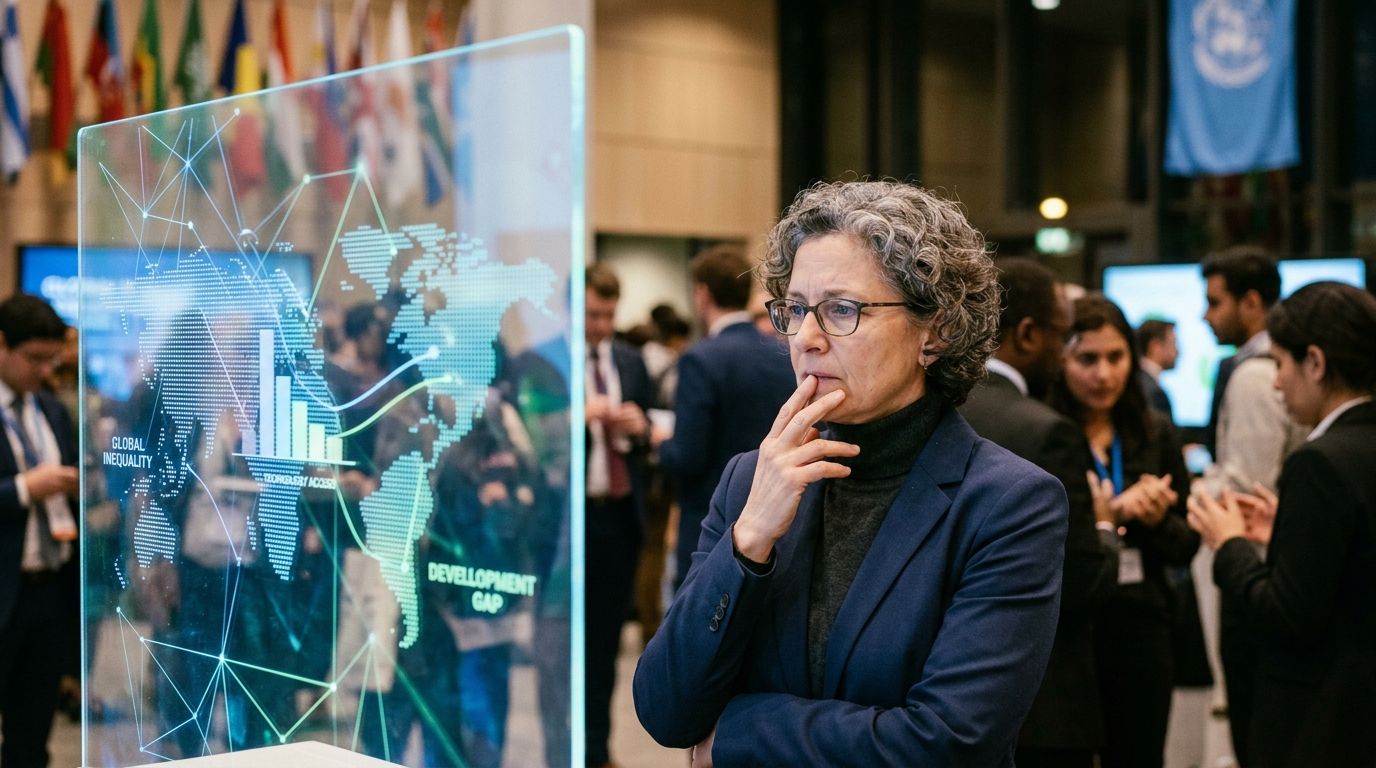
Furthermore, there is the issue of the "digital divide." Many countries in the Global South are excluded from discussions on AI governance, even though they are often the first to suffer the consequences of automation and disinformation. The UN argues that AI safety must be inclusive. It is not enough for the "big players" to agree; it must be ensured that technology is not used as a tool for neo-colonialism or repression.
Immediate Risks: From Deepfakes to Automated Warfare
While discussions about "Superintelligence" threatening humanity dominate headlines, the UN also focuses on current, tangible risks. The erosion of truth through deepfakes and generative AI is an immediate threat to democratic processes worldwide. In a year marked by critical elections, the ability of AI to create persuasive disinformation at scale is daunting.
- Disinformation: Mass production of fake news targeting specific social groups.
- Autonomous Weapons: Development of lethal systems that operate without human intervention.
- Cyberattacks: Use of AI to discover vulnerabilities in critical infrastructure (power grids, hospitals).
- Social Bias: Reinforcement of racial and gender discrimination through opaque algorithms.
The UN report suggests creating an international data repository and a global AI fund to ensure that knowledge and safety are shared equitably. The idea is to transform AI from a tool of corporate dominance into a global public good, with strict and verifiable safety standards adhered to by all.
Conclusion: A Call to Action
The UN's warning is clear: time is running out. Technology evolves at exponential rates, while policy and legislation move linearly. If this gap is not bridged immediately, we risk losing control of the very tools we created to serve us. Safety must not be viewed as a luxury or an afterthought, but as the foundation upon which the future of humanity in the digital age will be built.