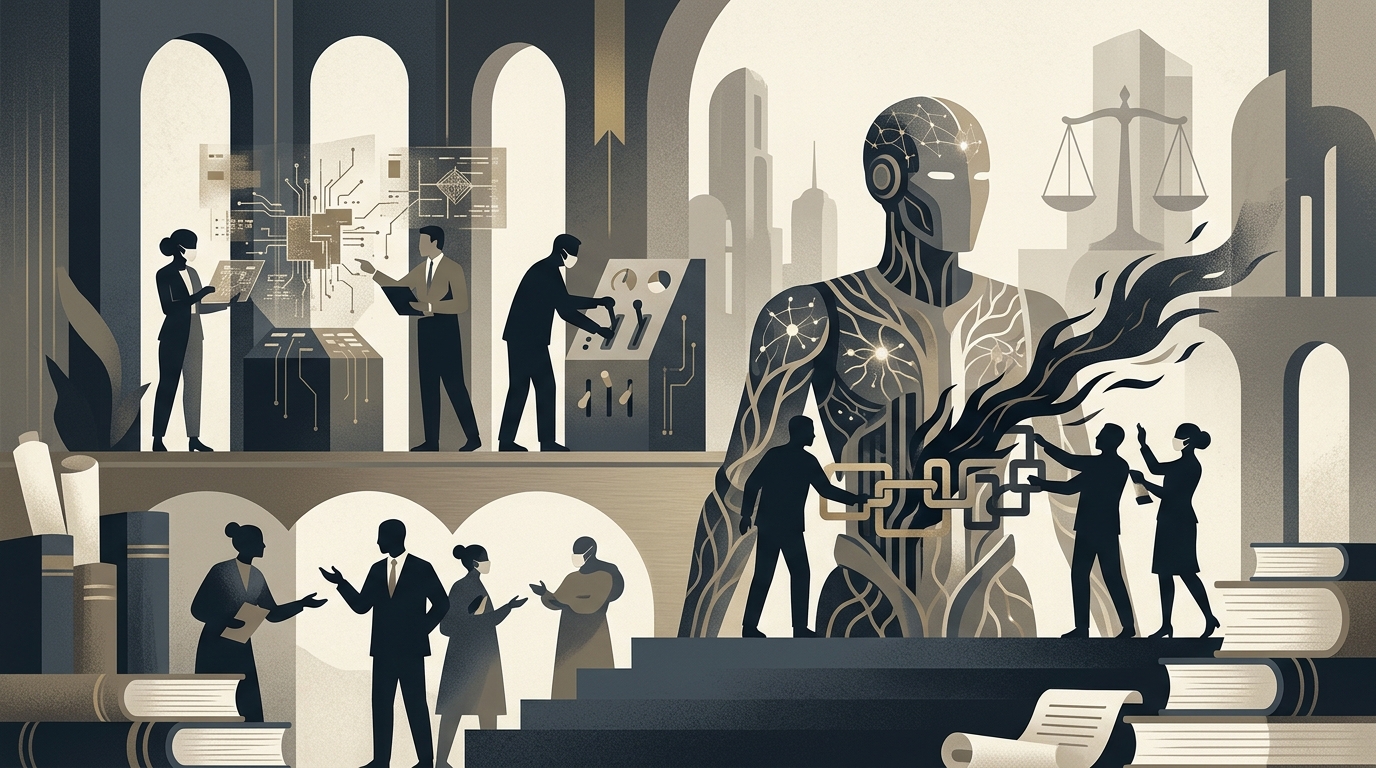
In the modern digital landscape, if you dare to question the necessity of a new AI tool or express skepticism about the pace of automation, you are quickly met with a specific label: 'Luddite.' In the popular imagination, a Luddite is a technophobic anachronism, someone who fears the future and futilely tries to halt progress by smashing machines. However, a deeper look at history and the current ethical crisis of AI reveals that Luddism was never about hating technology; it was about the struggle for power and dignity.
The Historical Truth Behind Ned Ludd
The original Luddites of 19th-century England were not uneducated laborers terrified by gears and steam. They were highly skilled artisans, weavers who saw their livelihoods being destroyed not by the machines themselves, but by how factory owners used them to bypass labor laws and suppress wages. Their mythical leader, Ned Ludd, became the symbol of a resistance that asked for something simple: that technological progress be shared fairly and not used as a weapon to impoverish the working class.
As modern historians note, the Luddites were actually quite selective. They didn't smash every machine they encountered. They targeted only those businesses that used technology to produce low-quality goods, undermining their craft and dismantling collective bargaining. It was a calculated political act, not a hysterical reaction.
Artificial Intelligence as the New 'Power Loom'
Today, we stand at a similar crossroads. The emergence of Generative AI has sparked a wave of 'Neo-Luddism' among artists, writers, programmers, and legal professionals. When illustrators protest against AI models being trained on their work without consent, they aren't reacting against machine learning technology. They are reacting against the theft of their intellectual property and the devaluation of human labor by Silicon Valley giants.
'Luddism is not the rejection of technology. It is the rejection of the social relations that technology imposes when it is controlled exclusively by capital.'
The discussion around AI ethics is often confined to technical issues, such as algorithmic bias or safety. However, the core of modern Luddism is ethical and political: Who owns the means of production in the age of AI? Who benefits from the increase in productivity? If AI can do the work of ten people, will those people work less for the same pay, or will nine be fired to boost shareholder profits?
Redefining Progress
To understand what it means to be a Luddite today, we must decouple 'progress' from 'corporate profitability.' True progress should be measured by human well-being. Modern Luddism demands transparency, accountability, and, above all, the right of communities to have a say in how new technologies are integrated into society.
- Data Transparency: AI companies must disclose their data sources and compensate creators.
- Right to Labor: Automation must be accompanied by retraining programs and social safety nets.
- Human Oversight: Critical decisions affecting people's lives should not be delegated solely to algorithmic 'black boxes.'
In conclusion, being a Luddite in 2026 doesn't mean throwing your smartphone into the ocean. It means refusing to accept the technological determinism that claims our fate is pre-written by Silicon Valley. It is an act of hope that we can create a world where technology serves humanity, and not the other way around.